Have a great Thanksgiving!
Our student bloggers are off this week – have a great Thanksgiving and check back on Monday 11/30 for new posts.
Wanted to flag our recently re-launched website. In addition to our new streamlined navigation, we’ve also added some great new content. For instance, check out these videos on Careers in Academia, International Law at HLS, and Public Interest. We’ve also added spotlights on many of our talented faculty and students and clear application checklists and process explanations for those of you still finishing up your application or just trying to figure out what’s going on.
Check it out when you get a chance and let us know what you think.
Have a great weekend!
Josh
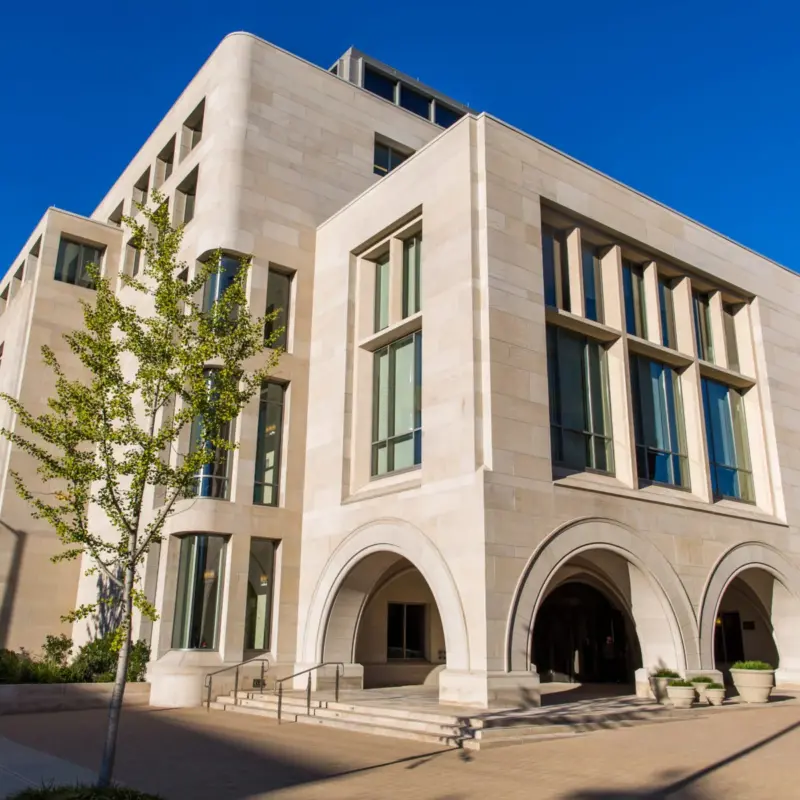
This week was the technical edit (a.k.a. subcite) for my article at the Harvard Law and Policy Review. Spending several hours in the law library, Langdell Hall, with the 1L editors who make up my article team reminded me what a great building it is and how many services it offers.
While the older Austin Hall may be more iconic, I think Langdell is the most beautiful part of campus. Walking into the bright, stately fourth-floor Reading was the most definitive “Wow, I’ve really made it” moment of my admissions visit to HLS—the pictures here and here may give you a sense of why.
Even now that the Reading Room has become part of my daily life, I keep finding new things to appreciate about it. First it was the individual table lamps and power outlets, then the prize armchairs facing the front windows (perfect for looking out on the snowy grounds in winter, yet staying toasty as they’re right beside the heaters.) A room in the back keeps the noise from scanners contained; another offers coffee and hot chocolate late into the night around finals. And around the corner is always the Reference Room, with its desk staffed long hours by extremely kind and helpful librarians.
Meanwhile, the third floor has study carrels and group meeting rooms like the one we took over for our subcite. Just outside the vast photocopy room is my personal favorite spot with orange plush armchairs and tiny chess tables overlooking the lobby. The second floor, which is actually ground-level, houses the Lemann Lounge where students can eat and socialize while they study, use public computers, and check out free movies from the respectable DVD collection.
While it’s far from true that Harvard students live in the library, I do think some of us wind up there even more than necessary because it’s so beautiful and the facilities are so great. I think Langdell is a real selling point for HLS since—aside from being the world’s largest academic law library, of course—it really embodies the supportive, student-focused atmosphere our administration works hard to create. And the inspiring quotes inscribed around the walls don’t hurt one bit.
- Lea
A group of us were heading to lunch with our criminal law professor last Monday (he likes taking his students out to lunch on occasion) when the professor stopped and said, “Hang on, I want to go say hi to Richard Posner.” At first I as confused. Was my professor talking about the Richard Posner and if so why was Richard Posner, Seventh Circuit judge and legal academia legend, wandering our halls?
It turned out that Judge Posner was one of the guest judges at the annual Ames Moot Court Competition that was taking place later that day. Ames is a competition in which 2Ls and 3Ls argue mock cases against each other. The competition is pretty grueling. The three rounds span two years and winning the competition is considered a big honor. For the final round, the law school usually gets a Supreme Court Justice or other legal heavyweight as the lead judge in a three judge panel. This year we were welcoming Judge Posner, Judge Diane Wood, and Judge Barrington Daniels Parker Jr.
I thought that observing the competition might be cool, but didn’t have the commitment to stand in line the 2ish hours that seemed to be required to view the oral arguments in person. About fifteen minutes before arguments were set to start, I walked over to Austin Hall, where the competition was being held. As expected, I was directed towards one of the overflow rooms where the arguments were going to be broadcast on large screens.
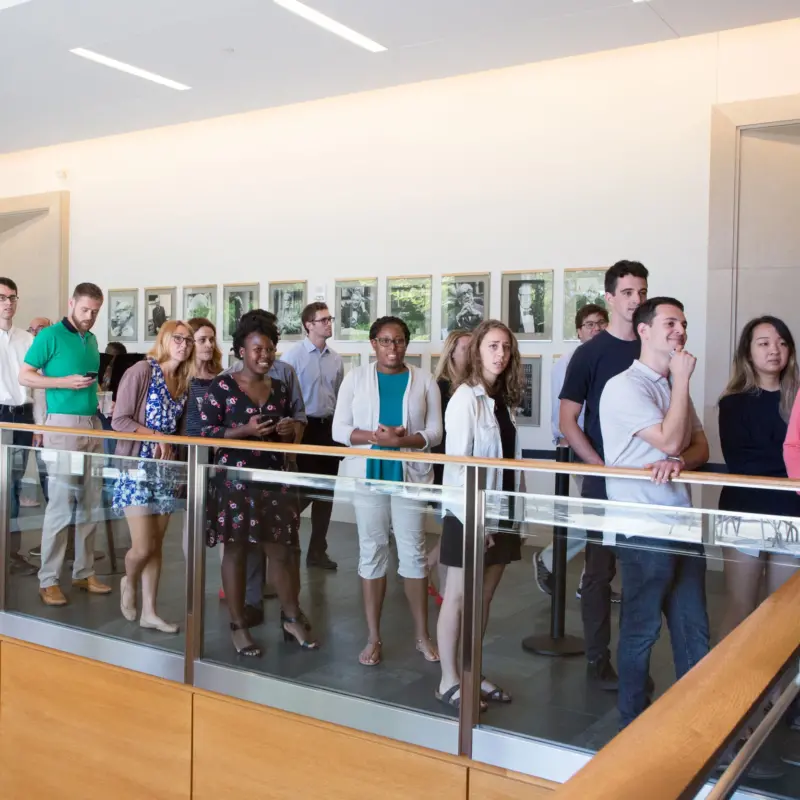
In retrospect I am glad that I didn’t get in to the actual competition. The overflow room is apparently where all the upperclassmen that know what’s happening camp out and talk about the goings on in the competition. The place felt more like a sporting event than a complex legal showcase. People were munching on snacks, cheering on classmates, and commenting aloud on the action in the courtroom.
The format for arguments in the case being tried was set up to mimic that of an actual Supreme Court case. The imitation was relatively accurate because no student was able to get more than a few seconds of argument in before they were interrupted by one of the judges. The judges were persistent in their interrogations. The oral arguments consisted mostly of a tug of war between the students and the judges as to the complexities of the topic at hand. It was actually pretty harrowing to watch fellow law students go toe to toe with a panel of incredibly tough federal judges on the particularities of a given legal issue.
The arguments also had their lively moments. The case being argued involved the constitutionality of allowing the slogan “Meat is Murder” to be emblazoned on a license plate. My room chuckled when Judge Wood suggested that maybe the phrase wasn’t actually meant to be inflammatory against meat eaters, but meant to signal the driver’s love for the band The Smiths. The room erupted when the student arguing at the time uncomfortably admitted that he did not understand the reference.* Also, I am relatively certain that by the end of the first set of arguments everyone in the room had tried their hand at imitating Judge Posner’s unique pronunciation of the word “vegan” (hard vowels such that it would rhyme with “we ran”).
All in all the event was pretty interesting. I watched fellow law students argue a case before some of the country’s greatest legal minds, and had a lot of fun while doing it.
* The Smiths put out an album in 1985 called “Meat is Murder”
- Anit
There are many affinity groups on the HLS campus. I don’t know how much history all the organizations have of getting together as one group but the other night we met for our second annual dinner. Each affinity group was allowed to send two representatives to the event. I attended on behalf of La Alianza. There were students there from BLSA, NALSA, APALSA, HALA, Lambda, SALSA, etc. The diversity committees of several different firms sponsored our meal.
It was really nice to be part of a forum where we could discuss the relationships between the different groups. As affinity groups, we share a lot of the same experiences and challenges while in law school and in the working world. As a result, we often collaborate on events where our interests intersect. For example, just this week there was a screening of the documentary, “From Swastika to Jim Crow” sponsored by the Jewish Law Students Association and the Black Law Students Association. The film was followed by a discussion between members of the two groups. Representatives from these groups at the dinner said it was a huge success.
At the dinner we talked about the ways in which we can continue to sponsor events like that and how we can bring the various affinity groups together to create awareness of the need for diversity in both the faculty and the student body. One of our main concerns was being able to co-sponsor events that can be controversial in different arenas without making our memberships feel marginalized. Many of the affinity groups have agendas that are both social and political. Members are drawn to these groups for different reasons. Many of the student boards expressed a feeling of hesitation at taking on any sort of politically motivated event because they are afraid of scaring away members. This is especially true of the groups where the pool of potential members is so small that the general membership is often made up of the board.
Hearing all the students talk about how they feel about being members of a particular affinity group was beneficial. I think that every group feels frustrated at times with struggles over how to plan successful events that students will want to attend or how to make everyone in the student body feel welcome to attend. It was nice to hear that these problems were not limited to my group. Everyone offered up some examples of how they have dealt with obstacles in leadership and recruitment.
Our meeting was productive overall. We decided to put together an affinity group listserv to keep each other in the loop about events that the other groups are putting on so that we don’t hold events or conferences on conflicting dates. We also talked about the possibility of putting together a mixer for the different student groups to get together during admitted students weekend. The overall goal of this initiative is to create greater opportunities for networking among our members and to create awareness of the need for diversity on campus and in the legal profession.
- Elizabeth
Woo-hoo! I got approved to spend winter term doing an independent writing credit! I’m going to be studying 1L legal education and how it has been evolving, particularly at Harvard. HLS is introducing a brand new mandatory class for 1Ls this year, which is good to know if you decide to come here and even if you don’t, since a lot of law schools follow Harvard’s lead on this type of thing. If you for some reason are not intimately familiar with the history of legal education in the United States, I’ll give you a little primer. It is a hugely popular cocktail party conversation, after all.
For better or for worse, Harvard is a big dog in the development of legal education. It was our guy Christopher Columbus Langdell who changed law school more than a hundred years ago to go from “Hello, students, here’s what the law is. Listen up.” to “Miss Smith, what was the holding in Terry v. Ohio?” Langdell changed law education at Harvard to switch to studying cases, and now just about every law school in the country uses the case study method. Go, Langdell! No wonder we named the HLS library after you.
Then nothing happened for like a hundred and twenty years. Law students everywhere continued to take the same required classes: criminal law (call it “crim” unless you want to sound like a newbie), contracts, property, torts, and civil procedure (“civ pro”). Legal education really stayed pretty much the same from around 1890 to 2007, when I started as a 1L. Ooh, then things got exciting. HLS added two classes for 1Ls, one on international law and another on legislation and regulation. The buzz was generally positive, since most people recognize how international our world has become, and how much of our law today is promulgated by statutes. It did take a few weeks that year for the student body to agree on the nickname for legislation and regulation, whose title was clearly too long to be bothered with, but the universally accepted term is “leg reg.” Ah, the important decisions made at Harvard Law School. . .
Well, bring on the excitement again, because this year’s batch of 1Ls will be the very first to all take the same class for winter term. It’s called the Problem Solving Workshop, and it’s designed to teach students practical lawyering skills, including client interaction. I’m a 3L so I won’t take the class, but a professor invited me to TA for his class, which will be great research fodder for my paper. Maybe I’ll get to help pick the nickname. I’m torn between “prob” and “PSW.” Right now everyone is just calling it the new 1L class. “The new 1L class”—obviously the creative spirit of Langdell is alive and well.
- Erin
Quick note – I’m out of the country most of this week. As such we’ll have a short hiatus on the blog. We’ll be back up and running first thing Monday – enjoy the HLS Admissions Blog version of a long weekend!
One thing I was just sure would be unpleasant about law school was the Socratic method—the tradition of professors teaching class by firing questions at students who haven’t volunteered. By the time I arrived at Harvard, I had received both a lot of teasing from family and friends about The Paper Chase and a lot of assurances from people at Harvard that it was going to be nothing like that. I believed the school and ignored my friends—in fact, I deliberately boycotted The Paper Chase to avoid scaring myself unnecessarily—but I still thought being personally answerable for everything I read each day couldn’t possibly be any fun.
Three semesters later, though, I can honestly say that Socratic “cold-calling” defined my 1L experience much less than I expected. For one thing, not many of my professors applied it strictly. Some used systems to make it more predictable who they will call: two set up “panels,” meaning segments of the class eligible to be called on certain days of the week, and one worked backward through the alphabet so each student could see his or her time coming. Three others claimed to cold-call, but took so many volunteers that the real thing became a rarity.
Only my Torts professor was Socratic in all the ways you’d expect: rarely lecturing, cold-calling regularly and sometimes on the same one or two people for entire class periods, using students’ last names, the whole bit. This was intimidating for a while, but only until I realized that correct recitations of facts were hardly the goal. Once the first few people answered wrongly and nothing bad happened at all, I realized the professor’s aim was not to embarrass us, or even really to check our reading comprehension, but to force us to explore issues together—sometimes by sheer process of elimination, making wrong answers as useful to the group as right ones.
Yes, this system had me reading Ploof v. Putnam and Vosburg v. Putney with a lot more care, but it was out of a positive desire to impress far more than a negative fear of humiliation. Of course, it helped that the professor was funny and entertaining, genuinely enthusiastic, and clearly a reigning expert in the field. So—although I never would have believed it at one time—the most Socratic class I had also turned out to be the most fun. And when my section convened at the end of the first semester to watch The Paper Chase with our Contracts professor, some of the loudest laughter at the classroom scenes came from me.
- Lea
One of the reasons to make friends during your first year in law school with 2Ls and 3Ls is the benefit of an early heads up. Well, here’s an early heads up to all of you who are thinking about coming to law school (any law school) next year: there’s an ethics test at the end. It’s called the MPRE, and it’s coming up on Saturday. Who’s excited? I’ll tell you who—all the 3Ls, only not so much for the exam as much as the terrific excuse for a social get-together afterward. Oh, poor us, we have to take the MPRE. We’ll deserve a break after it’s all over. In fact, I predict we’ll deserve several breaks.
The test is a two-hour multiple choice. It’s not hard, but conventional wisdom says you do have to be prepared. The parts I like the best are the ones about who you can and can’t give legal advice to. You will discover this next year, but starting approximately one week into law school, anyone you know who’s not a lawyer or a law student themselves—relatives, college roommates, high school friends, whatever—will present you with legal quandaries from their lives and ask for your opinion. The bad news is you will have no idea what the answers to any of their questions are. The good news is it’s illegal to practice law without a license! So, you can just tell them that giving your opinion might constitute a false expectation of competent legal representation and/or a false expectation of an invocation of the attorney-client privilege, so for their protection, you’d prefer not to comment. They will instantly understand you and will not think this is strange at all.
So we’ve all been studying the rules for giving legal advice and all the other components of professional responsibility for the last few days. As it turns out, planning the celebration for after the test is more fun than studying for test itself (who would have guessed?). As a result, we already have an elaborately orchestrated scheme that commences directly after the test is over, starting with a matinee showing of the new Chris Rock movie, a stop by the official law school post-MPRE celebration for free drinks at a bar, and then on to some show in Boston one of my friends found that’s apparently a disco-themed Shakespeare play combined with a dance club. I’m not clear about whether the play is in the middle of a dance club, or whether the theater turns into a dance club after the play is over, but either way, I’m sure it’s obvious how a disco-themed Shakespearian dance club is the proper celebration for the completion of an ethics test.
Failing the MPRE is kind of embarrassing, both because it’s not considered particularly difficult and because it’s an ethics test, and it’s never good to flunk an ethics test. So my main challenge this week is to keep my eyes on the prize instead of investigating an after-hours coffee place I heard about near the disco Shakespeare theater. Having said that, you never know when a fourth break idea will come in handy. MPRE advice applies to the celebrations, too—it’s best to be prepared.
- Erin
Students often ask what we’re looking for in an applicant, beyond a history of strong academic performance. While there are many other factors, one that often gets overlooked or minimized in the minds of applicants is a demonstrated history of leadership and impact. Intellectual ability is obviously a key factor in admissions here, but we’re very fortunate to receive applications from more talented students than we can possibly fit in an entering class. One thing that really sets applicants apart is what they’ve done with their time outside the classroom or how they’ve built upon their academic work.
Now this isn’t something that you can start to think about around the time you’re starting to fill out your law school applications. It’s more about how you’ve spent the last few years. Have you dedicated yourself to an extracurricular or cause? Have you taken on a leadership role in a group or job that has allowed you to create significant change or have a meaningful impact? There’s no one right answer here – the key is to use your application to let us know about situations where you’ve come in and changed things for the better.
A big part of being at HLS is immersing yourself in a community of people who are dedicated to change and impact across a variety of fields. A great way to convince us that you’ll be a positive addition to this community is to explain how you’re already doing this – I can’t wait to read about it.
- Josh