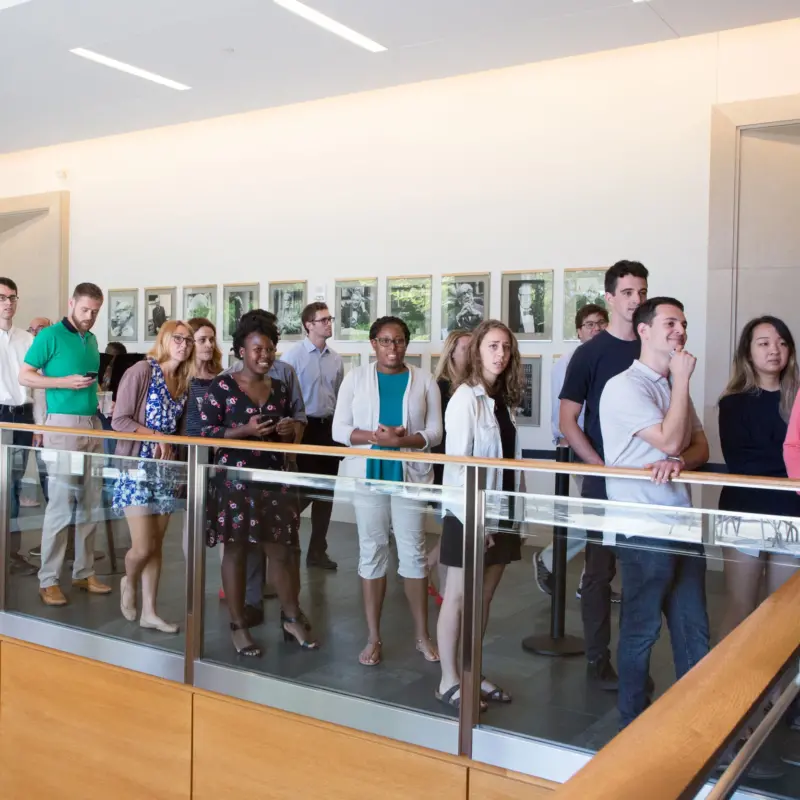
Over Winter Term, 2Ls and 3Ls have the option to take one of a variety of interesting classes such as Cyberlaw: Points of Control, taught by intellectual property whiz Jonathan Zittrain. I had the chance a few weeks ago to sit in on Professor Zittrain’s class for an afternoon of student discourse on the defense of Wikis and the blunders of sockpuppetry.
With course themes ranging from new modes of control over intellectual property to the expression of conflicting interests of commercial and individual internet broadcasters, Zittrain encourages his students to think critically about why IP law has developed the way it has, and how changes in technology have pushed the law to change.
The topic of the day I visited included an engaging and humorous discussion of a Wikipedia assignment requiring students to individually update any Wikipedia page. Then, groups of 5-6 students were asked to help resolve one of the many ongoing disputes on the site through Wikipedia’s semi-formal dispute resolution procedure. The mixed reactions to the group who chose the contentious subject of “waterboarding,” for instance, threw the world of Wikipedian editors into a dither as they scrambled to react to Zittrain’s innovative teaching methods that include requiring students to take risks and, as they did in the Wikipedia assignment, potentially step over the line of cyberlaw norms. Yet, as one message boarder quipped, “Wait… a group of Harvard Law students want to edit Wikipedia and this is a bad thing?”
The bold energy and expertise with which Zittrain approaches this course is palpable in the reaction of his students. “This class ties copyright, defamation, privacy, and other legal concepts to the real world in a way that no other class that I have experienced here does,” said 2L Arjun Mehra. “It also helps that [Zittrain], a co-founder of the Berkman Center, is on the cutting edge of this dynamic legal field.” Nika Engberg, also a 2L and a line editor for JOLT, agreed and said that she feels this course is great preparation for further IP class work. “For example, the issue of whether and how to grant IP rights to software developers comes up in both copyright and patent contexts (as well as trade secret contexts), and I believe that this class is giving me a stronger background in these kinds of issues.”
On the heels on my class visit, Admissions staffer Julia Foresman sat down with Elizabeth Stark, a recent graduate, Berkman Center fellow, and Cyberlaw teaching assistant to further discuss the course and new laws governing the Cyberlaw community.