A Wunderkind of Urban Development
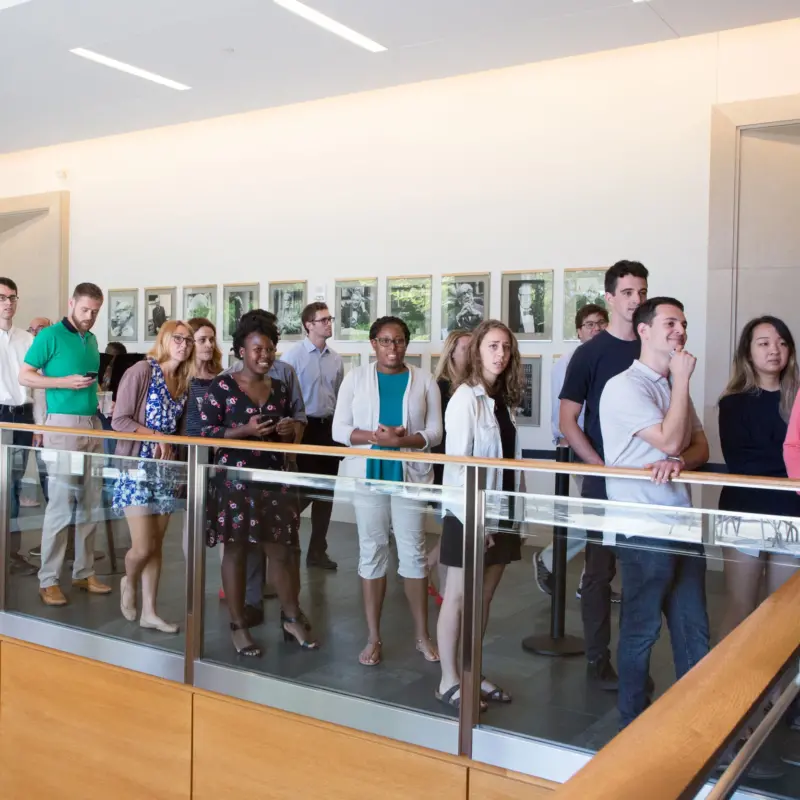
Interested in local government issues such as economic development, urban reform, and charter schools? Want to be inspired by someone who has been committed to public service since graduating from law school? Recently, the Harvard Real Estate Association (HREA) invited Stefan Pryor, Newark’s Deputy Mayor for Economic Development, to speak about obstacles facing struggling cities and current plans for reform under Mayor Cory Booker. He called on students interested in local government and city planning to join him in his quest to blow the embers on revitalization in Newark, New Jersey.
“This is an exceptional moment for urban life and urban centers in America,” said Pryor, “It’s been a long time since a president-elect has had such an elaborate set of proposals for urban revitalization.” Newark is taking advantage of this moment. As the second fastest growing city in the Northeast behind Boston, the city boasts a number of advantages not the least of which are its quick access to Manhattan and its claims to the largest seaport on eastern seaboard. The city is also a model for efforts to curb crime. “In 2008, Newark has seen a 40% drop in crime… this is the best in U.S.” Dozens of parks and other public spaces across the city are undergoing renovations with better lighting and landscaping. And the sense of safety among residents has begun to pave the way for further investment in commercial and residential space that Mayor Booker is overseeing.
But there are problems. With thousands of foreclosed properties, record high job losses, and frozen lines of credit to small business, Newark might not yet be worthy of Pryor’s rosy outlook. Yet the key to Newark’s silver lining seems to be its real estate potential. “Because Newark is so undervalued in region,” he said, “we think we will become a prime place for investment precisely because we are a lower cost environment in which to produce and lease office space and residential units.” Pryor later said that, over a 10-year period, Newark can save companies currently occupying office space in New York $40-70.
Yet given the current economy, one student asked, can builders get financing to make this stuff happen? Pryor is cautious but remains optimistic. “We brought in 25 banks to see what’s possible… we asked them, in effect, if we underwrite these deals, scrutinize them and establish a scorecard where we formally analyze which projects are most efficient with the least the public subsidy… would they form consortium of lenders? We got a very favorable response.”
When later asked how Newark plans to capitalize on its location without becoming a mere satellite for Manhattan, Pryor acknowledged the risk. “You want people to value their community which requires doing more than plopping buildings down… we need to revitalize streetscape, renovate parks, and the arts community has to be vibrant,” he said. We can capitalize on our assets, on our strategically important position on the eastern seaboard, our waterfront, our access to NYC and our community. I’m hoping we can recruit some of you to help us along the way.”