Kagan returns to HLS
One of the perks of being an HLS student is that key players in the law often stop by for a visit. Supreme Court Justices, law firm & business leaders, political candidates, and government leaders often come to the law school to give speeches, sit on panels, and guest lecture. Last Friday, Solicitor General Elena Kagan headlined a panel focused on the Solicitor General’s office. 1L Kostya Lantsman shared his recollections:
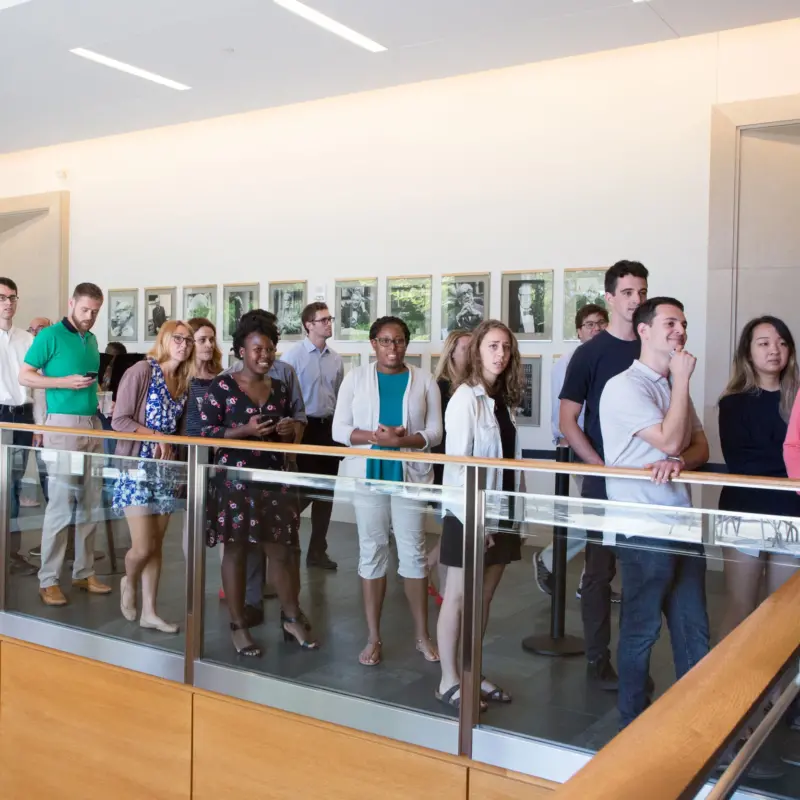
All day Friday, HLS was abuzz with anticipation of the return of former HLS Dean Elena Kagan, the first woman to serve as Solicitor-General. Kagan was appearing on a panel entitled “Views from Washington: Reflections from the Solicitor General’s Office” which was moderated by Dean Martha Minow and also included Professors John Manning and Charles Fried.
Professor Fried, a former SG under Reagan, opened the discussion by outlining the virtues of the SG’s Office. He cited the interpersonal support and lack of rivalries as a “model of what lawyers working together should be.” Professor Manning, who spent several years as a civil servant in the SG’s Office in the early ‘90s under Presidents Bush and Clinton then offered his own unique perspective. Drawing from his time as an Assistant to the SG he praised the “ethos of professionalism and neutrality that is unique” to the SG’s Office. General Kagan remarked on the “lack of partisanship and politicization” and praised the “professionalism and commitment” of the staff. She also provided some interesting detail regarding the make-up of the office (20 out of the 22 members are civil servants while only 2 are political appointments) and her day-to-day responsibilities (she has to personally approve every appeal the U.S. undertakes, which adds up to about 3-4 cases she has to review and approve or deny per day, the supervision of the 50-55 Supreme Court hearings per year in which the office is involved, and preparing as the SG to argue 6-7 cases/year in front of the Supreme Court.)
When the panel began the question and answer portion, the discussion quickly turned to the hot topic of the day: General Kagan’s first argument before the Supreme Court two days prior. General Kagan likened arguing in front of the nine justices to arguing in an HLS class with question after question coming from your professor, hypotheticals piling up on hypotheticals, but with nine professors rather than one – not a pleasant thought for a 1L. When asked about her statement to Justice Scalia that he was wrong, General Kagan said that she knew she could say that to Justice Scalia because “he likes a good battle” and “he gave me one.”
The panel also spoke about the role of the SG within the US government. Despite being appointed by the President and serving at his behest, the SG often defends other interests including that of Congress which crafted legislation being challenged or administrative agencies. Thus, the SG has a daily working relationship with the Attorney-General and rarely sees the President. In fact, Professor Fried remarked that President Reagan NEVER told him what to do while Fried was serving as SG. As a result, there is no clear client for an SG. The trick to the job, General Kagan told the crowd, is trying to figure out how to accommodate all those masters. In the end, despite being a part of the executive branch, the SG has a unique role defending acts of the legislature and serving as almost a “10th Justice,” a special officer of the Court and repeat player whose success depends on utmost honesty and the highest level of professional responsibility. As General Kagan concluded, the SG is a lawyer like any other, but unlike every other. The SG is “lawyer with a client and cases come across your desk and you have to defend it,” but the client is the US.
Editor’s Note: If you’re interested in learning more about HLS SG’s in history, check out this recent article from the HLS website: http://www.law.harvard.edu/news/spotlight/public-service/related/hls-solicitors-general.html
If you’d like to learn more about the inner workings of some top government law positions, many of which are now occupied by former HLS professors, check out this article from the HLS bulletin: http://www.law.harvard.edu/news/bulletin/2009/summer/feature_3.php