Event: Clinical Forum and Fair

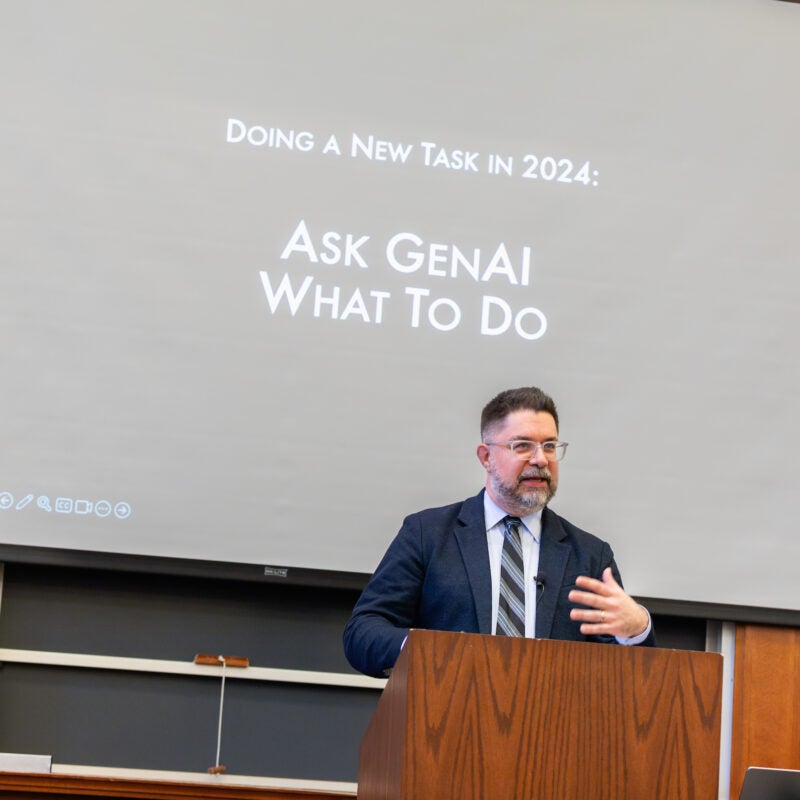
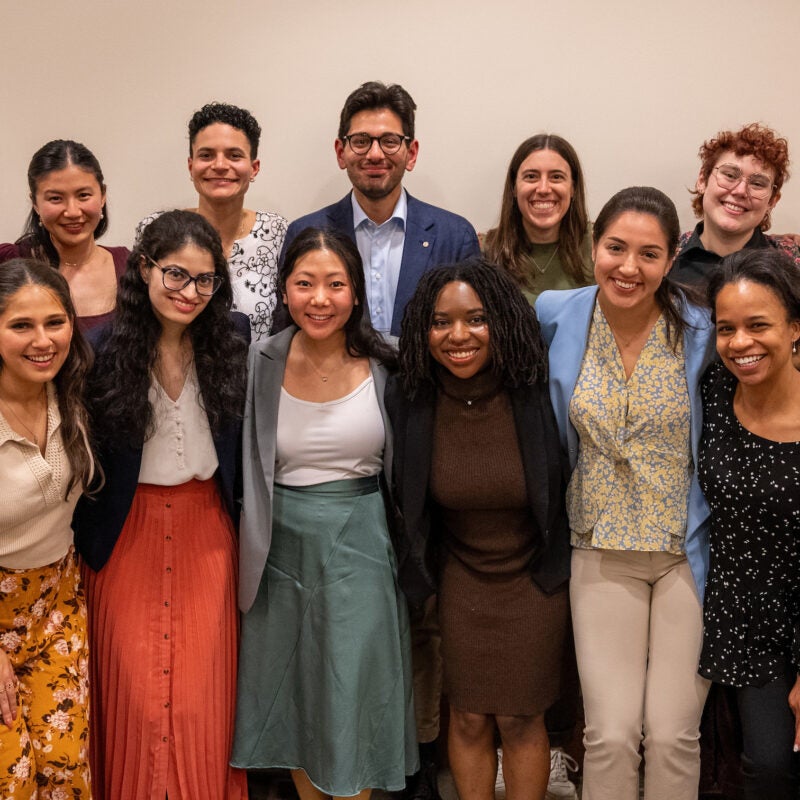
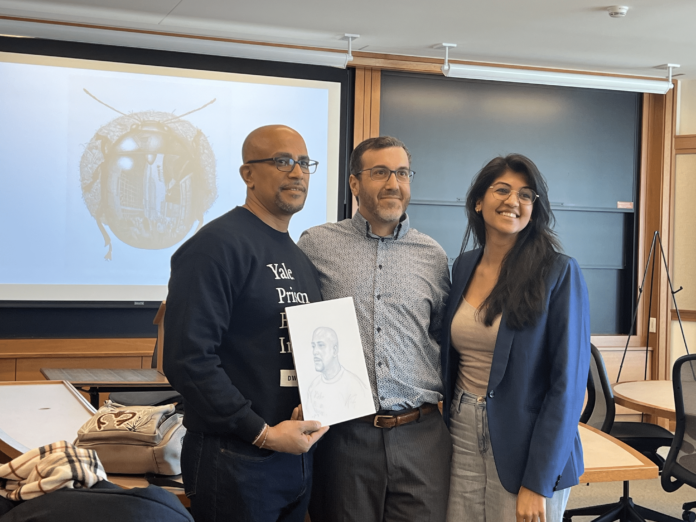
Meeting, greeting, and asking questions at last year's Clinical Forum and Fair

Clinical registration for next year is fast upon us. It’s hard to believe that spring break is just two and a half weeks away and that students will be making decisions about their classes for 2012-2013 in a little over a month.

In anticipation of clinical registration from March 28-April 2, the Office of Clinical and Pro Bono Programs is hosting two events that will help students figure out their options. We hope you’ll join us!

Clinical 101: Tips and tools for getting the most out of your clinical experience
Wed, Mar 28, 5:30-6pm
Location TBD

Attend this information session to gain insight into what a clinical experience can do for you, what a clinical commitment entails, how to enroll, and what questions to ask clinics during the Clinical Forum and Fair, which will start right after this session.

Clinical Forum and Fair
Wed, Mar 28, 6-8pm
Milstein East ABC, WCC

The Clinical Forum and Fair is the best way for students to learn about the variety of clinics offered at HLS before registering for clinics next year. Come prepared with questions, or just drop by and talk with clinical students, attorneys, and faculty about the work experience, projects and client work, time commitments, and learning opportunities unique to each clinic. This event is highly recommended for students thinking about participating in a clinic next year. Dinner and snacks will be served.

For the latest updates, please visit the HLS website.

Roundup: Clinical Programs

A few news items from the Harvard Law School clinical world…

A Harvard Legal Aid Bureau (HLAB) student is in the news for successfully arguing that a loan servicer made mistakes when it foreclosed on his client. Now, “The highest court in Massachusetts is poised to rule as soon as this month on a foreclosure case that could lead to a surge in claims from home owners seeking to overturn seizures.” (Bloomberg Businessweek)

Speaking of HLAB, take a tour of their offices. (The Record)

Two clients of Recording Artists Project, a student practice organization providing pro bono legal assistance on music business matters, contributed to Terri Lyne Carrington’s Grammy-winning album The Mosaic Project. (RAP blog)

This past January, three students from the Harvard Negotiation and Mediation Clinic traveled to Chile to investigate the Ministry of Justice’s neighborhood multi-door courthouse pilot program. (HLS website)

Clinical Events: Feb 20-24

As many of you know, there’s always an event (or two or three) to attend at HLS. A few clinical events are highlighted below but for a complete listing of HLS events, please visit the HLS calendar.

A Year after David Kato: The State of Ugandan Gay Rights Today
Tue, Feb 21, 12–1pm
WCC B015

HLS Advocates for Human Rights hosts a commemorative event in honor of the Ugandan gay rights activist David Kato, who was found murdered last January. Val Kalende, a fellow Ugandan and gay rights activist, and Mindy Roseman, Academic Director of the Human Rights Program, will will speak about Kato’s work and the current state of gay rights in Uganda today. From 1:30-2:30pm, Kalende will lead a discussion based on issues raised during the talk.

The Promises of Web-based Social Experiments
Tue, Feb 21, 12:30–1:45pm
Berkman Center for Internet & Society, 23 Everett St, 2nd Floor

The advent of the internet provides social scientists with a fantastic tool for conducting behavioral experiments online at a very large-scale and at an affordable cost. It is surprising, however, how little research has leveraged the affordances of the internet to set up such social experiments so far. In this talk, Jerome Hergueux will introduce the audience to one of the first online platforms specifically designed for conducting interactive social experiments over the internet to date.

Prosecuting the Recruitment of Child Soldiers as a War Crime before the International Criminal Court. A Critical Reading of the Lubanga Case
Thu, Feb 23, 12–1pm
WCC Suite 4133

As part of the Child Advocacy Program (CAP) Working Paper Lunch Series, visiting researcher and Fulbright grantee Mahyad Hassanzadeh-Tavakoli will discuss how the International Criminal Court’s Rome Statute – which stipulates that the recruitment and enlisting of children under the age of fifteen years into the national armed forces, or using them to participate actively in hostilities, is to be regarded as a war crime – has been handled by the Court in the Lubanga Case.

Reader Recommendation: Above the Law Post on Community Involvement

Thanks to the reader who shared this Above the Law post on the importance of getting involved with the community. It’s an interesting read for students thinking about the value (both business and personal) of pro bono work.

If you’ve read something you’d like to share with the HLS clinical community, please email clinical@law.harvard.edu.

Student Voices: From Farm to School in Mississippi

A patch of collard greens grows right on the side of the highway, illustrating that they can grow almost anywhere. Most of the greens served in Mississippi school meals are canned and from outside the state!

Today’s dispatch comes from Ona Balkus, a second-year joint degree student at Harvard Law School and Harvard School of Public Health. Ona spent her winter term working with the Mississippi Food Policy Council as part of the Harvard Food Law and Policy Clinic. She is also a member of the student practice organization the Mississippi Delta Project and is a student fellow for the Law and Social Change Program of Study. She will be participating in the Food Law and Policy Clinic again for the spring term.

It’s 5:30pm on a Friday and I’m sitting at a small dining room table with six eighth grade girls, a nun, and my friend whom I’m traveling with. The drive into the town where these girls have grown up and live was a bit of a shock, with mostly boarded up stores on the main street, stray dogs on the side of the road, and miles of corn and cotton fields around the small Delta town.

Around the table, we are engaged in serious conversation. “I only like string beans!” “The lunch lady spit in my potatoes today, I swear!” We’re talking about improving school foods, a topic that preoccupies our country and affects these girls every day. The girls like some vegetables, but love fried chicken and cupcakes, and are excited to start a community garden with Sister Kay (the nun who leads this mentorship group) next spring. After talking for an hour about food, cooking, and what they want to be when they grow up (doctors, lawyers, and a cosmetologist), we say our goodbyes and thank them for hosting us at their weekly meeting.

While my winter term assignment is focused on interviewing and learning from school food service staff, farmers, and other food advocates in Mississippi, meeting these girls is just as important for the success of this project. Through the Food Law and Policy Clinic and the Mississippi Delta Project, I’m working to help build a Farm to School movement in Mississippi.

Farm to School is any program where schools use locally grown produce in school meals. With over 40% of Mississippi’s children either overweight or obese, there is a high need for programs that promote healthy eating. Farm to School increases fruit and vegetable consumption as well as nutrition and health literacy among students. In addition and just as importantly, in a state ranked 50th for household income, Farm to School generates new revenue and jobs for small farmers in Mississippi.

One food service director I interview articulates a common theme: “We’ve gotten so far away from preparing fresh vegetables for school meals; everything is delivered already prepared. But I would definitely prefer to serve fresh fruits and vegetables.” While there is excitement about Farm to School, most school food service staff are overwhelmed by the logistics involved in finding farmers, writing contracts, preparing farm fresh foods, and other hurtles.

The Food Law and Policy Clinic and the Delta Project are working to address these hurdles in two distinct ways. First, student have developed legislative recommendations that formed the basis for two Farm to School bills that will be introduced in the Mississippi State Legislature this year. If enacted, these bills will show that the state is supportive and willing to invest in Farm to School programs in Mississippi. Second, this spring students are developing a step-by-step legal guide for school food service staff to start Farm to School programs in their communities.

As we continue our work in Mississippi, I will think about those girls often and how access to healthy foods and increased economic opportunities for their families and community could help them have a fair chance at reaching their full potential. Farm to School is a promising opportunity for Mississippians to invest in their communities, improve their health, and strengthen their relationships. It will be exciting to watch as Farm to School slowly but surely catches on in Mississippi.

Recent “Student Voices”
A Thursday at Pinal County Jail
Update from Florence…, Arizona
Dispatch from Tel Aviv

Many small vegetables farmers sell their crops out of roadside stands or the back of their trucks. Selling to a school would be a significant increase in revenue and provide a stable market, and thus enable them to scale up production.