Student Voices: Eating Well in the Mississippi Delta

Delta Fellow Nate Rosenberg and Rob Barnett (JD '14) tour Leann Hines's Levee Run Farm, which raises poultry in Greenwood, Mississippi

Today’s dispatch comes from Rob Barnett (JD ’14), who traveled to Mississippi during spring break as part of a pro bono trip organized by Harvard Law School. Rob is a member of Prison Legal Assistance Project (PLAP) a trained mediator with Harvard Mediation Program, and is interested in American Indian law

Over spring break, I was lucky to travel to the Mississippi Delta on a pro bono trip with eight other law students from Harvard and Ole Miss. As Kimberly’s post describes, we spent an unforgettable week researching property law, making friends, and immersing ourselves in the culture and climate of the Delta. We experienced a lot – everything from a one-man blues concert at Red’s to an all-day study session at Ole Miss Law School – and learned even more in the process. But one element of our trip really stood out: the food.

Of course, we consumed a ton of it. Starting with a visit to Gus’s World Famous Fried Chicken in downtown Memphis; continuing through visits to acclaimed Clarksdale restaurants like Abe’s (the best BBQ in all of Mississippi), Oxbow (a lunch spot that actually serves vegetarian options), and the Ground Zero Blues Club (where everything comes fried and with music); and finishing with elegant feasts at Snackbar in Oxford and Rendezvous in Memphis, we ate our way through the Delta… and washed it down with many glasses of Southern Pecan and sweet tea. It was a wonderful week of savory Southern cuisine.

Food is an amazing part of Delta culture. However, residents of the Delta don’t always have access to the kinds of fresh food we had at Mississippi’s best restaurants. Although the Delta has some of the country’s richest soil, the vast majority of it is used by to grow the big industrial crops – corn, cotton, and soy – much of which is exported outside the Delta. There are small growers throughout the Delta who are trying to grow local, sustainable, and healthy food, but these farmers often have trouble getting established in the face of confusing property issues and stiff competition from cheaper, less healthy alternatives.

Our work over spring break was designed to address these property issues. In order for small, local farms to be prosperous into the future, their owners should understand how estate plans, clear titles, and various easements can secure their land as farmland for generations to come. Our presentations to Delta farmers on our last day – and the accompanying legal manual we created – were designed with that goal in mind. We also made some policy suggestions for our partners (such as Delta Directions) who continue to work on these important issues in Mississippi.

We finally had to leave the Delta to return to Cambridge, and I know I can speak for my team in saying that we’ve all been craving some delicious Delta food ever since. (I, for one, am hoping to go back.) But in the meantime, it’s critical that the people who actually live in the Delta have access, every day, to the kind of local, sustainable food which we had during our week. I hope and believe that our work in the Delta over spring break will help them get there.

Recent Coverage of HLS Pro Bono Trips
Student Voices: Learning About Land Rights in Mississippi
Event: HLS Students Discuss Spring Break Trip to Alabama
Student Voices: Collaboration and Community in Alabama
Student Voices: Anti-Immigration Law in Alabama (Video)

Erin Schwartz (JD '14) examines vegetables grown in C.W. 'Doc' Davis's greenhouse

HLS group members enjoy a final Southern meal of ribs and sweet tea at Rendezvous in Memphis

Student Voices: Learning About Land Rights in Mississippi

Jamal Khan (HLS '13), Jack West (Ole Miss '13), and Rob Barnett (HLS '14) at the Mississippi River after a day of research

Today’s “Student Voices” post comes from Kimberly Newberry (JD ’14), who traveled to Mississippi during an HLS pro bono spring break trip. Kimberly is a member of PLAP and Harvard Defenders, and plans to go into capital appeals.

The Mississippi Delta is populated by more juke joints than Starbucks (and rightly so as the birthplace of the blues). Nightly strolls are accompanied by the faint strums of guitar in the distance and you can imagine how Robert Johnson allegedly sold his soul to the devil right in the middle of it all. The blues are part of a shared cultural identity among the Delta’s inhabitants, and there is still plenty of heartache to keep the musical tradition alive.

Six of us headed down from HLS to Clarksdale, Mississippi for spring break, where we were joined by Ole Miss students. We were surprised to find that a lot of the regional heartache stemmed from concepts we had covered in our 1L Property classes – easements, color of title, types of estates, and even adverse possession (when a person who is not the legal owner of land can become its owner after having occupied it for a specified period of time). The seemingly difficult task of adversely taking someone’s land is frequently accomplished in parts of Mississippi, and with serious impact on the lives of farmers. From disputes between siblings about what to do with inherited land to questions about how to preserve farmland well into the future, we saw our textbooks come to life.

We also learned about the challenges faced by small, family-owned farms. A few days into our trip, we met with Dustin and Ali, two young farmers whose business growth is constrained by regulations designed for industrial farms but that also apply to them. As a result of Dustin and Ali’s commitment to sustainable farming, they run their farm under different standards than those adhered to by commercial sellers and, as a consequence, cannot sell their goods to larger, more popular grocery stores. These mandatory standards are both prohibitively expensive and largely inapplicable to small-scale sustainable farming, to the detriment of the availability of locally and sustainably grown food. As Dustin put it, “We vote for our president once every four years, but we vote for what to put in our bodies three times a day. And what we vote for today will affect our children tomorrow.” Prior to running their own farm, Dustin and Ali interned at Polyface Farms, which is featured in Michael Pollen’s book The Omnivore’s Dilemma.

After seeing how the issues of inheritance, ownership, and land use impacted the lives of residents, we had the opportunity to conduct additional research and then present a tutorial to the farmers. When the workshop was over, the farmers compared notes and shared their experiences with each other. Much was left unanswered but we appreciated the opportunity to learn more about property rights in Mississippi, contribute our knowledge, make a few friends, and soak in the culture and music of the Delta.

Recent Coverage of HLS Pro Bono Trips
Event HLS Students Discuss Spring Break Trip to Alabama
Student Voices: Collaboration and Community in Alabama
Student Voices: Anti-Immigration Law in Alabama (Video)

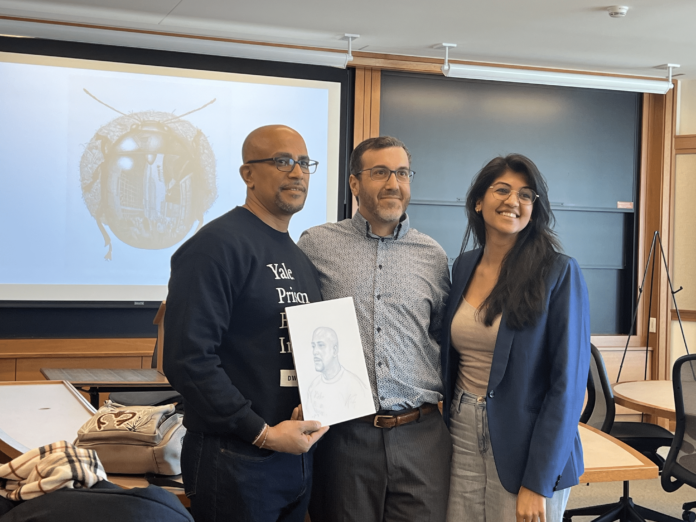
Julian Smoller (HLS '12) gives a presentation to Mississippi growers about conservation easements

HLS students collaborated with Ole Miss Law students to host a workshop for local farmers

Student Voices: From Farm to School in Mississippi

A patch of collard greens grows right on the side of the highway, illustrating that they can grow almost anywhere. Most of the greens served in Mississippi school meals are canned and from outside the state!

Today’s dispatch comes from Ona Balkus, a second-year joint degree student at Harvard Law School and Harvard School of Public Health. Ona spent her winter term working with the Mississippi Food Policy Council as part of the Harvard Food Law and Policy Clinic. She is also a member of the student practice organization the Mississippi Delta Project and is a student fellow for the Law and Social Change Program of Study. She will be participating in the Food Law and Policy Clinic again for the spring term.

It’s 5:30pm on a Friday and I’m sitting at a small dining room table with six eighth grade girls, a nun, and my friend whom I’m traveling with. The drive into the town where these girls have grown up and live was a bit of a shock, with mostly boarded up stores on the main street, stray dogs on the side of the road, and miles of corn and cotton fields around the small Delta town.

Around the table, we are engaged in serious conversation. “I only like string beans!” “The lunch lady spit in my potatoes today, I swear!” We’re talking about improving school foods, a topic that preoccupies our country and affects these girls every day. The girls like some vegetables, but love fried chicken and cupcakes, and are excited to start a community garden with Sister Kay (the nun who leads this mentorship group) next spring. After talking for an hour about food, cooking, and what they want to be when they grow up (doctors, lawyers, and a cosmetologist), we say our goodbyes and thank them for hosting us at their weekly meeting.

While my winter term assignment is focused on interviewing and learning from school food service staff, farmers, and other food advocates in Mississippi, meeting these girls is just as important for the success of this project. Through the Food Law and Policy Clinic and the Mississippi Delta Project, I’m working to help build a Farm to School movement in Mississippi.

Farm to School is any program where schools use locally grown produce in school meals. With over 40% of Mississippi’s children either overweight or obese, there is a high need for programs that promote healthy eating. Farm to School increases fruit and vegetable consumption as well as nutrition and health literacy among students. In addition and just as importantly, in a state ranked 50th for household income, Farm to School generates new revenue and jobs for small farmers in Mississippi.

One food service director I interview articulates a common theme: “We’ve gotten so far away from preparing fresh vegetables for school meals; everything is delivered already prepared. But I would definitely prefer to serve fresh fruits and vegetables.” While there is excitement about Farm to School, most school food service staff are overwhelmed by the logistics involved in finding farmers, writing contracts, preparing farm fresh foods, and other hurtles.

The Food Law and Policy Clinic and the Delta Project are working to address these hurdles in two distinct ways. First, student have developed legislative recommendations that formed the basis for two Farm to School bills that will be introduced in the Mississippi State Legislature this year. If enacted, these bills will show that the state is supportive and willing to invest in Farm to School programs in Mississippi. Second, this spring students are developing a step-by-step legal guide for school food service staff to start Farm to School programs in their communities.

As we continue our work in Mississippi, I will think about those girls often and how access to healthy foods and increased economic opportunities for their families and community could help them have a fair chance at reaching their full potential. Farm to School is a promising opportunity for Mississippians to invest in their communities, improve their health, and strengthen their relationships. It will be exciting to watch as Farm to School slowly but surely catches on in Mississippi.

Recent “Student Voices”
A Thursday at Pinal County Jail
Update from Florence…, Arizona
Dispatch from Tel Aviv

Many small vegetables farmers sell their crops out of roadside stands or the back of their trucks. Selling to a school would be a significant increase in revenue and provide a stable market, and thus enable them to scale up production.