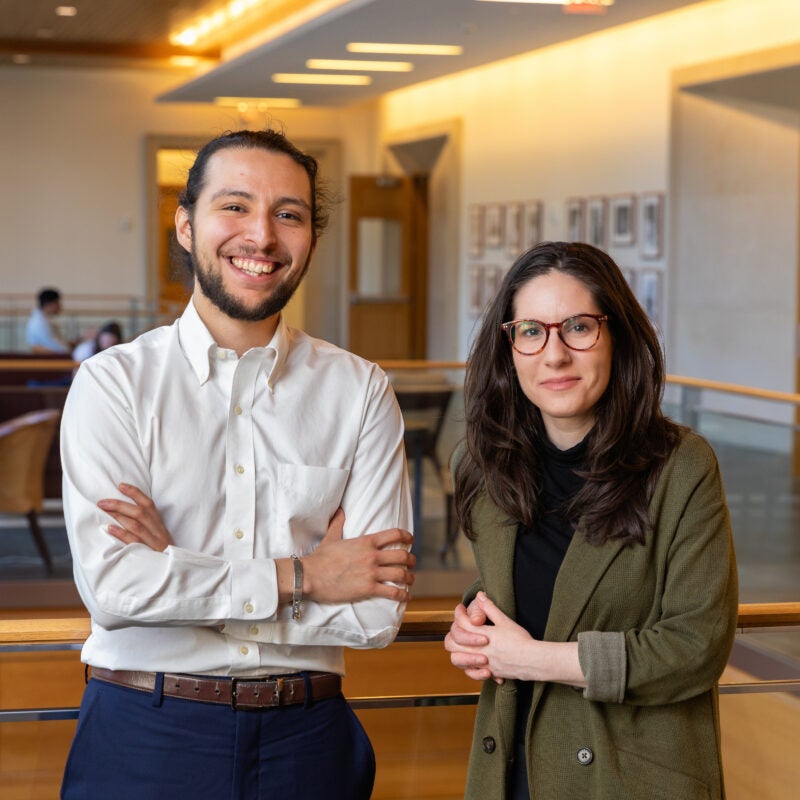
Harvard law students visit the Delta

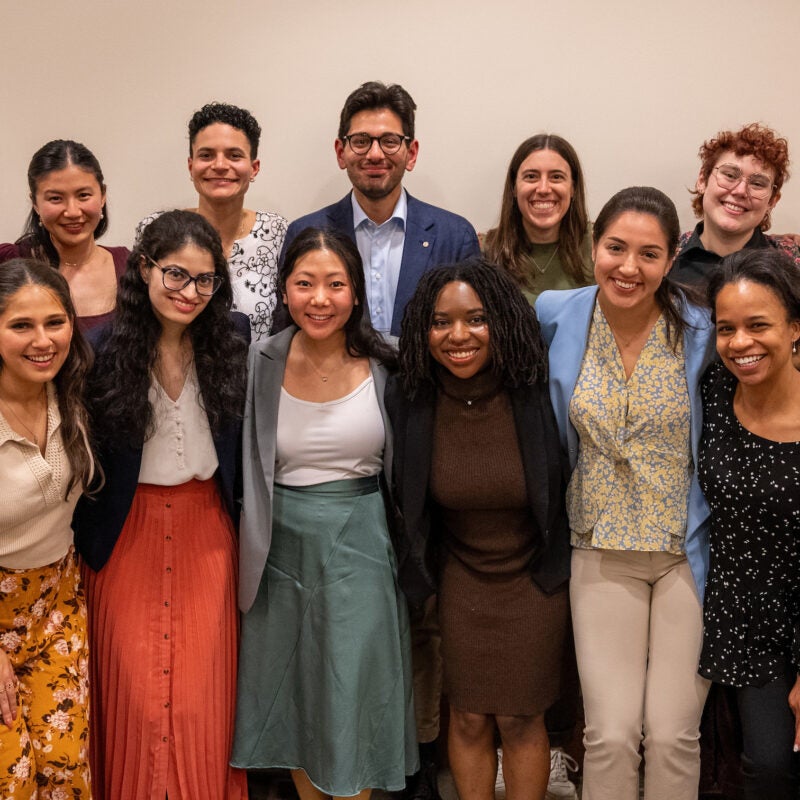
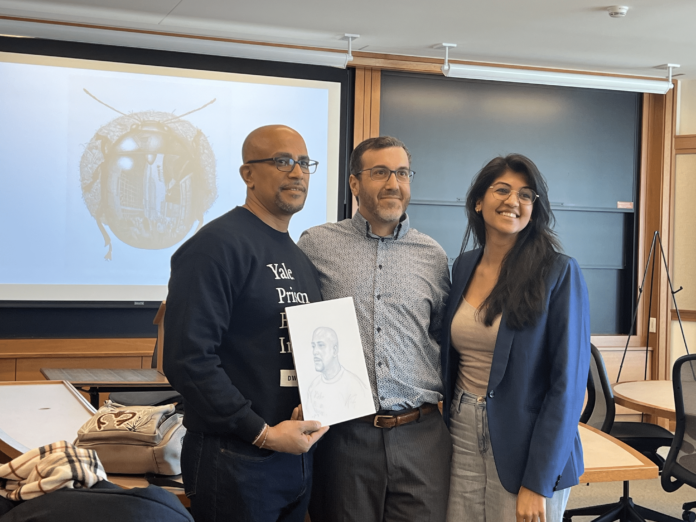
Pictured: Megan Woodford (JD’13), Jenny Gimian (JD’15), Nate Rosenberg (Delta Fellow), Emily Norman (JD’15), Hillary Harnett (JD’13), Tara Norris (JD’15), Chi Zou (JD’14)

Via Delta Business Journal:

The Delta Center for Culture and Learning at Delta State University introduced six Harvard law students and their supervisor, Nate Rosenberg, to the Delta’s cultural heritage. The students are based in Clarksdale, and all have an interest in the legal issues that govern food.

Lee Aylward, of the Delta Center, provided the heritage tour, following an introductory lecture by Dr. Luther Brown.

Events: Nov 9 through Nov 15

We hope you will join us for some or all of these events this weekend and next week:

What: Coordination of Sandy Efforts for Students
When: Fri, Nov 9, 12–1pm
Where: WCC Milstein East C
Details: HLS Events Calendar

What: Project No One Leaves: Community Responses to the Foreclosure Crisis Conference
When: Fri, Nov 9 – Sun, Nov 11
Where: Harvard Law School (various locations)
Details: Project No One Leaves website

What: Advocacy for Boston-Area Veterans: Unmet Needs and Pro Bono Opportunities
When: Mon, Nov 12, 12–1pm
Where: WCC Milstein West B
Details: HLS Events Calendar

What: Knowing Your Legal Rights: A Seminar for Military Veterans and Families
When: Wed, Nov 14, 5–7pm
Where: WCC 1010
Details: HLS Events Calendar

What: Negotiation in the News: Negotiating a Ceasefire in Syria
When: Thu, Nov 15, 12–1pm
Where: WCC 3012
Details: HLS Events Calendar

Resources: SPO Panel Handout

Learn more about opportunities to get involved with a wide range of student organizations and topic areas. To help you better navigate the maze of open houses, applications, training dates, and potential projects, we’ve created this handy chart.

We also encourage students to contact our office to discuss additional pro bono opportunities such as spring break trips, short-term pro bono work, and clinical placements.

Roundup: Clinical Programs in HLS News

HLS students traveled all over the world during spring break

HLS News presents a nice roundup of student travel over spring break, including mention of pro bono trips to New Orleans, the Mississippi Delta, and Alabama and International Human Rights Clinic trips to Brazil and the Thai/Burmese border. Check it out!

Snapshot: Admitted Students Weekend

Clinical students and instructors chat with newly admitted students during a panel on clinical opportunities at HLS

This past weekend, 190 admitted students visited Harvard Law School for a busy few days of touring the campus, meeting with professors and administrators, attending sample classes, learning about housing and financial aid, and getting to know one another.

During two panels, clinical students and instructors chatted about the wide-ranging clinical opportunities at HLS, which include 27 clinics, 10 student practice organization, and numerous pro bono opportunities. Here are a few fun stats:

  • 74% of student complete a clinical before graduation
  • HLS students completed 828 clinical placements in 2011-12
  • Students worked in 27 different clinics with 60 different supervising faculty and instructors in 17 different countries
  • The Class of 2011 averaged 628 hours of pro bono service
  • Since the Pro Bono requirement was instituted in 2002, students have completed over 1 million pro bono hours

If you have any questions about anything related to clinical opportunities or the pro bono requirement, please don’t hesitate to contact us!

Student Voices: Eating Well in the Mississippi Delta

Delta Fellow Nate Rosenberg and Rob Barnett (JD '14) tour Leann Hines's Levee Run Farm, which raises poultry in Greenwood, Mississippi

Today’s dispatch comes from Rob Barnett (JD ’14), who traveled to Mississippi during spring break as part of a pro bono trip organized by Harvard Law School. Rob is a member of Prison Legal Assistance Project (PLAP) a trained mediator with Harvard Mediation Program, and is interested in American Indian law

Over spring break, I was lucky to travel to the Mississippi Delta on a pro bono trip with eight other law students from Harvard and Ole Miss. As Kimberly’s post describes, we spent an unforgettable week researching property law, making friends, and immersing ourselves in the culture and climate of the Delta. We experienced a lot – everything from a one-man blues concert at Red’s to an all-day study session at Ole Miss Law School – and learned even more in the process. But one element of our trip really stood out: the food.

Of course, we consumed a ton of it. Starting with a visit to Gus’s World Famous Fried Chicken in downtown Memphis; continuing through visits to acclaimed Clarksdale restaurants like Abe’s (the best BBQ in all of Mississippi), Oxbow (a lunch spot that actually serves vegetarian options), and the Ground Zero Blues Club (where everything comes fried and with music); and finishing with elegant feasts at Snackbar in Oxford and Rendezvous in Memphis, we ate our way through the Delta… and washed it down with many glasses of Southern Pecan and sweet tea. It was a wonderful week of savory Southern cuisine.

Food is an amazing part of Delta culture. However, residents of the Delta don’t always have access to the kinds of fresh food we had at Mississippi’s best restaurants. Although the Delta has some of the country’s richest soil, the vast majority of it is used by to grow the big industrial crops – corn, cotton, and soy – much of which is exported outside the Delta. There are small growers throughout the Delta who are trying to grow local, sustainable, and healthy food, but these farmers often have trouble getting established in the face of confusing property issues and stiff competition from cheaper, less healthy alternatives.

Our work over spring break was designed to address these property issues. In order for small, local farms to be prosperous into the future, their owners should understand how estate plans, clear titles, and various easements can secure their land as farmland for generations to come. Our presentations to Delta farmers on our last day – and the accompanying legal manual we created – were designed with that goal in mind. We also made some policy suggestions for our partners (such as Delta Directions) who continue to work on these important issues in Mississippi.

We finally had to leave the Delta to return to Cambridge, and I know I can speak for my team in saying that we’ve all been craving some delicious Delta food ever since. (I, for one, am hoping to go back.) But in the meantime, it’s critical that the people who actually live in the Delta have access, every day, to the kind of local, sustainable food which we had during our week. I hope and believe that our work in the Delta over spring break will help them get there.

Recent Coverage of HLS Pro Bono Trips
Student Voices: Learning About Land Rights in Mississippi
Event: HLS Students Discuss Spring Break Trip to Alabama
Student Voices: Collaboration and Community in Alabama
Student Voices: Anti-Immigration Law in Alabama (Video)

Erin Schwartz (JD '14) examines vegetables grown in C.W. 'Doc' Davis's greenhouse

HLS group members enjoy a final Southern meal of ribs and sweet tea at Rendezvous in Memphis

Student Voices: Learning About Land Rights in Mississippi

Jamal Khan (HLS '13), Jack West (Ole Miss '13), and Rob Barnett (HLS '14) at the Mississippi River after a day of research

Today’s “Student Voices” post comes from Kimberly Newberry (JD ’14), who traveled to Mississippi during an HLS pro bono spring break trip. Kimberly is a member of PLAP and Harvard Defenders, and plans to go into capital appeals.

The Mississippi Delta is populated by more juke joints than Starbucks (and rightly so as the birthplace of the blues). Nightly strolls are accompanied by the faint strums of guitar in the distance and you can imagine how Robert Johnson allegedly sold his soul to the devil right in the middle of it all. The blues are part of a shared cultural identity among the Delta’s inhabitants, and there is still plenty of heartache to keep the musical tradition alive.

Six of us headed down from HLS to Clarksdale, Mississippi for spring break, where we were joined by Ole Miss students. We were surprised to find that a lot of the regional heartache stemmed from concepts we had covered in our 1L Property classes – easements, color of title, types of estates, and even adverse possession (when a person who is not the legal owner of land can become its owner after having occupied it for a specified period of time). The seemingly difficult task of adversely taking someone’s land is frequently accomplished in parts of Mississippi, and with serious impact on the lives of farmers. From disputes between siblings about what to do with inherited land to questions about how to preserve farmland well into the future, we saw our textbooks come to life.

We also learned about the challenges faced by small, family-owned farms. A few days into our trip, we met with Dustin and Ali, two young farmers whose business growth is constrained by regulations designed for industrial farms but that also apply to them. As a result of Dustin and Ali’s commitment to sustainable farming, they run their farm under different standards than those adhered to by commercial sellers and, as a consequence, cannot sell their goods to larger, more popular grocery stores. These mandatory standards are both prohibitively expensive and largely inapplicable to small-scale sustainable farming, to the detriment of the availability of locally and sustainably grown food. As Dustin put it, “We vote for our president once every four years, but we vote for what to put in our bodies three times a day. And what we vote for today will affect our children tomorrow.” Prior to running their own farm, Dustin and Ali interned at Polyface Farms, which is featured in Michael Pollen’s book The Omnivore’s Dilemma.

After seeing how the issues of inheritance, ownership, and land use impacted the lives of residents, we had the opportunity to conduct additional research and then present a tutorial to the farmers. When the workshop was over, the farmers compared notes and shared their experiences with each other. Much was left unanswered but we appreciated the opportunity to learn more about property rights in Mississippi, contribute our knowledge, make a few friends, and soak in the culture and music of the Delta.

Recent Coverage of HLS Pro Bono Trips
Event HLS Students Discuss Spring Break Trip to Alabama
Student Voices: Collaboration and Community in Alabama
Student Voices: Anti-Immigration Law in Alabama (Video)

Julian Smoller (HLS '12) gives a presentation to Mississippi growers about conservation easements

HLS students collaborated with Ole Miss Law students to host a workshop for local farmers

Event: HLS Students Discuss Spring Break Trip to Alabama

We hope you’ll join us on Tue, Apr 3 from 12-1pm in WCC 3012 for lunch with the HLS students who traveled to Alabama during spring break. (Read the blog post and watch the video to get an introduction to their work.) The students will discuss what they learned about the state’s new anti-immigration law HB 56, the impact of the law on Alabamans, and the growing movement in the state to seek repeal. Lunch provided.

HLS students studied Alabama's immigration law HB 56 over spring break (image courtesy of Paige Austin)

The Alabama River (image courtesy of David Baake)

Alabama Appleseed, one of the organizations that HLS students worked with on their trip (image courtesy of David Baake)

Know your rights materials from HICA!, another partner on the trip (image courtesy of David Baake)

HLS students met with Alabama State Senator Hank Sanders (image courtesy of David Baake)

The statehouse in Montgomery, Alabama (image courtesy of David Baake)

Student Voices: Collaboration and Community in Alabama

HLS students met with founders and members of Somos Tuskaloosa in Alabama (image courtesy of David Baake)

This dispatch comes from Carol Wang (JD ’13), co-director of Harvard Immigration Project‘s Bond Hearing Project:

This Spring Break, six Harvard Law students traveled to Alabama to study the state’s immigration law. (Watch the video from our trip here.) The Hammond-Beason Alabama Taxpayer and Citizen Protection Act, or HB 56 for short, makes it a felony for an undocumented immigrant to enter into a “business transaction” with a state or “political subdivision of a state”; invalidates all past, current, and future contracts with undocumented immigrants; authorizes police to stop, ticket, and arrest any person they “reasonably suspect” to be an undocumented immigrant; makes it a crime to “conceal, harbor, or shield” any undocumented immigrant; and creates a civil enforcement action by private citizens to report undocumented immigrants.

It was Friday, our fifth day in Alabama. It was a downcast day with the threat of rain and the weather mirrored my mood. Over the course of the previous four days, Jacqueline Pierluisi (JD ’12), David Baake (JD ’14), and I had met with a wide range of people with expertise in HB 56, including a judge, a district attorney, community organizers, lawyers, an Immigration and Customs Enforcement (ICE) official, and undocumented immigrants.

What we saw and heard was a side of America that was hostile and unfamiliar. Both undocumented and documented immigrants have been targeted by the law. Police officials stop, ticket, and detain drivers they “reasonably” suspect to be an undocumented immigrants, effectively conducting the same kind of racial profiling that is prohibited in other states.

In the weeks immediately following the passage of the act, many families were afraid to leave the house, even to go to the grocery store, because they had heard that purchasing basic food items were “business transactions” that were now crimes. One community organizer told us that 911 operators do not respond to telephone calls made in broken English, with an operator once explaining that HB 56 forbade them from providing emergency care for undocumented immigrants.

On that fifth day, we stepped into a small home in Tuscaloosa, expecting to hear similar stories. We were meeting with the founders and members of Somos Tuskaloosa, an organization formed in the aftermath of HB 56 to inform, mobilize, and serve undocumented immigrants. When we asked Somos Tuskaloosa about HB 56, at first they shared the same sentiment, the feeling of fear – fear of driving, fear they could be stopped at any time, fear of getting sick because not only would they lose their job but they would also be unable to receive medical care. These Tuscaloosa residents had extra reason to feel unsettled. A tornado last April had torn apart their city, and traces of the devastation were still evident almost a year later.

But when we asked them what they were doing about all of this, their voices were animated and their faces were bright. They told us about all the different people with whom they were working. In the tornado’s aftermath, some of them trained and served as part of the Community Emergency Response Team (CERT) to build shelters for all those Tuscaloosa citizens who had lost their homes. In HB 56′s wake, Somos Tuskaloosa’s founder Gwen Ferreti also described building relationships with “uncommon allies” such as police and law enforcement officials. Some officials had told them they would not enforce a law they found unjust.

Somos Tuskaloosa and Gwen’s words of collaboration and coordination reinforced what other community organizers had told us. HICA community organizer Victor Spinezzi told us that HB 56 galvanized previously disparate Hispanic interest groups to finally form the Alabama Coalition for Immigrant Justice (ACIJ). Alabama Appleseed attorney Zayne Smith told us how ACIJ was working with multiple audiences to accomplish a repeal of the law: creating a media “blitz” to educate the broader public, organizing faith-based events such as vigils for those directly hurt by the law, launching know-your-rights campaigns to educate and empower community members, as well as bringing a lawsuit challenging the law as unconstitutional in the courts. And we found another powerful example of collaboration in the previous weekend’s civil rights march in Montgomery, where African American groups, worker organizations, and Latino American coalitions all joined together to condemn HB 56 “for invoking inhumanity reminiscent of Jim Crow laws“.

That day in Tuscaloosa showed us that despite HB 56′s aim to divide the residents of Alabama, meaningful collaborations were taking root. These stories helped lift the week’s grey skies and stories, reminding us that even the worst situations can bring out our country’s best qualities – working together and helping our neighbors.

One Family One Alabama (image courtesy of David Baake)