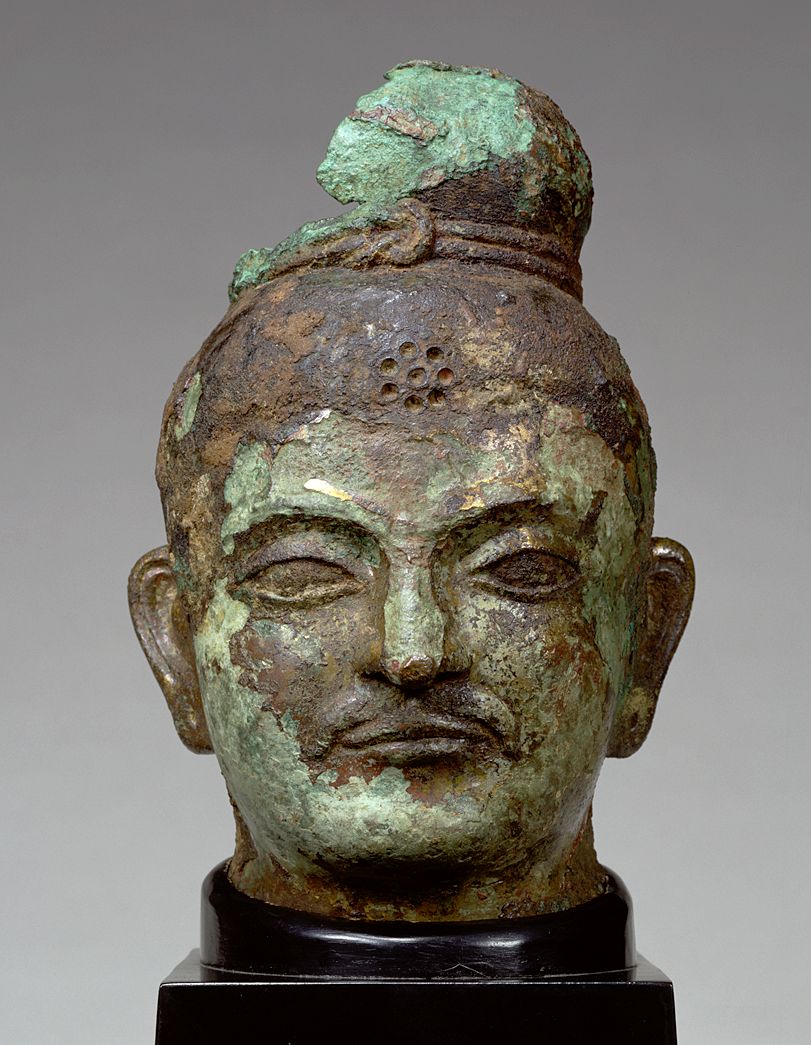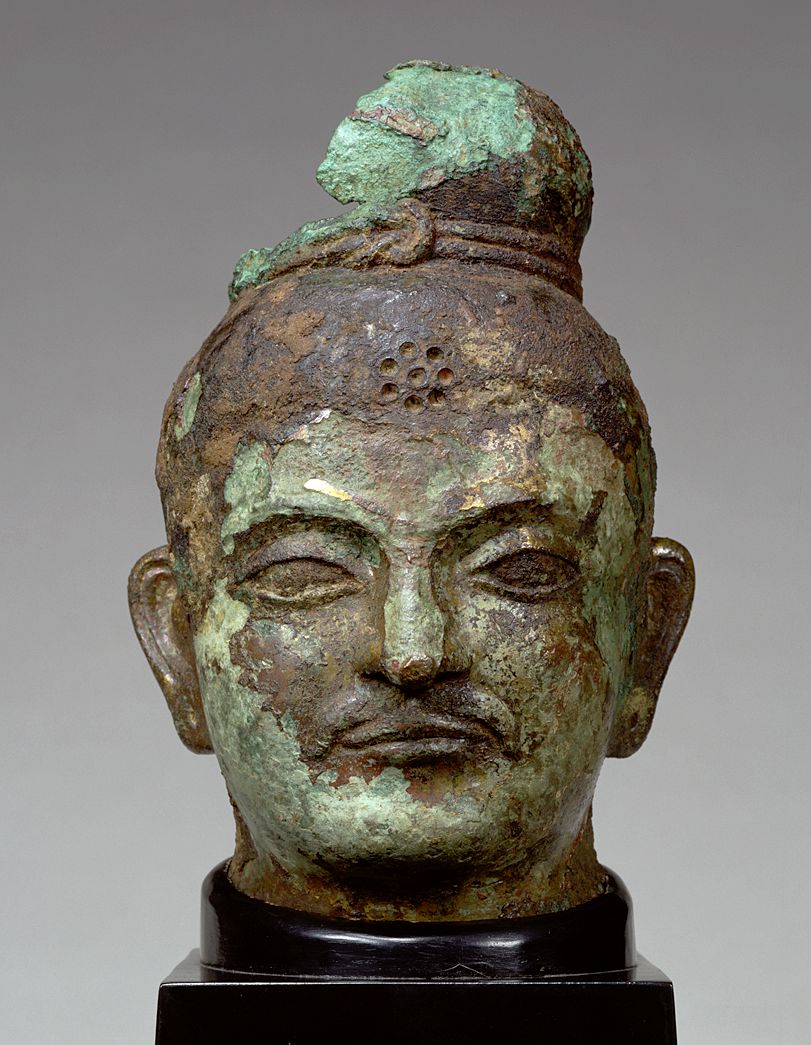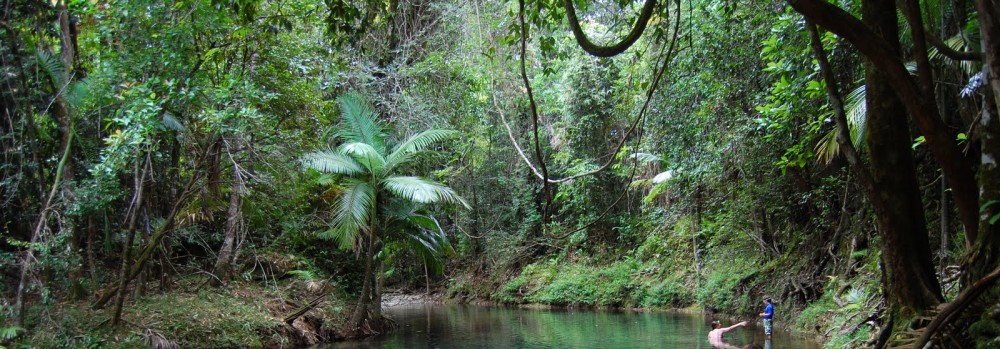
Probably the first book I ever read about Buddhism was Janwillem van de Wetering’s The Empty Mirror: Experiences in a Japanese Zen Monastery. It made a deep and lasting impression on me, although he later, characteristically, published a much more critical view on those same experiences in afterzen: Experiences of a Zen Student Out on His Ear. So I was saddened to read in the Times that he had died on 4 July.
It turns out — I didn’t know this — that he was also the author of a successful series of Dutch detective novels, based in part on his experiences as an Amsterdam cop. His literary agent reported that he lived in Surry, Maine (which is pretty much the best place to live, if you ask me) and used to sail up and down the Maine coast in an old lobster boat. He also wrote children’s books featuring a porcupine named Hugh Pine (possibly a play on Bill Porter?)
Besides his family, all that — the Zen monastery, the Amsterdam cop, the novels, the Maine lobsterboat — adds up to a rich, enviable life, one that will be hard to top next time.
Tags: random
Barry Ritholtz has a characteristically blunt assessment of the current financial crisis:
There is a choice to be made: Either we regulate the Banks, or leave it to the vagaries of the free markets to punish those who trade with, or place their assets in the wrong institutions. But for God’s sake, do not give us the worst of both worlds — do not allow banks the freedom to make horrific but preventable mistakes (i.e., only lending money to those who can pay it back), but then expect the taxpayers to foot the trillion dollar bill.
You can practically hear him pounding the table as he writes. He’s angry at Alan Greenspan for getting us into this mess, for politicians refusing to acknowledge reality, at regulators for failing in their obligations, and at much else besides.
Tags: politics · music
Joe Nocera had a scalding piece in the New York Times on Friday about the Google child care fiasco. (More coverage here and here and here.) Basically, the story goes, Google’s childcare benefit is being hijacked by nepotism without regard for cost or affordability, putting it outside of the reach of all but the wealthiest of Googlers.
This story ties in neatly to another Times article, Russell Shorto’s piece in the magazine section last week, on Europe’s birth rate crisis. He looks at the factors driving below-replacement-rate fertility in Europe and argues that there are several different currents at work; the Eastern European health collapse, the German happier-with-no-kid phenomenon, and statist policies across Europe encouraging reproduction. But these policies, he says, don’t exist in a vacuum; Italy, for example, where he centers his story, goes to absurd lengths to encourage women to have children, but they — unlike northern Europe, where there are elaborate childcare institutions — don’t provide the social infrastructure to support the families after they’ve given birth, like Google’s Kinderplex.
And then there’s the US, which is a special case, an industrialized country with no statist policies encouraging fertility yet with high birthrates, above replacement rate and thus, soon, with younger populations than even developing countries such as China. One explanation for the US anomaly could lie in our flexible job market, which allows women to enter and exit the workforce as required, a flexibility lacking elsewhere, notably in Europe. Shorto writes:
So there would seem to be two models for achieving higher fertility: the neosocialist Scandinavian system and the laissez-faire American one. Aassve put it to me this way: “You might say that in order to promote fertility, your society needs to be generous or flexible. The U.S. isn’t very generous, but it is flexible. Italy is not generous in terms of social services and it’s not flexible. There is also a social stigma in countries like Italy, where it is seen as less socially accepted for women with children to work. In the U.S., that is very accepted.”
By this logic, the worst sort of system is one that partly buys into the modern world — expanding educational and employment opportunities for women — but keeps its traditional mind-set. This would seem to define the demographic crisis that Italy, Spain and Greece find themselves in — and, perhaps, Japan, South Korea, Hong Kong, Taiwan and other parts of the world. Indeed, demographers have been surprised to find rapid fertility changes in the third world, as more and more women work and modern birth-control methods become standard options. “The earlier distinct fertility regimes, ‘developed’ and ‘developing,’ are increasingly disappearing in global comparisons of fertility levels,” according to Edward Jow-Ching Tu, a sociologist at the Hong Kong University of Science and Technology. According to the United Nations, the birthrate in 25 developing countries — including Cuba, Costa Rica, Iran, Sri Lanka and China — now stands at or below the replacement level. In some cases — notably China — the drop is explained by a concentrated effort at containing the population. In the rest, something else is happening. The lesson of southern Europe is perhaps operative: embrace the modern only partway and you put your society — women in particular — in a vise. Something has to give, and that turns out to be the future.
I’m not sure if this analysis is right, but it is insightful. I can say with certainty that the “US model” creates enormous strain on working families, especially ones — like ours — that either choose or need to maintain two careers. There is simply no good answer in the US for this issue; Google, at least, offers childcare, even if it is prohibitively expensive. By contrast, for example, Harvard, at least when we needed it, didn’t even do that much. Most employers don’t, and the US federal government certainly doesn’t help. So working families, even extraordinarily privileged ones, are forced to juggle and improvise. I wonder the kind of advice that my wife and I will give to our children, especially our daughter, about the wisdom of pursuing a career and a family at the same time.
My wife has been working, on the side, to create an infant child care center at her employer, the University of Redlands; not out of self-interest — our baby days are over — but in the interest of the common good. And it’s been an uphill struggle; infant childcare is expensive no matter how you do it and even so progressive an employer as a university doesn’t necessarily see their role as a provider of child care. Even Google, the product of those two Montessori kids, doesn’t seem to think that childcare is a core issue for their employees.
I can’t wait until Sergey and Larry have children of their own.
PS: Highly recommended: Shorto’s The Island at the Center of the World, The Epic Story of Dutch Manhattan and the Forgotten Colony that Shaped America ISBN 0-385-50349-0 (New York, Doubleday, 2004).
Tags: 92373

Via Valleywag, news that IBM has opened up their corporate whitepages to the Internets, a huge step. Valleywag’s telling headline: “IBM employee directory mocks your company’s lameness.” But, perhaps, like IBM’s other progressive HR policies, this one will point the way for others.
Tags: identity
So I have a theory, “the standard history” theory, which is that everything was invented, more or less, between 1880 and 1910. By ‘everything’ I mean Italy, college fraternities, marriage ceremonies, dog breeds, sports, the city of Redlands, and so on. Everything. I’m serious. More specifically, the usual way that we talk about the history of these things follows a standard pattern:
- Pre-history; fuzzy antiquity, including Egyptians, Native Americans, Picts, that sort of thing, in vague generalities.
- Invention: coming into focus for the first time between 1880 and 1910.
- All the rest: the familiar, reassuringly detailed, story from invention to the present.
This is not to say that there weren’t, for instance, dogs before 1880. But the idea of dog breeds, in our sense of pure blood lines and AKC registration, dates from this period, so that the story of the cocker spaniel or the golden retriever follows my standard history pretty closely — and I chose those examples before checking to see if they fit the theory. But if you still don’t believe me, go look at the AKC list of breeds and test it against some other examples. The history of most breeds only comes into focus between 1880 and 1910; before then, they were just dogs, chasing rabbits or whatever.
Sports, too, follow this pattern, precisely. For example, soccer, rugby, American football and others (Australian rules football, Gaelic football) are all modern variations of games which were played since time immemorial at English high schools (”public schools.”) These local English games collectively are pre-history; the modern sports that we watch and play today all came about between 1880 and 1910. After their invention, they follow the familiar story (Knute Rockne, AFL/NFL, Roger Staubach…)
You wouldn’t think, at first glance, that soccer and (American) football have much in common, but their differences are really only a century or so old. The similarities are much clearer when you put them on a continuum with their relatives, from least to most violent:
- soccer (association football)
- Gaelic football
- Australian rules football
- rugby (union and league)
- American football
Gaelic football, at least to the naive viewer, looks like nothing so much as a bunch of soccer goalies running around. The ball is the same, there’s very little contact, the goals are similar, and so forth. Gaelic football was codified by Michael Cusack and others in 1884 while the modern game of soccer is only a few years older (1848 - 1863, thus predating the standard history by a bit; pray forgive me dear reader.)
Australian rules football is similar enough to Gaelic football that the two national associations held interleague tournaments for many years. The Irish are still angry about the 2006 “international rules” Gaelic/Australian rules match at Croke Park in Dublin and it doesn’t look like the series will continue, although top Irish players (the Irish GAA is all-amateur) are being poached by the Aussies.
The Australian game is much more physical and looks — to me, at least — more like rugby without the scrums; the ball is a rugby ball, not a soccer ball. Rugby itself, named after an English high school, is then transitive between the Australian game and the American game, which has seen probably the most innovation over time, including the forward pass and the reshaped ball to aid passing, the idea of downs and yardage, and the subsequently required body armor. (Interestingly, there was a hybrid Australian-American game that developed during WWII but it never took off.)
You can see remnants in the rules and quirks of each game; American football came to emphasize touchdowns at the expense of the kicking game, which is now vestigal; punters today are wretched specialists, not heroes of the game. But it used to be that you scored a touchdown in order to get a chance at a kick to score a point; the touchdown itself, like a mark in Australian rules, didn’t itself count for anything. Over time, the balance shifted away from the kicked score to the touchdown, but we still have the odd ‘extra point’ in American football. When I played soccer as a kid, I remember a rule, which I don’t think is enforced any more, that the goalie could only take four steps with the ball in his hands before having to bounce it, a rule that is central to Gaelic football.
Other sports besides the ‘football complex’ follow the standard history as well; tennis (handball/squash/real tennis/etc.) and baseball, for example. Baseball has a much-discussed pre-history, including rounders and other games, a famous invented history (the myth of Abner Doubleday), and the subsequent modern history. Undoubtedly, other sports, and much else besides, follows the same story, the standard history.
Tags: 92373 · words

We just got back from a gloriously off-the-network vacation in West Cork, Ireland. We rented a house with friends and generally stayed off the beaten path. Which was great and everything, except that even the beaten path in Ireland is still a pretty narrow road according to my tastes; I think that the street in front of my house in California would qualify as pretty much the widest road we saw in Ireland.

So staying off the beaten path meant that the ‘roads’ we drove along were more like narrow driveways, optimistically two lanes. Which, again, is fine, except that Hertz, out of gratitude for my loyal patronage, upgraded me from the cheapskate sedan I rented to an absolutely gorgeous — and completely impractical — Alfa Romeo 159. After getting over the normal adjustment to driving on the other side of the road and remembering how to drive a stick, I was still left with a terrifyingly large shiny Italian car that I had to squeeze down the rural roads of West Cork. I have never in my life been so glad to return a car as I was with this one, and I’m happy to report that it was mostly undamaged, except for some crayon stains in the back.
But there were many compensations: I think it was the best car I have ever driven. The engine was powerful and responsive, the steering — balanced and sensitive — was a revelation, and the seating position and dials were just perfect. I have never felt so connected to a car, so completely in tune with it. I sort of suspect that the intensity of the driving experience (raining, no visibility, one tiny lane, left-hand driving, twisting and winding road, howling three year in back, etc.) only added to that feeling, since I was required to be attentive in a way that driving down the interstate in a Ford Taurus does not demand. My current rental, an otherwise serviceable Subaru Outback, pales considerably in comparison to the Alfa.

It wasn’t a perfect car; unlike Jeremy Clarkson I thought that the triple headlights were bizarre-looking and it felt heavy in a way that I didn’t expect from an Alfa Romeo. Plus, the rear visibility wasn’t great and the stereo was crummy. There were times, though, that the car just sang; I remember one rainy early morning drive into town once I had the road figured out and it really felt like the car was responding to me. Or the time when we finally got onto a divided highway and I dropped the hammer; I could just imagine the car saying, palms up: “finally!”
Tags: travel

Yahoo is testing a new locative service, “Fire Eagle.” Yahoo describes it as a ‘location data broker,’ which is useful enough. Navizon, for example, is a service that uses wifi and cell phone tower locations to triangulate your location; I’m trying it out right now and it found me, on my laptop without GPS, down to the street block level. If I wanted to, I could link up Navizon to Fire Eagle and make my exact location available. This will be even more useful when there’s a Navizon client for my now-outdated first generation iPhone without GPS. Navizon, or the native GPS functionality of the next generation iPhone, can automatically and continuously update Fire Eagle with my location.
But why would I want it to?
It might be useful have my general location available, for example published here on this blog, so that my friends and family could look and see where I am, but I don’t want the world to know that I’m on Old Country Road in Westbury, NY. Instead, something like “Long Island, USA” would be adequate. And that’s what Dopplr does; it takes location information from Fire Eagle and applies a set of filters to it and then makes the filtered information available. (Dopplr supposedly also identifies friends travelling to the same city as me, a problem I don’t need solved. Who needs that problem solved?) I use Dopplr now, published via RSS on the righthand side of this blog, to update my location via Tripit, yet another service that consumes and standardizes travel itineraries. I adore Tripit.
Fire Eagle’s position as a broker is smart, I think; there are all kinds of location-information providers (Navizon, car GPS systems) and lots of services that can consume that information (mapping services, geo-tagged photos), but too often there’s no way to go from one to the other. Plus, crucially, there is a tremendous privacy component to location; I like having the insulation of a broker like Fire Eagle between the raw data of place and that which is publicly available.
For me, as an end user, the developer release of Fire Eagle is still of limited value. I see where it’s going and how I could use it but the range of supported applications (Dopplr and Moveable Type but not Tripit or Wordpress, and certainly not my camera or my car or my kid’s embedded beacon. I joke.)
All of these bits, of course, are just small specific pieces of functionality; the beauty lies in the elegant composition of them, a process that is only just beginning. A more fundamental question might be the business model for this brokerage service and, given Yahoo’s recent travails, the viability of the company itself.
Tags: travel
We’re going on vacation next week to West Cork, in southwesternmost Ireland. I worked at a marine biological lab, Sherkin Island Marine Station, the summers after my junior and senior years in college and I spent a lot of time hitchhiking and walking around West Cork, but I haven’t been back since. Going through old journals — including some painstakingly hand-drawn maps — I found a description of a ’solstice stone’ that I found in Slievemore, a remote part of Sherkin:
From Abbey Strand, where the boat docks, walk a mile to the crossroads. You will pass the store/post office on your left, Kinish Harbor on your right, and the Island House (on your right). At the crossroads, bear left up a small hill, with the church on your right.
After 3/4 of a mile you will be opposite Trabawn, a sandy beach. Slievemore is ahead on your left. Leave the road at a gate, where a rough track passes between two houses. This track disappears into a pasture — continue straight and up through bracken. Stay close to the stone wall (on your right) running straight up the hill. You should be going up the righthand side of a saddle. At the top, pause in a small clearing. Set in line with the stone wall is a Bronze Age solstice stone, a large flat rock with a round hole bored in it. It is exactly aligned N-S, so the hole catches sunrise on the longest day of the year.
The view here is excellent. The pond below, Lough Ordree, is used by gulls to preen their feathers. The Baltimore Beacon is also visible. On the ridge, the wind picks up considerably. The cove below is called Fourdree.
Maybe someone else pointed it out to me, or maybe I found it based on some written reference; I don’t now remember. They’re fairly common in that part of the world. Unfortunately, there wasn’t a map for this entry, but I’m hoping I can find it again, especially since we’re going to be there around the summer solstice.
Tags: travel
The box arrived this weekend. Setup was trivially easy; it found our wireless network and we were watching movies within ten minutes. Quality is fine, as far as I can tell, with the included RCA cables. I have an HDMI cable on order from Monoprice which I guess will make it better. No skipping or delays in playback. The fast-forward and reverse is a little funky but usable. The value is outstanding, I think; really outsized value. I watched Blade Runner and Herzog’s My Best Fiend on Saturday night, movies I wouldn’t have watched (again) if not for the little box.
I wasn’t expecting to have to manage my queue from my computer; I can’t add movies from my couch. But it’s an acceptable design tradeoff to me. At the moment there are ‘only’ 10,000 movies available and nothing recent. But the catalog is only going to improve; after all, they didn’t name it “DVD-flix,” right?
Tags: hardware
There’s a common misperception that Greek settlement in Afghanistan was simply the remnants of Alexander’s garrisons in the east. For example, writing in a recent New York Review of Books, the estimable William Dalrymple says, “After [Alexander] died, the Greek garrisons he had established in what is present-day Pakistan and Afghanistan found themselves cut off from their Mediterranean homeland and had no choice but to stay on, intermingling with the local peoples, and leavening Sanskrit learning with classical Greek philosophy.”
If this were true, it would have to be a pretty impressive garrison of troops to have such an impact. But the reality is that there was an active program of settlement even in the easternmost satrapies, with Greek colonists moving to Bactria, and other regions, over the course of many — hundreds? — years. At least at first these were not isolated communities, and they were designed to anchor the successor kingdoms. John Grainger writes in his Alexander the Great Failure:
[Alexander’s successor] Seleukos found groups of Greeks and Macedonians scattered throughout his lands, usually former soldiers settled in old Persian centers or new Macedonian garrisons. He organized several of these places as new cities, each with a defined territory, a set of public buildings, including city walls. Each city also had a garrison established in an adjoining citadel; he established cities, but also ensured that he retained control. Some of these places were organized while he was in the east campaigning in Baktria and India, and he inherited Alexander’s foundations as well: at Alexandria at Kandahar, Alexandria-Eschate and Merv, in Margiane.
And their impact was huge; in art (veristic portraiture, for one arrived in South Asia with the Greeks), medicine, language and scripts, warfare, governance, and philosophy. But despite this acknowledged influence, until fairly recently, there was a paradox about the Greeks in Afghanistan: there was the textual record and the evidence of their impact — Buddha statues in togas, lots of numismatic evidence, the edicts of Asoka in Bactrian written in Greek letters, and so on — but we didn’t know where their fabled cities were. Balkh today, outside of Mazar-e-Sharif, Ali’s tomb, in northern Afghanistan, is a dusty little village: Colin Thubrow reports in Shadow of the Silk Road that “almost nothing in Balkh remained.” This paradox — lots of evidence, no cities — was often referred to as ‘the Bactrian mirage,’ and it was resolved only with the modern discovery, by French archeologists before the Soviet invasion, of the classical Greek city of Ai Khanoum in northern Afghanistan.
Tags: Central Asia