Over the past few days, I’ve been thinking about the remarkable change
in the role of women in the realm of diplomacy and international relations,
since I entered college in 1967, at Georgetown University’s Edmund A.
Walsh School of Foreign Service.
My musing was touched off by Madeleine Albright’s appearance on the
Charlie Rose Show on May 3, 2006 (guest host Andrea Mitchell; $.99
video download from Google.com). Albright was touting her just-released
Affairs. More musing was sparked yesterday, when I heard that British P.M.
Albright, the first female U.S. Secretary of State, mentioned that gender did not
seem at all relevant when Condoleeza Rice was named as President Bush’s top
security advisor, nor when she was elevated to Secretary of State in 2005. She
then noted that the State Department now had so many women in important staff
and policy positions, who have been educated at Georgetown, that they are called
the “Georgetown Mafia” within the Department. [Albright used the phrase to close
a commencement speech at Georgetown in 1999: “the best of luck and come to
the Foreign Service and join the Georgetown Mafia.”]
Read on for the tale of how a Georgetown Mafia came about. Let’s look at
Albright’s path and my own:
In 1963, Madeleine Albright gave birth to twins girls (Anne and Alice) and, in 1967,
her third daughter (Katharine) was born. For the next eight years, she was very
busy working on a doctorate from Columbia University (awarded in 1976), while
raising her children, serving on the board (and then as the first woman Chairman)
of the Beauvior School and working on the Muskie and Mondale presidential cam-
paigns. From 1976 to 1978, she served as Chief Legislative Assistant to Senator
Edmund S. Muskie, and then left to take a staff position at the National Security
Council.
In 1982, Albright came to Georgetown to teach. In Madam Secretary : A Memoir
(2003), she explains [at 99 – 100]:
“My charge at Georgetown was threefold: teach, create the Donnerwomen’s program [established “to encourage women to enter interna-tional relations”], and serve as a role model for the young women there.I believed that if women were to compete with men in the internationalarena, they needed to receive an education that prepared them for everychallenge, including those no woman had faced before.”
In contrast, here’s my tale for the same time period:
1963 – 1967 newspaper carrier, high school student1967 to 1971 student at GU School of Foreign Service1973 – 1976 law studentthereafter — practiced law for 20 years, with no internationalrelations subject matter;currently — occasionally offer amateur punditry on internationalaffairs issues; still wish there were more women around
Back to the issue of gender and international affairs: When I headed off to
Washington, D.C., in early September, 1967, I had all the usual hopes and
worries of a college freshman. One thing seemed strange about the SFS:
only 20 of the 220 freshman were female. For a guy who was shy in the
dating depatment that was not a good sign.
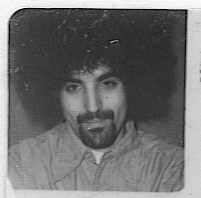
dagosan 1971
Things moved rapidly at that time. With the Vietnam War becoming a very
hotly disputed issue, many classmates found ourselves disillusioned with the
whole notion of — in the words of the SFS catalogue — “promoting and protecting
the nation’s international interests” through foreign service. (see Washington Post,
“GU Foreign Service School Seeks Identity,” March 24, 1970, which noted a 21
percent drop in applications to SFS in the past year, and quoted an idealist 21-year–
old chap named David Giacalone, who decried the School “making us agents of Amer-
ican foreign and economic policy” and hoped SFS graduates could go out into the
international realm as “world citizens.”)
Several agitators (on a rather conservative and apathetic campus) started to
seek more student input in course requirements and content. My own inter-
est in broadening the notion of “international service” led me to run for the very
first elected student seat on the SFS Executive Committee, which was the School’s
policy-making board. [The first student on the Committee had been appointed the
prior year.] It was 1970. When I won (and I truly can’t remember if any one else
even wanted the position), I found myself in the lofty company of all the department
heads, the Dean, and a few other venerable faculty members. It was a bit stressful,
Luckily, my academic reputation was excellent, and my demeanor respectful, and
there were some friendly faces on the Committee, including the Dean.
By that time, I had learned that the paucity of female SFS students was not due
to a lack of applicants, but was caused by a quota — only 10% of the student body
was allowed to be female. (This was before federal laws banned such gender dis-
crimination.) My first proposal to the Executive Committee, therefore, was that
acceptance to the School be gender-neutral. The reaction from the “conservative”
and “traditionalist” members of the Committee (even a woman or two) was strong
and emphatic:
“There are no jobs for women in the diplomatic field. (E.g.,Many countries would not accept women in American diplo-matic positions.) Therefore, it would be extremely unfair toyoung women to hold out the false hope of careers in inter-national relations by accepting them in large numbers tothe School of Foreign Service.”
I literally cannot remember how the voting broke down (I never kept a diary and
there were no personal computers, much less weblogs). Nor can I say what argu-
ments saved the day — although I’m betting the sharp dropoff in applications had
swayed a few minds. Nonetheless, my proposal was eventually adopted. The
oldest and largest school of international relations in the nation would henceforth
have a gender-neutral admissions policy.
“malesym”
The change was not quick enough to help my social life. A decade later,
when Madeleine Albright came to the School of Foreign Service, and created
the Donner Foundation to encourage women to enter the field, there was a
student body at the SFS that had a significant female presence, and a sizeable
cadre of well-educated women were ready to enter into the foreign service, and to
take public, private, and nonprofit positions in the field of international relations.
Yes, the change in admissions policy and in gender equality at the State Depart-
were certainly inevitable. Nonetheless, I’m proud to have played a part in helping
to lay the foundation for the Georgetown Mafia.
If you educate them [and they take advantage of opportunities, work extremely hard, and
have mentors] they will thrive. An important notion for many aspects of
our often unjust and unfair world.
afterthought (10 AM): You’ll have to decide for yourselves whether the following
excerpts from Albright’s Madam Secretary : A Memoir [at 100 – 101] are — or should
be — analogously applicable to the legal profession in the 21st Century:
“I taught classes on international affairs to women and men, drawingon what I had learned in the Carter White House. . . . I had femalestudents play roles they wouldn’t have had at that time in governmentand had male students report to them. I invited women professionals todiscuss their varied and jagged career patterns to illustrate that the shor-test distance between two points might not be a straight line.” . . .“I discussed the difficult choices women face and implored my studentsnot to let others see the chips that might have settled on their shoulders —especially during job interviews. I spoke with passion about how womenmust make sure not to push the ladder of success away from the buildingafter they have climbed to the top but must help each other succeed.”[Ed. Note: Is Albright being too hard on herself when she adds:]“I was confident about the logic of all this, but my shift in marital status[with her divorce finalized] had in my own mind made me lose credibility.When my students asked how I had managed to be married and havechildren and work at the same time, I felt like a phony because I hadn’tsucceeded.”
p.s. If anyone reading this post has further details (or any corrections) on the topic
of SFS’s admission quotas or goals concerning women, please let me know.
fund drivethe ivy covered buildinghas a new namenew deanall blackboardsturn whitewindowless classroomthe blank looksame as last termaround and aroundlearning the namesof one way streetswinfow box —between flowering pansiesmy daughter’s face
May 6, 2006
Madeleine, the Georgetown Mafia, and Me


Comments Off on Madeleine, the Georgetown Mafia, and Me
No Comments
No comments yet.
RSS feed for comments on this post.
Sorry, the comment form is closed at this time.