Goodbye, cruel world!
July 23rd, 2012
Greetings! Due to some administrative quirks of this blog, we have started this newly renovated blog for your enjoyment.
Please update your RSS feeds and bookmarks, and check back often!
http://blogs.law.harvard.edu/hfacollections2/
more hand-colored lobby cards
May 1st, 2012

Geliebte Bestie (Arthur Maria Rabenalt, Austria, 1959) hand-colored lobby card from the Just Collection
These hand-colored lobby cards from the Lothar & Eva Just Collection make us want to find a print of the film.

Geliebte Bestie (Arthur Maria Rabenalt, Austria, 1959) hand-colored lobby card from the Just Collection
Director Arthur Maria Rabenalt was born in Austria in 1905. He made films under the Nazis, beginning in 1934, and continuted to work through the 1970s.
Geliebte Bestie (Arthur Maria Rabenalt, Austria, 1959) hand-colored lobby card from the Just Collection
Geliebte Bestie (Arthur Maria Rabenalt, Austria, 1959) hand-colored lobby card from the Just Collection
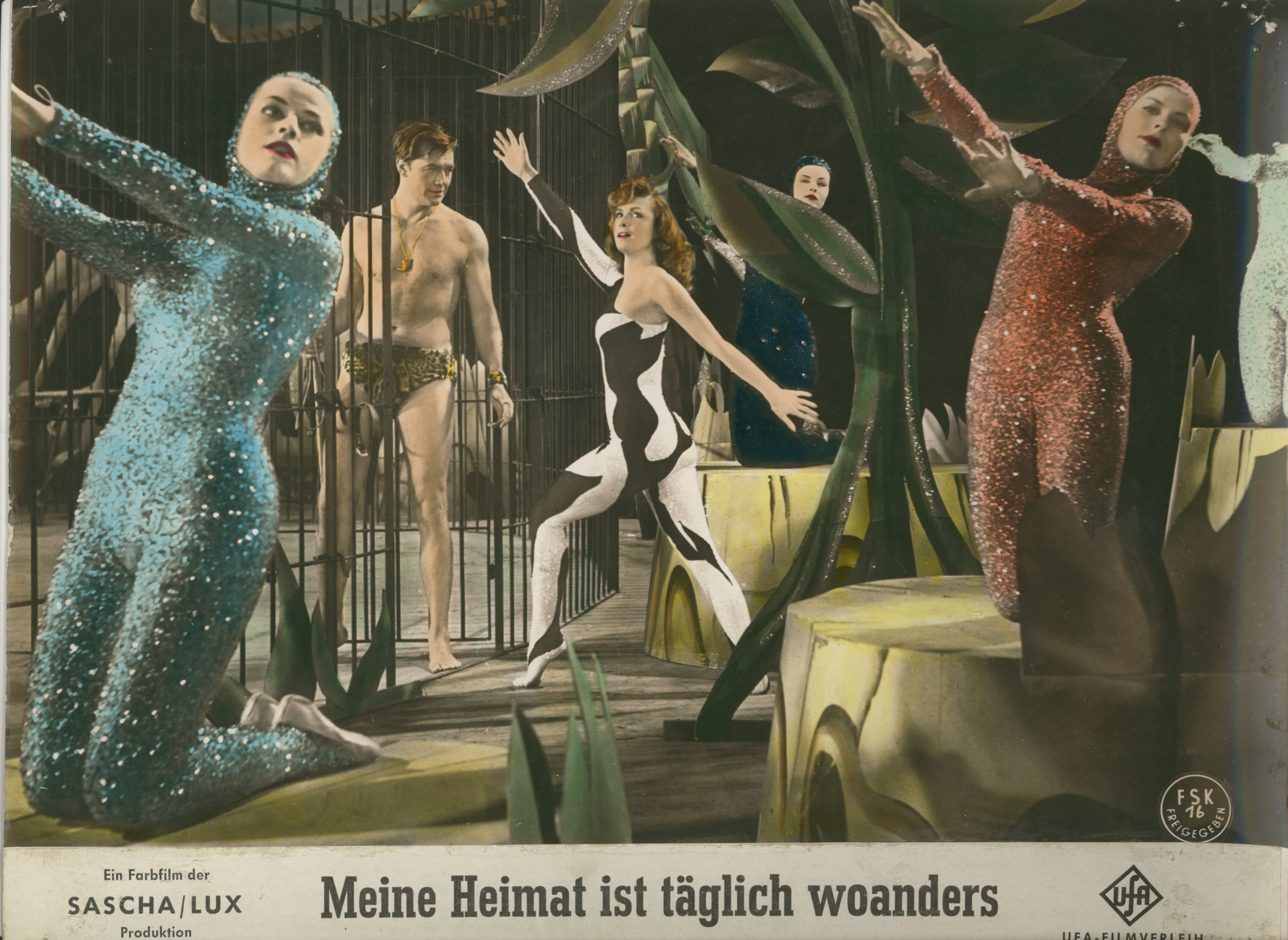
In the picutre above, the woman’s outfit has switched from red & white to black & white. One assumes her costume change was a whim of the colorist.

Frühling in Berlin (Rabenalt, West Germany, 1957) hand colored lobby card from the Lothar & Eva Just Collection
In the image above, the colorist has colored the woman’s shoe the same color as her leg, making it appear that she is only wearing one shoe!
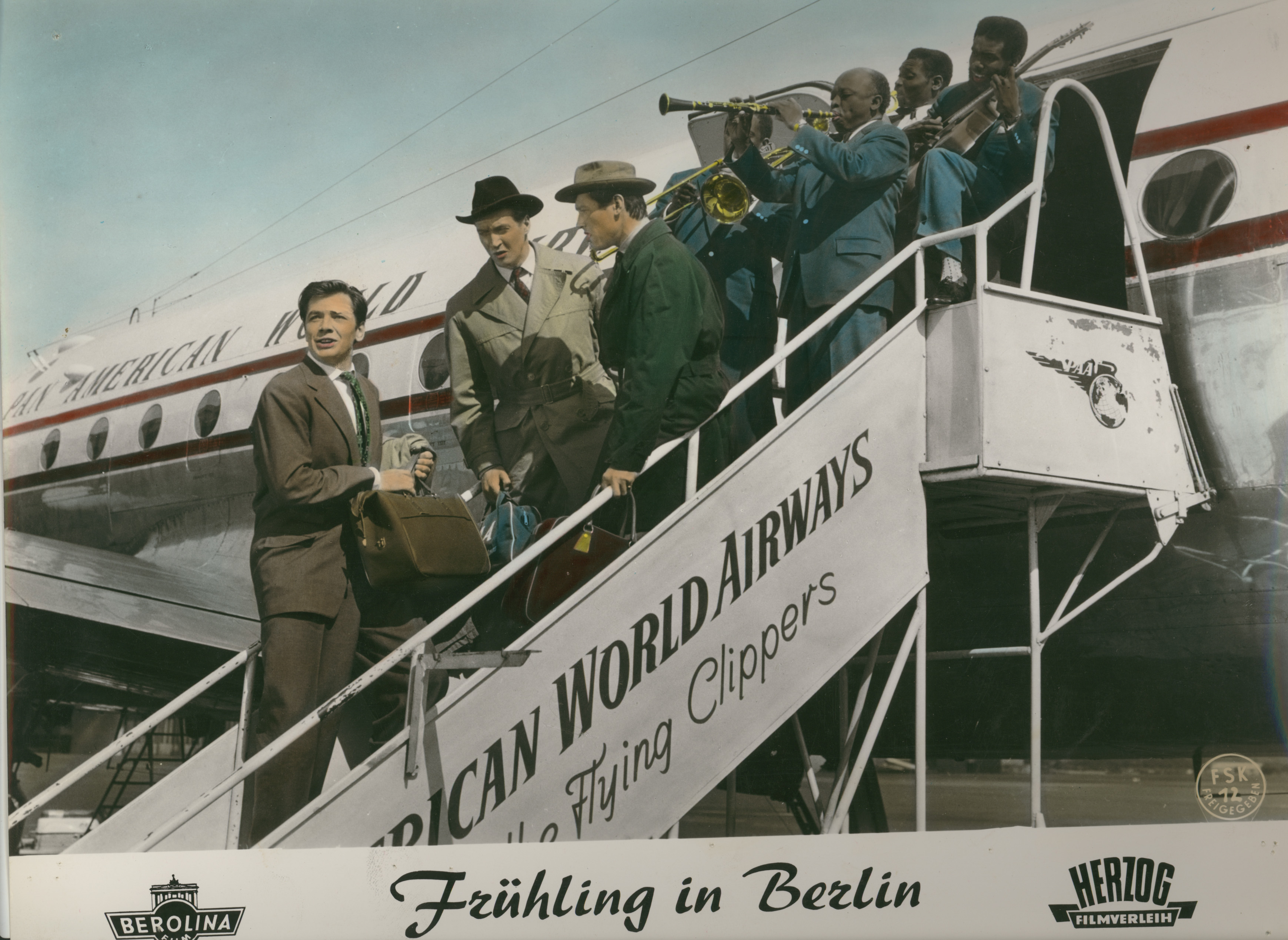
Frühling in Berlin (Rabenalt, West Germany, 1957) hand colored lobby card from the Lothar & Eva Just Collection
It’s springtime in Berlin, 1957. The stills from this cold war rom-com make us want to take a plane back in time.
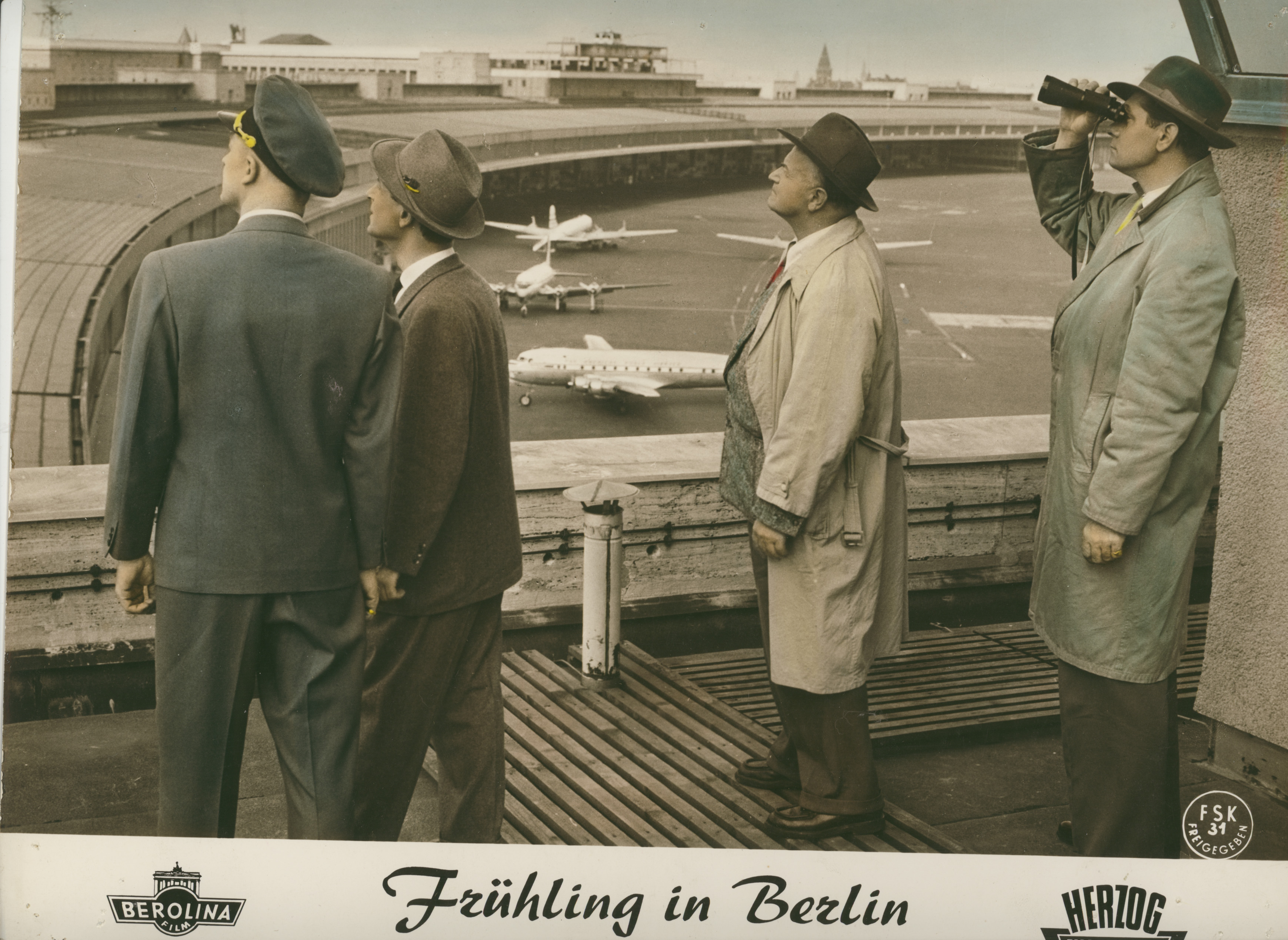
Frühling in Berlin (Rabenalt, West Germany, 1957) hand colored lobby card from the Lothar & Eva Just Collection
Plane travel certainly was different in the old days.

Frühling in Berlin (Rabenalt, West Germany, 1957) hand colored lobby card from the Lothar & Eva Just Collection
The nightclubs look superior, too!
COFFY
April 27th, 2012
Processing the Just Collection has been a lot of fun. Today’s find was hand-colored film stills from Jack Hill’s COFFY (1973), starring the inimitable Pam Grier. It’s generally surprising to find hand-colored stills of this vintage, but it appears to have been fairly common in the German film promotion industry.

COFFY, Jack Hill, 1973, USA hand colored film still
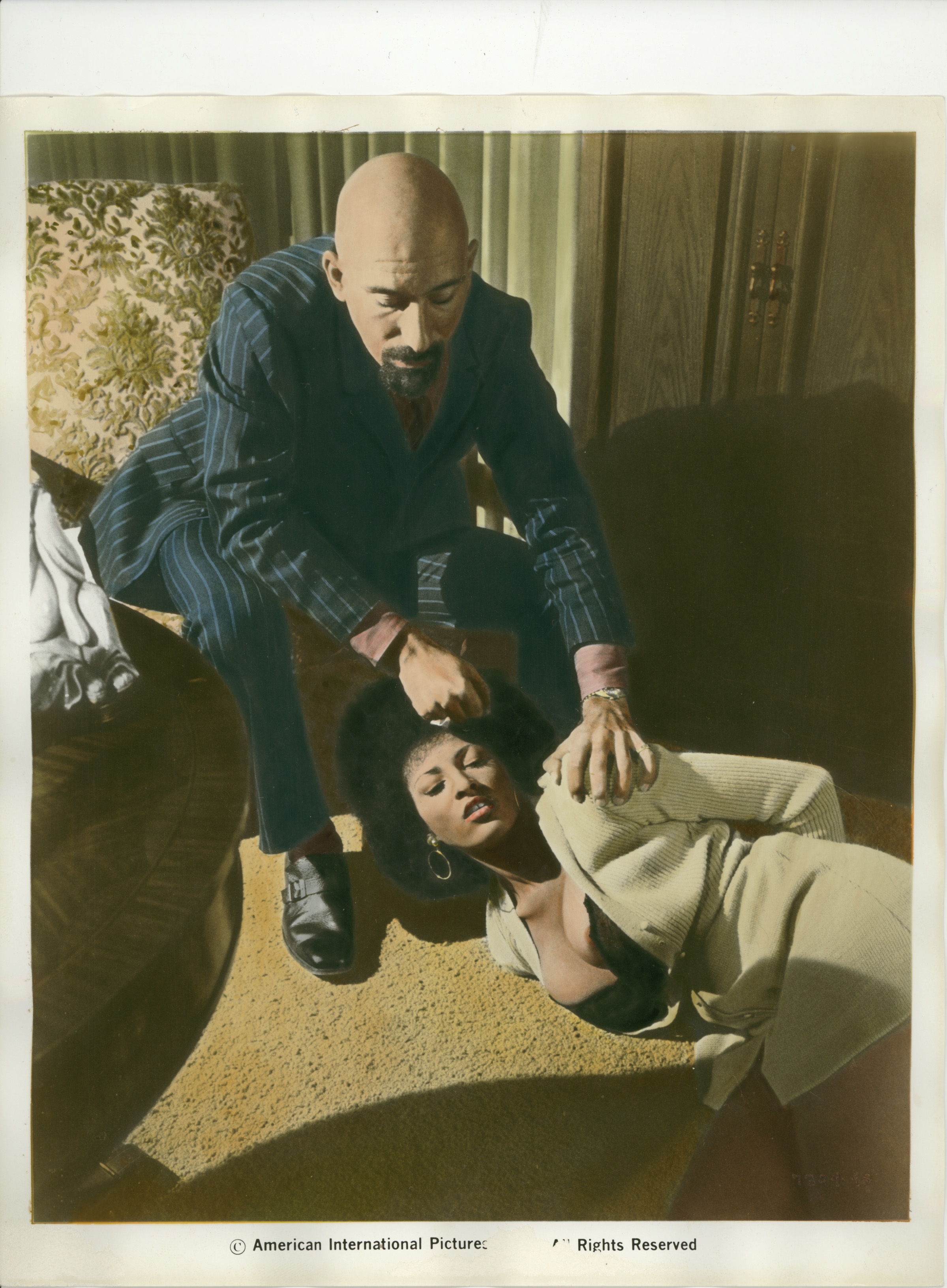
COFFY, Jack Hill, 1973, USA hand colored film still
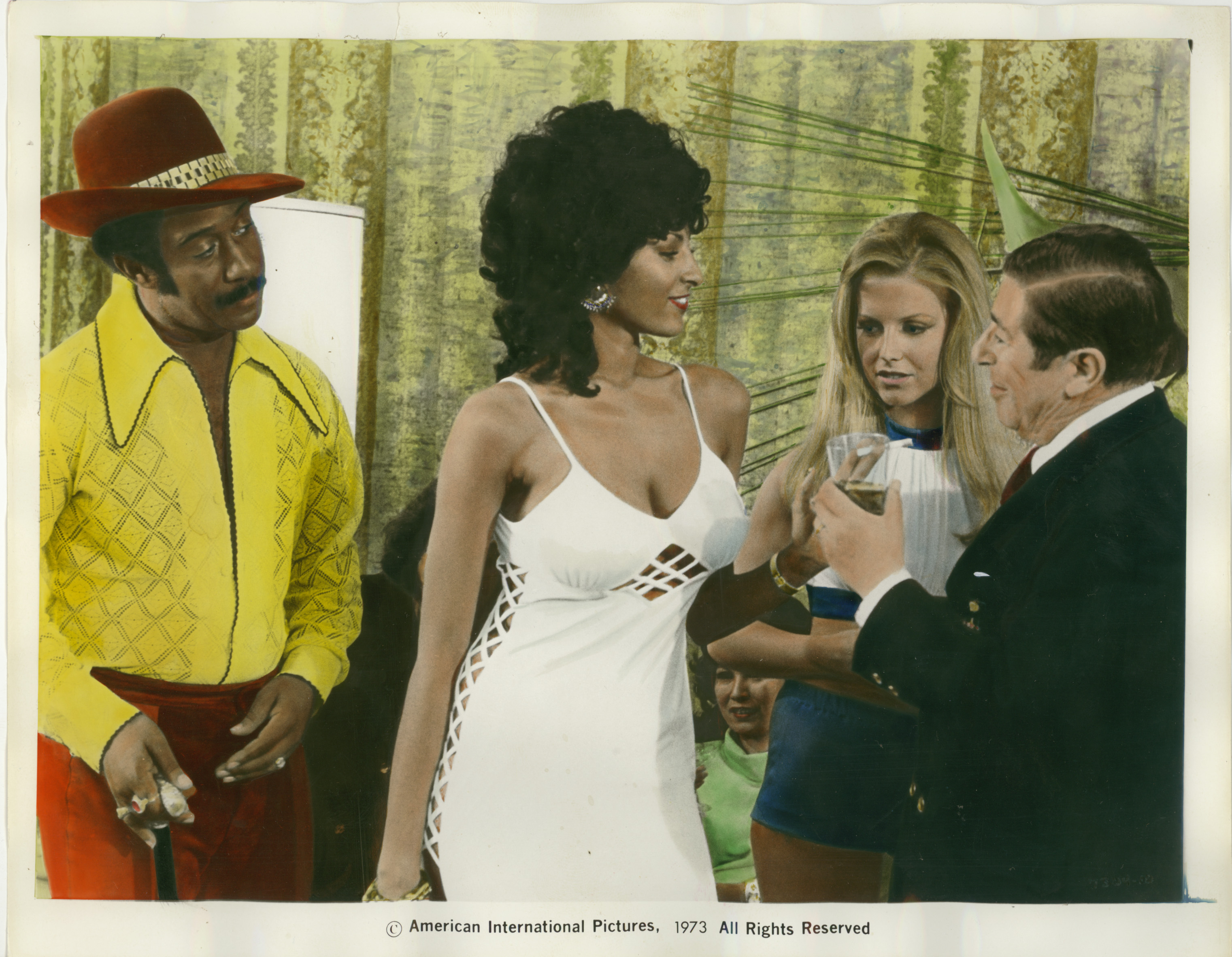
COFFY, Jack Hill, 1973, USA hand colored film still
help us identify this poster
April 19th, 2012
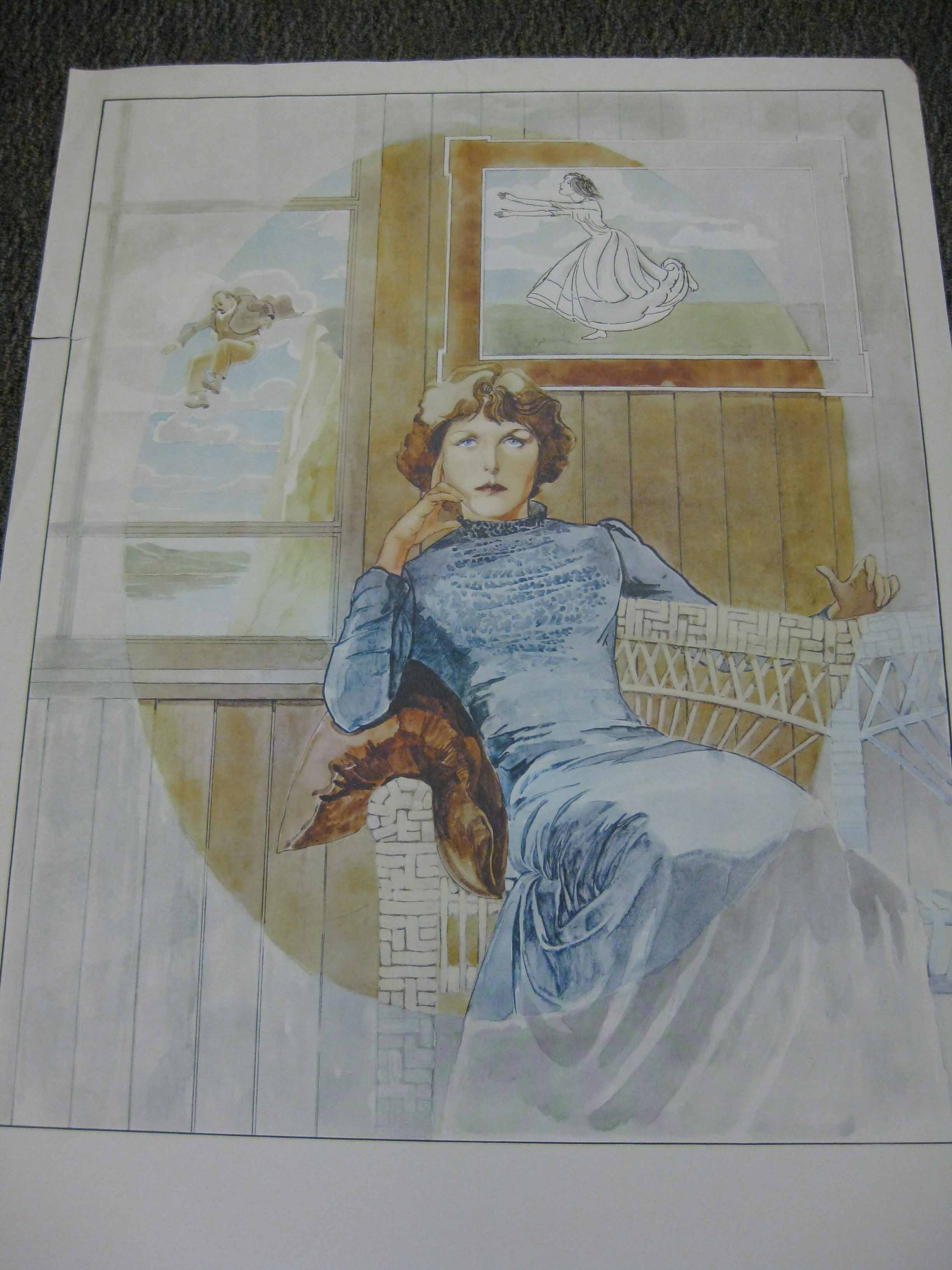
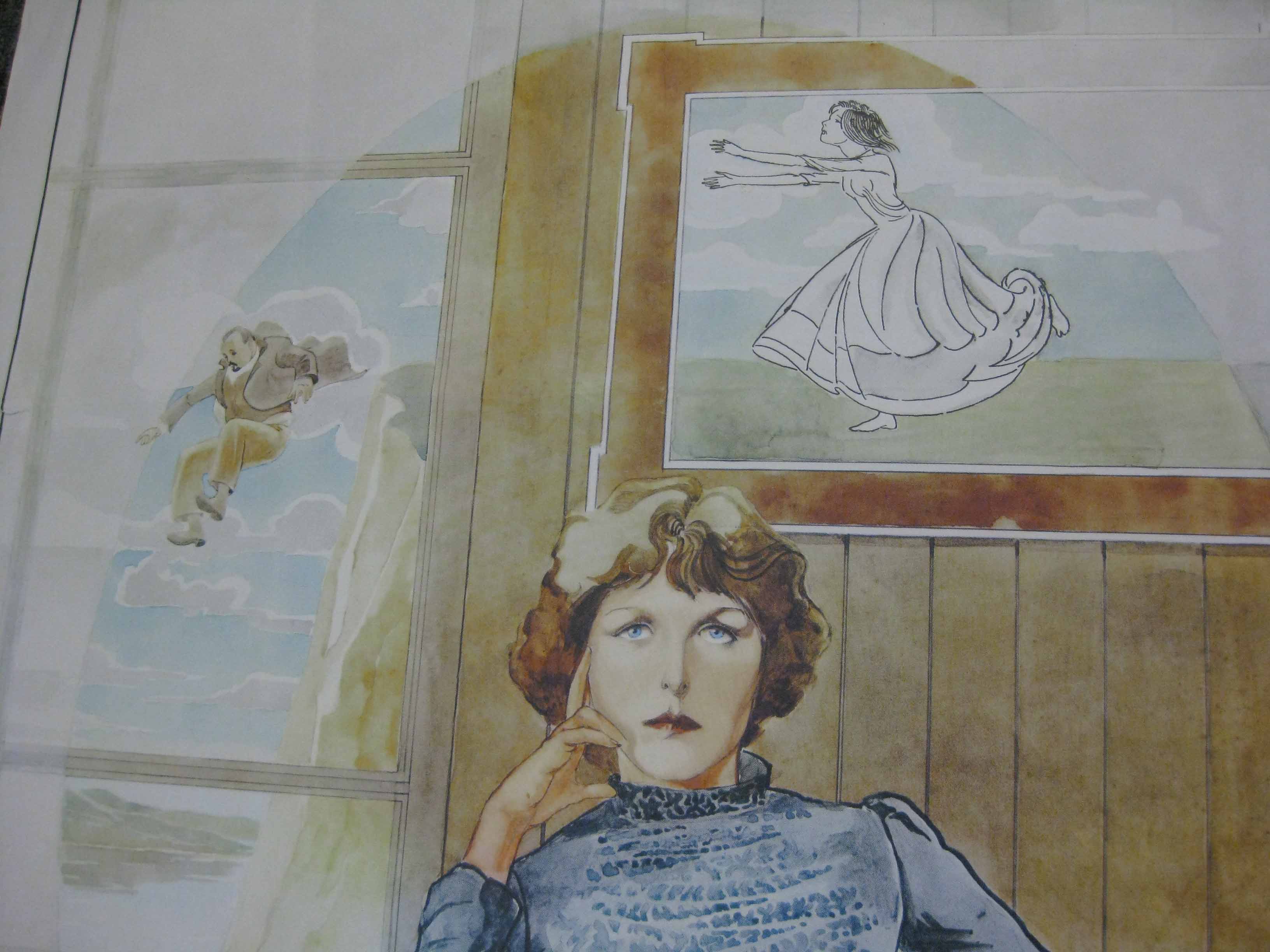
This poster is in our collection, but we don’t know much about it. It’s 27×41 and has no text nor writing on it. A woman sits on a chair. Behind her, through windows, we see a woman running arms outstretched, and a man falling off a cliff.
Can you identify it?
thank you Vernica!
Lederhosenfilm
March 29th, 2012
We are constantly amused by the items in the Lothar and Eva Just Film Stills Collection that fall into the category we call Bavarian Softcore (see previous blog post on erotica).
Today, while working on the oeuvre of Sigi Rothemund, we discovered these films do have their own genre title, very close to the one we had assigned to it: Lederhosenfilm, which apparently translates into “Bavarian porn,” a title that is far less amusing (and less descriptive!).
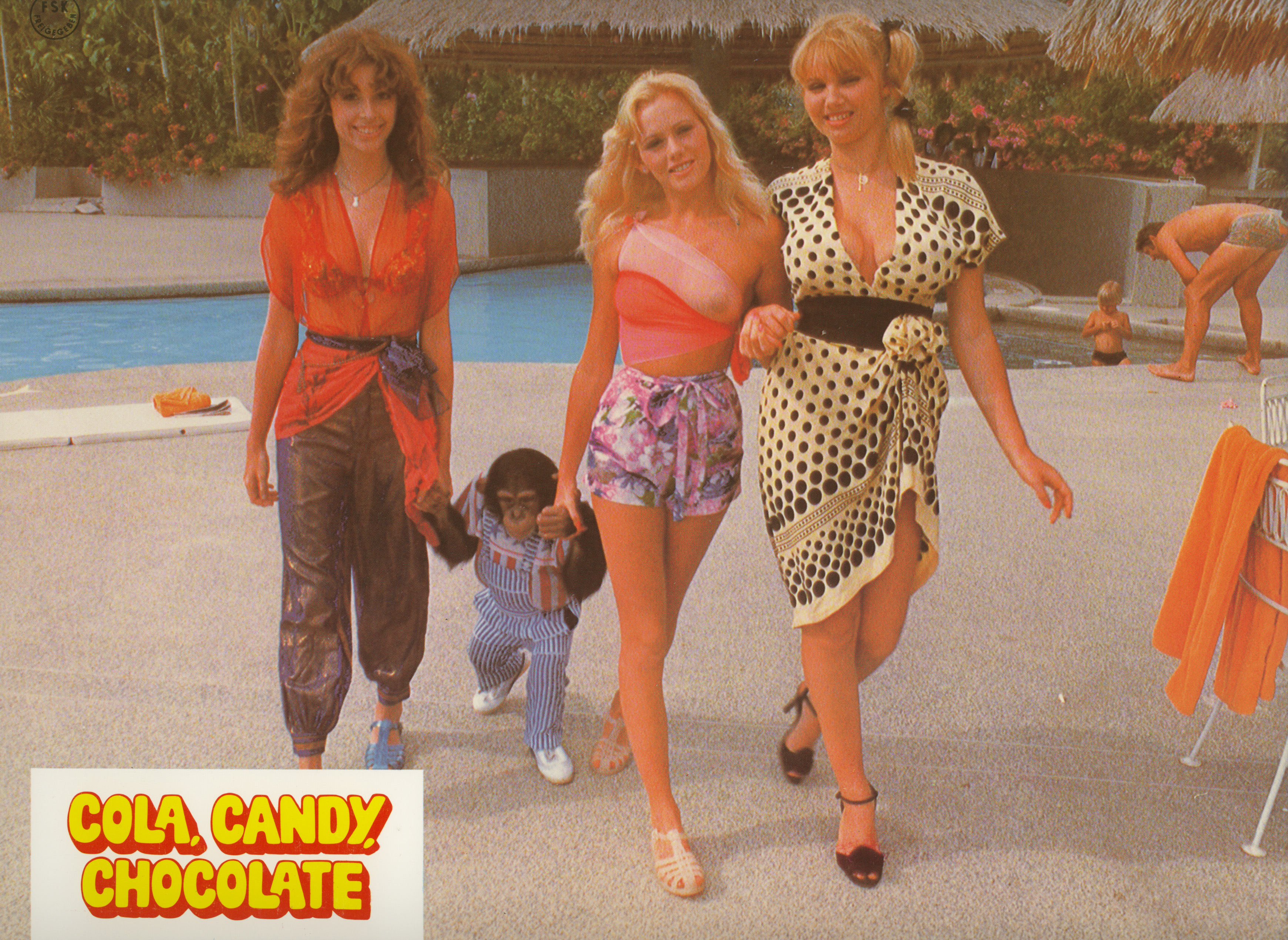
Cola, Candy, Chocolate (Sigi Rothemund, 1979) lobby card
The above image, from the instant classic COLA, CANDY, CHOCOLATE, apparently typical for the director Sigi Rothemund (AKA Siggi Götz), brilliantly incorporates two themes that will always be funny – a chimp wearing clothes and women popping out of their tops. The image below, from the same film, adds the additional hilarity of a man in poorly done drag with the chimp (who, come to think of it, can also be considered to be in poorly done drag).

Candy, Cola, Chocolate AKA Drei kesse Bienen auf den Philippinen (Sigi Rothemund, 1979)
Mr. Rothemund was also partly responsible for a film that is difficult to comprehend from the production materials:
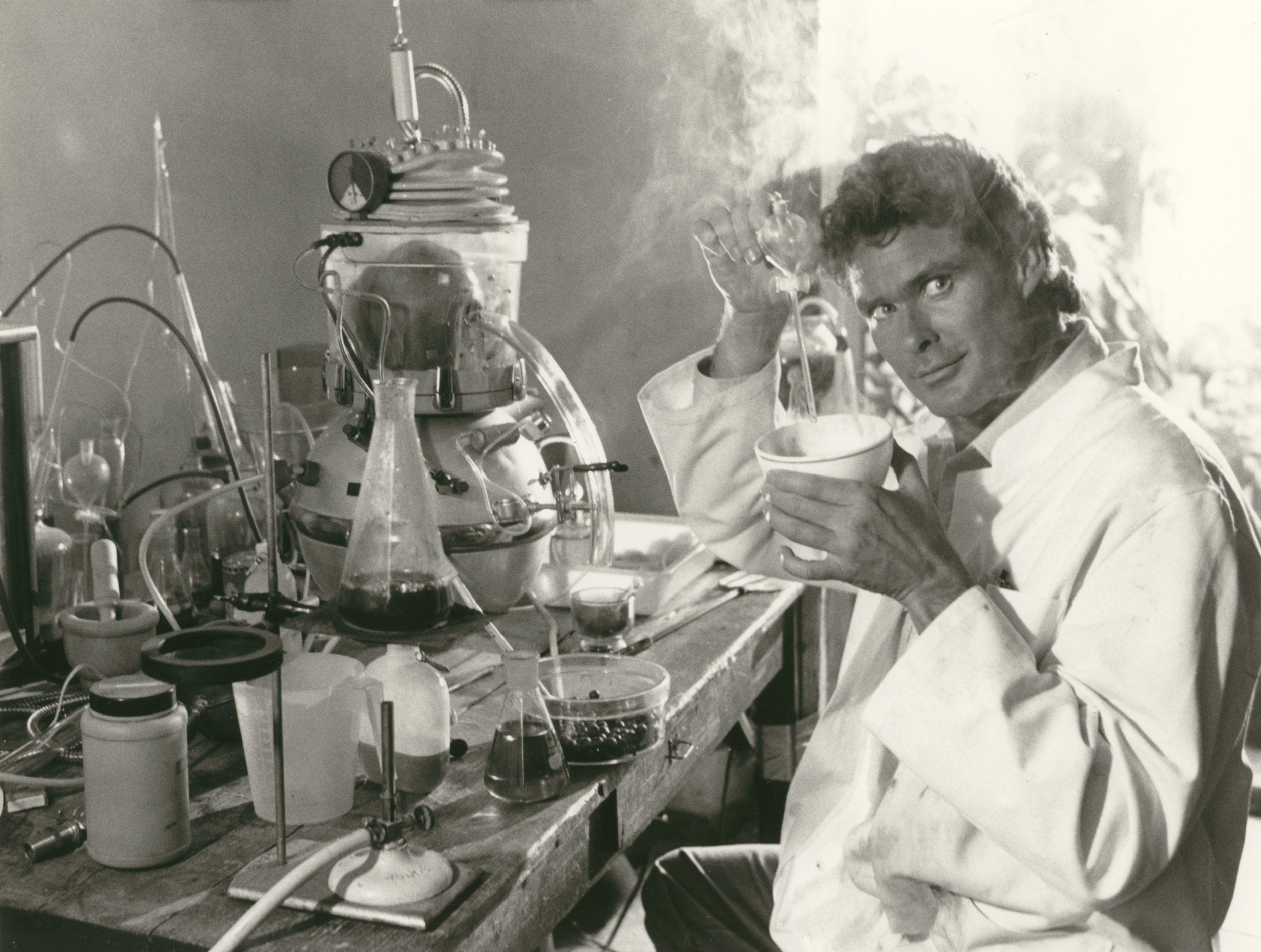
Starke Zeiten (Klaudi Fröhlich, Rolf Olsen, Otto Retzer, Sigi Rothemund, 1988)
STARKE ZEITEN, a production with no less than 4 credited directors plus a co-director, includes the above scene with David Hasselhoff as a mad scientist? And then it’s off to the Middle East to blow up oil fields and drive around in a strange collage of mis-sized people! Naturally, a chimp in human’s clothing (upper left) directs.

Starke Zeiten (Klaudi Fröhlich, Rolf Olsen, Otto Retzer, Sigi Rothemund, 1988)
Although nobody appears in lederhosen in the above images (and nobody appears to be in Bavaria), we assure you these are part of the much beloved Lederhosenfilm genre.
Next time we write about it, we promise to provide pix of people in Lederhosen being naughty in Bavaria.
A note to those of you looking for a research topic for your film studies degree – it doesn’t look like anyone has written much about Lederhosenfilm. Just a suggestion.
The TECO Collection
March 21st, 2012
The Taipei Economic and Cultural Office in Boston donated their collection of 16mm film prints to the Harvard Film Archive in 2007. They are now find-able on Harvard Library’s online catalog, HOLLIS.
To see the titles, go to Advance Search, put TECO Collection in the Keyword box, and limit the location to Harvard Film Archive. Titles are cataloged with their original language characters, their transliterated titles, as well as their English language release titles.
Culled from the years 1979-1994, 115 titles from Taiwan and Hong Kong are represented here. These prints were once used by the Cultural Office as a resource for loaning and screenings in and around the city of Boston. The genres they cover run the gamut from Kung Fu action films to sweet romances to serious dramas. The films are in Mandarin and subtitled in English and Cantonese.
Titles include
That Day at the Beach (1983), Taipei Story (1985), The Black Skin and White Tooth (1985), Terrorizer (1986) (all directed by Edward Yang)
Ang Lee’s first film, Pushing Hands (1992)
Five Girls and a Rope (Hung-Wei Yeh, 1992)
Song of the Exile (starring Maggie Cheung, directed by Ann Hui, 1990)
Kung fu films such as
Dragon Inn (starring Maggie Cheung and Donnie Yen, directed by Hsiao Ton Cheng and Raymond Lee, 1992)
The Kung Fu Kids (Wu Wanlali, 1982)
Raiders of the Shaolin Temple (Fang Hoa, 1982)
And some great titles like
Marvelously Fast Juvenile Delinquents (Liang Chun Chao, 1988, starring Andy Lau)
Return of the Electric Love (Dunping Yang, 1982)
Even the Sun is Sobbing (Chin-Tang Lai, 1983)
scratch that
March 12th, 2012
Film is both sturdy and incredibly delicate. One wrong move can ruin a film forever. The biggest mistakes most often happen in projection. Like vampires, film projectors often destroy the ones they love.

The image above, seen through a loupe, is from a 16mm print that was most probably projected from or onto a bent metal reel that had a burr on it. This print of The Great John L. (USA, 1945) is from the Howard E. Burr Collection. (This is also the kind of scratching you can get from running a film on a platter incorrectly, but those of you projecting at home probably won’t have to worry about that.)
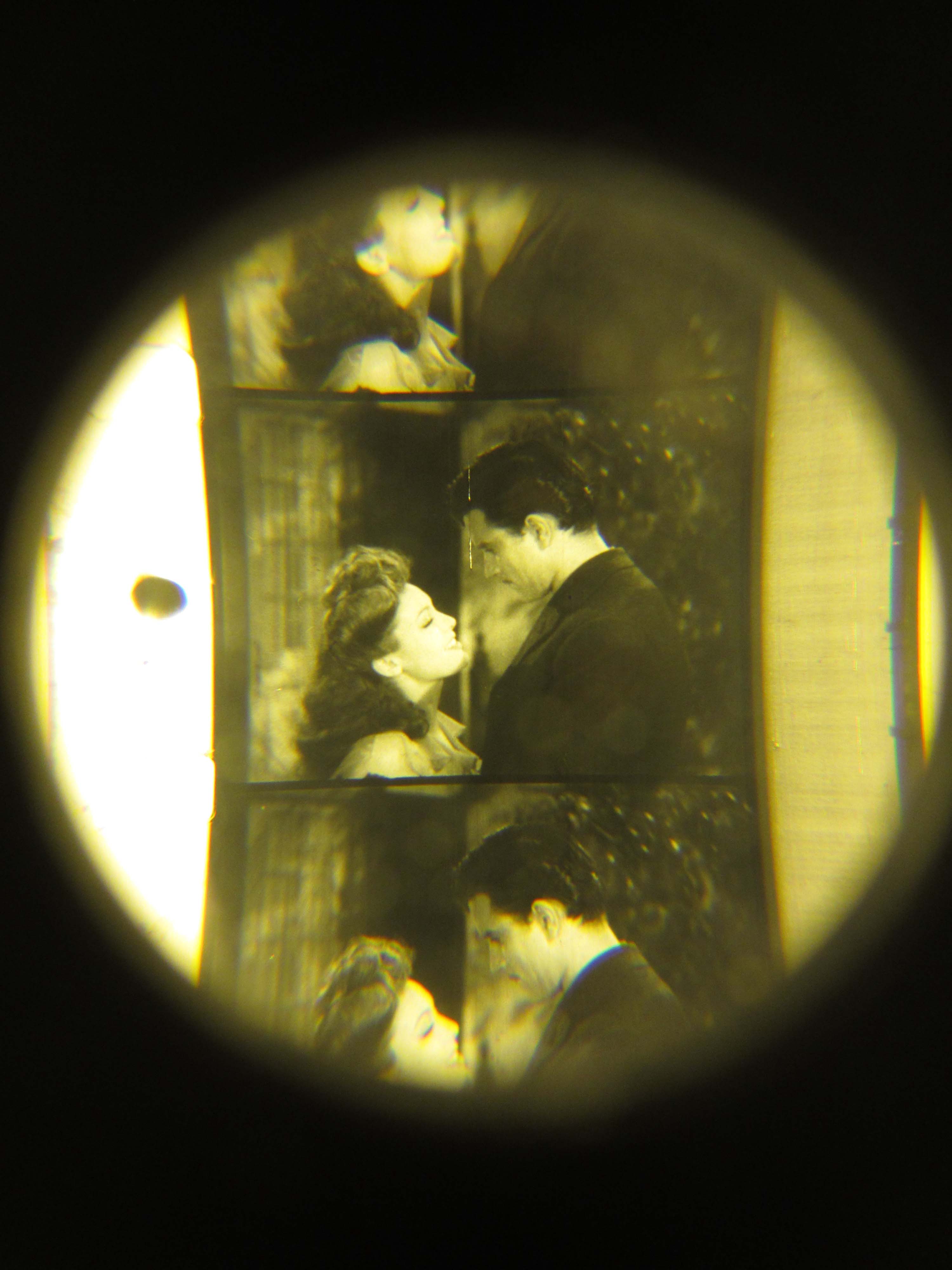
The image above, from another print of the same film, shows damage that can be done inside the projector gate. There is a short white line through the man’s head in this Gone With the Wind – style shot. This is where the emulsion has been abraded, probably by something stuck to the gate.
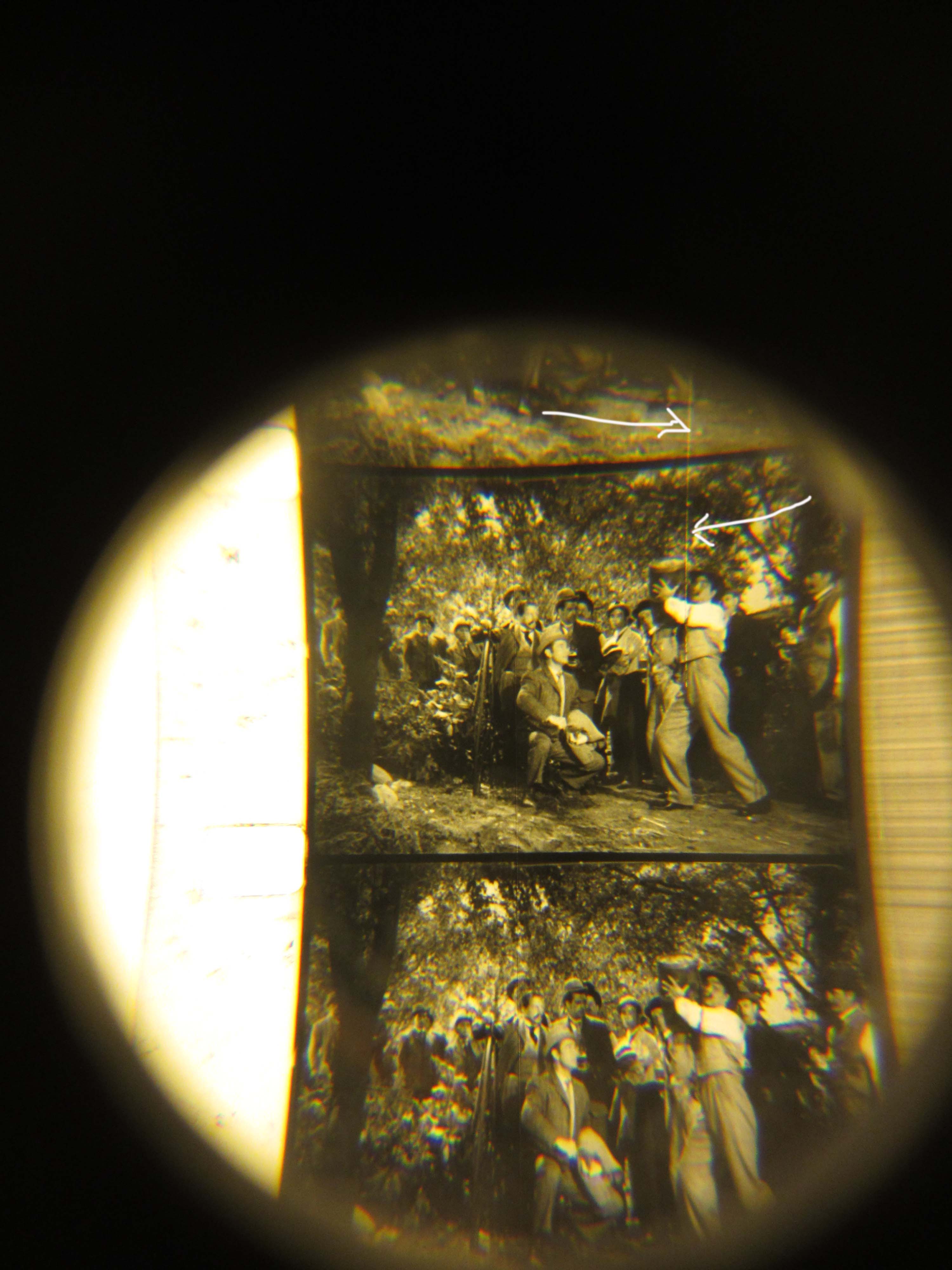
The arrows point to another emulsion scratch. This could easily have been made by a dirty roller in the projector.
Always clean your projector prior to showing your movie! Here are some tips on projector cleaning from Bob Brodsky.
Winter greetings from the Lothar and Eva Just Film Stills Collection
December 21st, 2011
Season’s Greetings!
One of our largest projects of the past few years is nearing completion. The Lothar and Eva Just Film Stills Collection is in the final stages of processing. It has been handled in two main batches, the first of which is now search-able through Harvard’s finding aid database, OASIS.
To view the finding aids, search Lothar and Eva Just Film Stills Collection and limit by repository Harvard Film Archive.
If, for instance, you are looking for material for films directed by Frank Capra, you may search by typing Frank Capra into the search field and limit by repository Harvard Film Archive. One of the results will be the Lothar and Eva Just Film Stills Collection, and you will see there is material for eight of his films and one miscellaneous item.
Due to its large size, the finding aid is split into five parts, organized alphabetically by director’s last name. The finding aid will be updated again in June when the second and final section of the processing has been completed. The second portion of the finding aid will list only a director, and not each of the films represented.
The material listed in the finding aid is available for research at Harvard.
Posters from this collection will have their own finding aid.

Kaspers Reise zu den Zwergen, (Hella Mora, 1954, hand colored lobby card, from the Lothar and Eva Just Film Stills Collection)
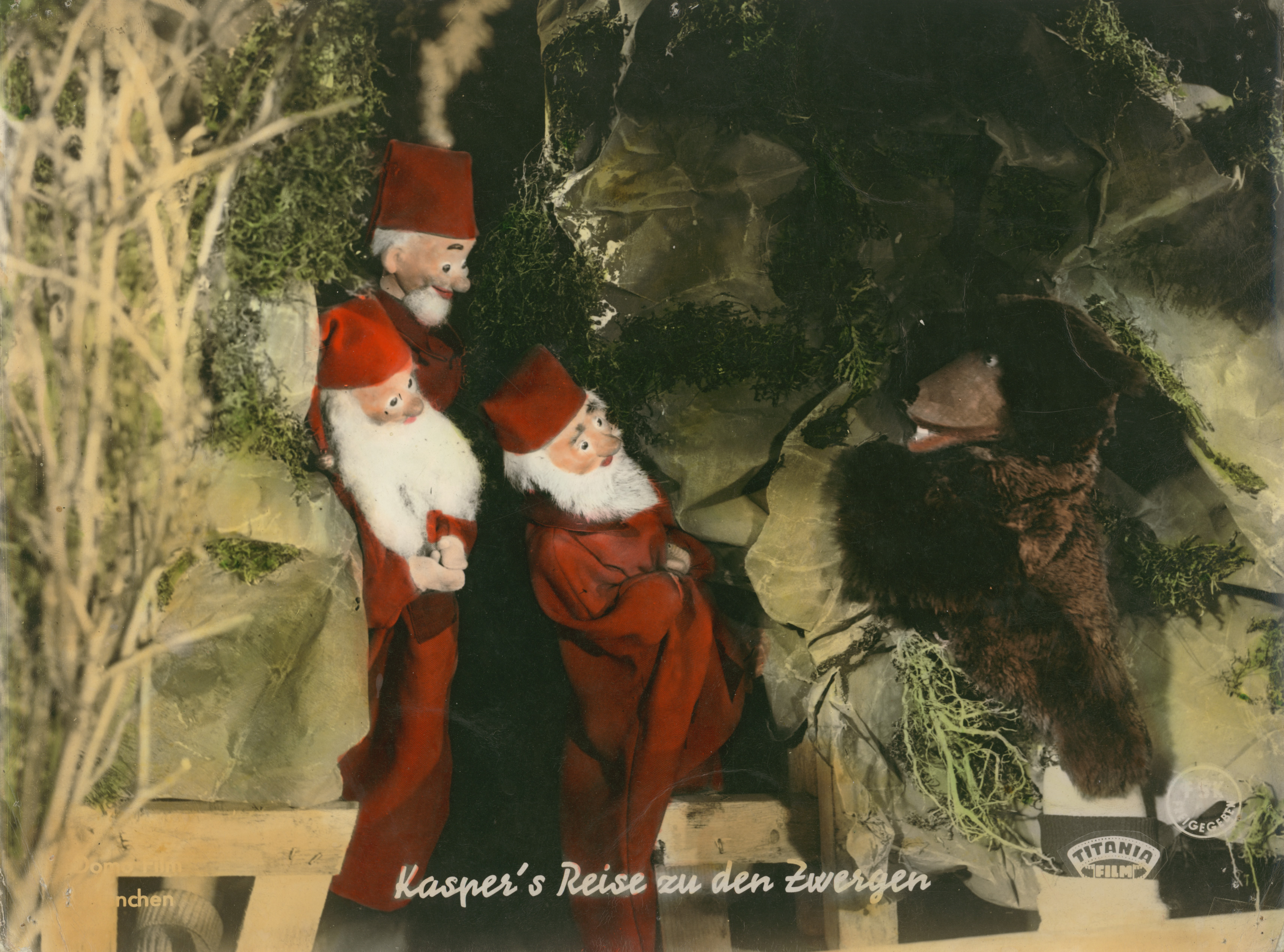
Kaspers Reise zu den Zwergen, (Hella Mora, 1954, hand colored lobby card, from the Lothar and Eva Just Film Stills Collection)

Kaspers Reise zu den Zwergen, (Hella Mora, 1954, lobby card, from the Lothar and Eva Just Film Stills Collection)
small gauge film storage
December 20th, 2011
We have a number of home movie collections at the HFA and we are always adding more. Every year we host Home Movie Day, helping the public watch home movies on formats they may not be able to watch at home.
A problem we have come across time and again in these collections is film stored on grey plastic reels that have white stuff on them. The white stuff can be light or heavy. It occurs on grey plastic reels, some of which are labeled TENITE. Tenite is a wood-based plastic made by Eastman, first developed in 1929.
The white stuff isn’t mold; it’s the result of the plastic decomposing.
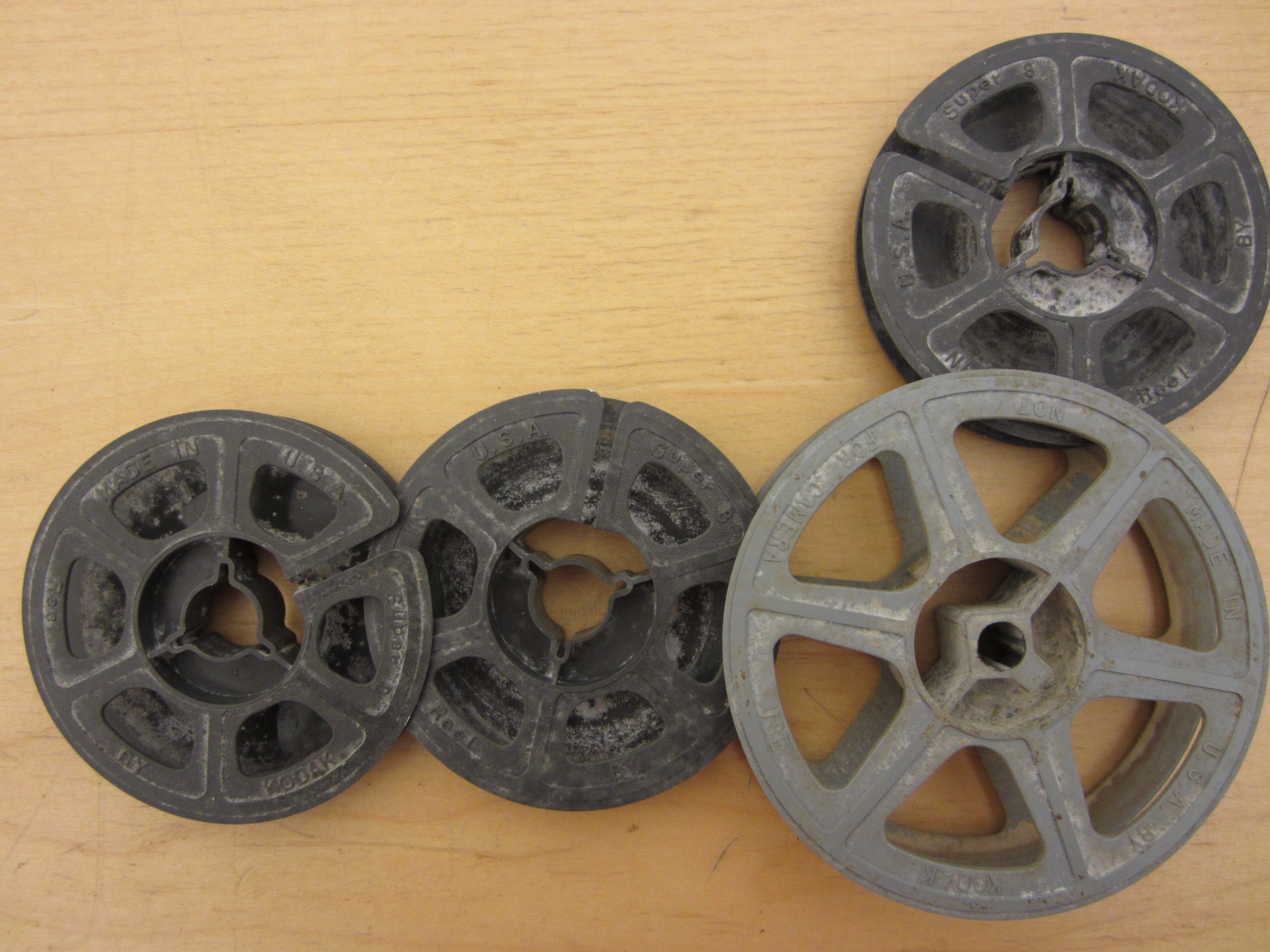
Above: decomposing Super 8 and 16mm film reels by Kodak
The decomposing reels smell “like vomit,” a technical description in the wonderful world of plastics. Weissman Preservation Center staff member Zach Long tested the super 8 reels (which were not marked Tenite), and determined the reels are most likely made of cellulose acetate butyrate.

Above: actively decaying super 8 reels

Above: In early stages of decomposition, the reels have only a small amount of white on them and do not smell.
If you find you have film on grey plastic reels or reels labeled TENITE, we recommend putting them on different reels and throwing the old reels away.
* We recommend wearing plastic gloves when handling these reels! *
Even if the reels are not yet decaying, they are good candidates for this problem. It is safer to store your films on a different type of reel. For 8mm or Super 8 we use polystyrene reels, which are not ideal but are better than metal or cellulose acetate butyrate. Your film will thank you!
Zdenek Miler
December 16th, 2011
From the Just Collection, some images from Zdenek Miler’s Puppy films. This Czech animator is best known for his character the animated mole ‘Krtek’. Miler made over 70 films.

Jak slunícko vrátilo stenátku vodu (1960) AKA How the Sun Returned Water to the Puppy

Jak stenátko chtelo malé pejsky (1960) AKA How the Puppy Wanted Little Dogs