• Home
  • About MESH
  • Members
  • Papers
  • Contact

Middle East Strategy at Harvard

National Security Studies Program :: Weatherhead Center

Feed on
Posts
Comments

‘The Politics of Intelligence and American Wars with Iraq’

Apr 4th, 2008 by MESH

MESH invites selected authors to offer original first-person statements on their new books—why and how they wrote them, and what impact they hope and expect to achieve. Ofira Seliktar is a professor of political science at Gratz College and adjunct professor at Temple University, specializing in predictive failures in intelligence. Her new book is The Politics of Intelligence and American Wars with Iraq.

From Ofira Seliktar
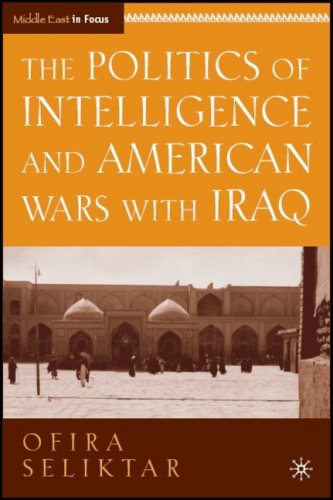
The genesis of my book The Politics of Intelligence and American Wars with Iraq is rooted in my experience teaching a class on the Middle East at Texas A&M University during the revolution in Iran in 1979. Most of my students were ROTC cadets who hoped to serve in intelligence, yet had difficulty understanding how a country could opt for what they defined as a regressive revolution. After having researched a book on the Carter administration’s failure to predict the fundamentalist revolution in Iran, I realized that such problems transcended my classroom, as they represent a more general difficulty in comprehending foreign societies and, especially, the Middle East.

Some of these problems relate to the pervasive influence of realist theory in international relations; countries are considered to be rational unitary actors which are said to share our view of what a nation’s interest is. Naturally, realist theory does not accommodate non-state actors like Al Qaeda or rogue regimes (like Syria and Iran) which have collaborated with terrorist organizations to destabilize the region and, in the process, incurred the high cost of international isolation and sanctions.

Another source of misperception stems from the writings of many Middle East experts who have downplayed the impact of the virulent strand of Islam which gave birth to terrorism on the scale practiced by Osama bin Laden. Indeed, my book documents in great detail how—until 9/11—most observers dismissed the possibility of a mega-terrorist attack and argued that bin Laden was a cold war-style bogeyman.

More to the point, The Politics of Intelligence draws attention to the perils of intelligence gathering and analysis in Iraq since 1980, a country notorious for its secretive ways, a byzantine political system and a hard-to-decipher dictator with a penchant for bizarre behavior. The Carter drive to “clean up” the intelligence community, coupled with the equally energetic Clinton era “scrub,” hobbled the few remaining intelligence assets of the CIA with legal limitations that rendered the operational branch highly risk-averse. All this occurred while the specter of WMD in the Middle East made the issue of Islamist terrorists with murky ties to state sponsors more urgent.

When Clinton bombed the Al Shifa pharmaceutical factory in Khartoum in 1998, he acknowledged this linkage, for the CIA had determined that Iraqi engineers had developed chemical weapons for Al Qaeda at that site. Yet, criticism of the “wag the dog” presidency made the administration reticent either to pursue bin Laden or to target Iraq. Obtaining evidence about Hussein’s nonconventional weapons program was equally difficult given the virtual lack of American intelligence on the ground. After Iraq expelled UNSCOM in 1998, the United States was forced to rely on assorted sources, including allied intelligence services, Arab leaders, defectors and former inspectors. The resulting CIA Iraq estimate contended that Hussein had retained parts of his WMD program and was intent on enlarging its scope.

The 9/11 attack and the anthrax scare added urgency to the issue of Islamist terrorism and rogue states. The CIA, which had failed to predict the attack, was further disgraced when evidence of an Al Qaeda chemical weapons program was uncovered in Afghanistan and northern Iraq where Saddam Hussein sponsored a terrorist group allied with Al Qaeda. The realization grew that—in the murky world of WMD, Islamist terrorists and less than rational rogues like Iraq—there may not be enough “smoking gun”-grade evidence, a standard for action. Thus, the Bush administration embraced preemption and invaded Iraq.

The failure to find WMD and the high cost of the war have generated tremendous criticism, including the allegation that a group of Jewish neoconservatives in the administration, acting on behalf of the state of Israel, manipulated the intelligence in order to trick the United States into an unnecessary war. The backlash has also rehabilitated the realist idea that the Middle East is populated by rational state actors that play by universal rules.

I hope that The Politics of Intelligence and American Wars with Iraq will contribute to the debate about the difficulties of understanding the highly complex nature of the Middle East regimes. The Iraqi estimate revealed numerous problems: verification of nuclear proliferation, questionable rationality of state actors and their terrorist proxies, difficulty of penetrating such networks, murky and inconclusive evidence. These will continue to plague the United States in the years to come.

Order from Publisher | Amazon

  • E-mail this story to a friend!
  • Facebook
  • Twitter
  • del.icio.us
  • Digg
  • Google Bookmarks
  • Technorati
  • StumbleUpon
  • Reddit

Posted in Books, Intelligence, Iraq | No Comments

Comments are closed.

  • This Site

    Middle East Strategy at Harvard (MESH) is a project of the National Security Studies Program at the Weatherhead Center for International Affairs.
    • Read about MESH
    • Search MESH with Google
    • Receive MESH by email
  • Latest Posts

    • • Lebanon on UN Security Council by David Schenker
    • • Whither Yemen? by Mark N. Katz
    • • Saudis into Yemen by Daniel Byman
    • • Disrupting Iran’s weapons smuggling by Matthew Levitt
    • • MESH seeks support
    • • How the Saudis radicalized U.S. troops by Gal Luft
  • Comments

    MESH invites comments from its members and other analysts.
    • Read about comments
  • Latest Comments

    • Walter Reich on Bungled again: Israel and Goldstone
    • J. Scott Carpenter on Farewell and thanks
    • Michele Dunne on Farewell and thanks
    • Robert Satloff on Farewell and thanks
    • Stephen Peter Rosen and Martin Kramer on Farewell and thanks
  • Subscribe

    Subscribe to MESH by email Posts+Comments
    Feed Posts+Comments
    Subscribe to MESH by email Posts+Comments
    Posts+Comments
    AddThis Feed Button
  • RSS MESH Pointers

  • Posts by Category

    • Administration (5)
    • Announcements (23)
    • Countries (245)
      • Afghanistan (11)
      • Arab Gulf (11)
      • Bahrain (1)
      • Caucasus (5)
      • Central Asia (2)
      • China (3)
      • Egypt (25)
      • France (2)
      • India (1)
      • Iran (77)
      • Iraq (35)
      • Israel (95)
      • Jordan (9)
      • Lebanon (28)
      • Pakistan (8)
      • Palestinians (52)
      • Qatar (1)
      • Russia (12)
      • Saudi Arabia (14)
      • Syria (18)
      • Turkey (15)
      • United Kingdom (3)
      • Yemen (5)
    • Members (266)
      • Adam Garfinkle (22)
      • Alan Dowty (19)
      • Andrew Exum (11)
      • Barry Rubin (14)
      • Bernard Haykel (9)
      • Bruce Jentleson (6)
      • Charles Hill (3)
      • Chuck Freilich (15)
      • Daniel Byman (17)
      • David Schenker (16)
      • Gal Luft (9)
      • Harvey Sicherman (11)
      • Hillel Fradkin (8)
      • J. Scott Carpenter (15)
      • Jacqueline Newmyer (6)
      • Jon Alterman (13)
      • Josef Joffe (17)
      • Joshua Muravchik (10)
      • Mark N. Katz (21)
      • Mark T. Clark (15)
      • Mark T. Kimmitt (6)
      • Martin Kramer (24)
      • Matthew Levitt (15)
      • Michael Doran (4)
      • Michael Horowitz (9)
      • Michael Mandelbaum (12)
      • Michael Reynolds (14)
      • Michael Rubin (8)
      • Michael Young (16)
      • Michele Dunne (16)
      • Philip Carl Salzman (32)
      • Raymond Tanter (16)
      • Robert O. Freedman (20)
      • Robert Satloff (17)
      • Soner Cagaptay (4)
      • Stephen Peter Rosen (13)
      • Steven A. Cook (14)
      • Tamara Cofman Wittes (18)
      • Walter Laqueur (20)
      • Walter Reich (11)
    • Subjects (269)
      • Academe (3)
      • Books (39)
      • Counterinsurgency (13)
      • Culture (21)
      • Democracy (16)
      • Demography (5)
      • Diplomacy (19)
      • Economics (1)
      • European Union (3)
      • Geopolitics (42)
      • Hamas (21)
      • Hezbollah (25)
      • Intelligence (9)
      • Islam in West (5)
      • Islamism (16)
      • Maps (27)
      • Media (5)
      • Military (19)
      • Nuclear (26)
      • Oil and Gas (13)
      • Public Diplomacy (10)
      • Qaeda (23)
      • Sanctions (6)
      • Taliban (3)
      • Technology (2)
      • Terminology (9)
      • Terrorism (30)
      • United Nations (7)
  • Archives

    • November 2009 (12)
    • October 2009 (8)
    • September 2009 (9)
    • August 2009 (9)
    • July 2009 (9)
    • June 2009 (12)
    • May 2009 (16)
    • April 2009 (11)
    • March 2009 (16)
    • February 2009 (11)
    • January 2009 (10)
    • December 2008 (12)
    • November 2008 (11)
    • October 2008 (19)
    • September 2008 (15)
    • August 2008 (17)
    • July 2008 (18)
    • June 2008 (12)
    • May 2008 (17)
    • April 2008 (20)
    • March 2008 (27)
    • February 2008 (19)
    • January 2008 (18)
    • December 2007 (19)
  • MESH Bookstore


    Recently featured:


  • Maps

    • Online atlas in construction
    Latest additions:
    Scriptless Flickr Badge Scriptless Flickr Badge
    Scriptless Flickr Badge Scriptless Flickr Badge
    Scriptless Flickr Badge Scriptless Flickr Badge
  • RSS Latest Iran

    • • Iran 'seizes Ebadi's Nobel medal': colleague (AFP)
    • • World powers seek Iran nuclear censure (AFP)
    • • IAEA chief: Iran investigation at 'dead end' (AP)
    • • Brazil, US official discuss differences (AP)
    • • US aides pressured China on Iran: report (AFP)
  • RSS Latest Levant

    • • Israel targets Gaza militants in air strike (Reuters)
    • • Israel army says it foiled suspected bomb attack (AFP)
    • • Hamas says 'tangible progress' in prisoner swap (AFP)
    • • Israel dismisses Palestinian rejection of freeze (Reuters)
    • • Palestinians urge US to raise pressure on Israel (AP)
  • RSS Latest Iraq

    • • Key British diplomat testifies to Iraq inquiry (AP)
    • • Iraq's postmen put their lives in God's hands (AFP)
    • • US troops in Iraq reflect amid Thanksgiving celebrations (AFP)
    • • Iraq attacks kill seven, hit Christian sites (AFP)
    • • Iraqi PM: Election dispute poses risks to security (AP)
  • RSS New York Times

    • • Iran Nuclear Program Inquiry Is at ‘Dead End,’ U.N. Says
    • • Iraqi Lawmakers Hunt for Election Compromise
    • • News Analysis: Half-Truths Dim Chances for Mideast Talks
    • • Memo From Alexandria: Harnessing Darwin to Push an Ancient Intellectual Center to Evolve
    • • In Iraq, 2 Attacks Raise Fears of Sectarianism
  • RSS Washington Post

    • • War crimes envoy has personal touch
    • • Iraqis reach tentative deal on contested election legislation
    • • U.S. hails Israeli plan on West Bank settlement building
    • • China's backing on Iran followed dire predictions
    • • At least 10 people reported killed in violence in Iraq
  • RSS NPR

    • • Jerusalem's Palestinians Allege Expulsion Campaign
    • • Iran Reportedly Seizes Activist's Nobel Medal
    • • Israel Declares A 10-Month Settlement Freeze
    • • At Gaza Zoo, The Wild Things Return
    • • U.K. Begins Iraq War Inquiry
  • Harvard Events

    Check upcoming events from the calendars of...
    • Weatherhead Center for International Affairs
    • Center for Middle Eastern Studies (CMES)
    • Belfer Center for Science and International Affairs
  • RSS Weatherhead

    • • Canada, The United States and Cuba: The Triangular Relation between 1959 and 1962 as seen in Cuban Diplomatic History Co-sponsored by...
    • • The Capabilities: View of Development
    • • Special Series on International Relations of East Asia The United States and Kaji Wataru in Wartime China and Occupied Japan Co-sponsored...
  • RSS CMES

    • • From Social Democracy to Islamic-Ottoman Multiculturalism: Origins of the Historic Reforms in State Policies Towards Ethnicity
    • • Turkey’s Opening: Negotiations with Iraqi Kurdistan and US Redeployment from Iraq
    • • Modernity's Aesthetic Turn: Art Education and the Nation in Japan and Egypt
    • • 2009-2010 Egypt Forum program
    • • Destinies Apart: Jewish Immigrants from the Atlas Mountains and from Ethiopia, Moshe Shokeid
    • • The Cartoons that Shook the World
    • • Middle East Film Screening: Edge of Heaven (2007, Turkey/Germany)
  • RSS Belfer

    • • Why Arab States Fear Islamist Regimes: Threat Perception and Soft Power Politics
    • • Youth Civic Engagement & Diversity through Social Entrepreneurship in Egypt
    • • REFLECTIONS ON THE REVOLUTION IN EUROPE: Immigration, Islam, and the West
    • • Political Costs of Nuclear Threats: Implications for Crisis Stability in South Asia
    • • Are Ambassadors Still Important?
    • • Air Supremacy and the Air Force, Closure and Introduction of Spring semester
    • • "Northern Ireland Peace Process: What Then, What Now, What Next?”
    • • "Let the Historians Decide"? Politics and the Past in Turkey and Japan
    • • Saudi Arabia and “Rentier Exceptionalism”: Oil Price Fluctuations, State Responses and Political Mobilization
    • • Two Concepts of Liberty: American Grand Strategy and the Liberal Tradition
  • Sponsor

  • Host

  • Rights

    Copyright © 2007-2009 President and Fellows of Harvard College
    Site Meter

Theme: MistyLook by Sadish


Protected by Akismet • Blog with WordPress

Bad Behavior has blocked 1 access attempts in the last 7 days.