• Home
  • About MESH
  • Members
  • Papers
  • Contact

Middle East Strategy at Harvard

National Security Studies Program :: Weatherhead Center

Feed on
Posts
Comments

Saudi angle on U.S. elections

Oct 30th, 2008 by MESH

From Bernard Haykel
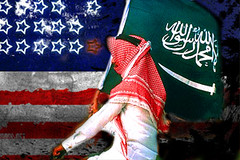
The Saudis have been remarkably tight-lipped about the U.S. presidential election and about whom they favor among the candidates. Their reticence can be explained, in part, by their bewilderment at the choice.

They don’t know what to think of the real possibility that a young and charismatic black candidate might win. Senator Obama represents the joker in the deck, although they also have a sense that in terms of the pillars of U.S. policy in the Middle East (i.e., oil security and Israel’s security) little will change regardless of the election’s outcome. In other words, they feel the regime’s survival is assured because of the importance of oil.

Historically, the Saudis have favored Republicans for the following reasons: 1) a shared social and economic conservatism and a visceral anti-Communism; 2) the closer ties that Republicans are thought to have to the oil companies and the weapons industry, which represent the two domestic constituencies of, and therefore lobbyists for, the Saudi government in the U.S. political system; and 3) a highly personal (anti-institutional) form of political engagement in foreign affairs, especially in the Middle East. The Saudis like the current President Bush on a personal level, and he appears to relish the all-male gatherings in Saudi Arabia, as can be seen during his last trip to Riyadh in January.

The royal family’s objection to G.W. Bush’s policies have to do with what they perceive to be his impulsive and rash behavior as well as his high-stakes style in foreign policy. On the whole, the Saudis were not in favor of the invasion of Iraq because they were worried of the instability that this would create in the region. The Saudis are, if anything, conservative and don’t like to gamble their survival on military campaigns unless these are absolutely necessary, as in the 1991 Gulf war against the Iraqi invader of Kuwait. Instead, they prefer other means, which include financial inducements and fighting through proxies (e.g., Lebanon today).

Based on all the above, I would guess that the Saudis would prefer if McCain were to win. Furthermore, there are indications that they have a strong dislike to Senator Biden, primarily because of his public criticism of the Saudi royal family, its religious policies, and the very form of rule it represents. The Saudis have been relatively discreet about this animus towards Biden, and when it has surfaced, as in an editorial article by Jamal Khashogi in Al-Watan newspaper earlier this year, it has criticized Biden for his plan to divide Iraq into three parts. I believe the Saudis feel that they can proceed with business-as-usual with McCain but not with Biden, who is, paradoxically perhaps, more ideological when it comes to reforming Saudi Arabia’s regime.

Whatever the outcome of the U.S. election, the Saudis are sitting on a large pile of cash which is the result of record-high prices for oil and they can easily balance their budgets as long as the price remains roughly at or above the $50 mark per barrel. They are secure in the short term and confident that their people don’t want to see an Iraq-like scenario envelop the Kingdom.

The more imaginative among the Saudis think that they can reinvigorate their relationship and alliance with the United States on the basis of the excess capacity Saudi Arabia enjoys in terms of oil production. What this means is that the Saudis today have a significant power over the downward price of oil because they can increase supply of this product at will, and the demand is no longer there to suck up all the world’s production. Unlike the Saudis, the Iranians and the Russians cannot balance their budgets if the price is anywhere below the $70s to $90s per barrel range. The Saudis therefore have the means, but not necessarily the will, to punish the Iranians and Russians, and this is a fact that should not escape any new administration in the White House. The luck of the House of Saud never seems to run out.

Comments are limited to MESH members and invitees.

  • E-mail this story to a friend!
  • Facebook
  • Twitter
  • del.icio.us
  • Digg
  • Google Bookmarks
  • Technorati
  • StumbleUpon
  • Reddit

Posted in Bernard Haykel, Oil and Gas, Saudi Arabia | 1 Comment

One Response to “Saudi angle on U.S. elections”

  1. on 31 Oct 2008 at 2:48 pm1 Thomas W. Lippman

    First, one correction: President Bush’s last trip to Riyadh was in May, not January as Bernard Haykel’s piece says.

    Overall, I agree with some of this and disagree with some of it. I think it’s true in general that the Saudis have been more comfortable with Republicans, although they were very warm toward Jimmy Carter when he went there in 1978 because of his outreach to the Palestinians. But when I talked to Saudis about this during a visit in June, I basically heard the same thing from all of them: Please, just let us get to January without another stupid catastrophe and then we’ll worry about it. They opposed the invasion (and “illegal occupation,” as King Abdullah called it) of Iraq and they were afraid Bush was going to bomb Iran.

    In addition they had differences with the Bush administration over policy toward Hamas, support for a Shi’a government in Iraq, and U.S. criticism of the “Qatif Girl” rape case. But that hasn’t stopped them from proceeding with bilateral agreements such as the nuclear cooperation deal that Bush signed when he was last there.

    As for the next president, Arabs as a group seem to be fascinated by Obama. They know there isn’t going to be any basic change in U.S. policy toward Israel, but given the Saudis’ desire to avoid armed conflict with Iran, I think they’ll be happy to live with an Obama victory.

    Thomas W. Lippman is adjunct scholar at the Middle East Institute in Washington, and the author of Inside the Mirage: America’s Fragile Partnership with Saudi Arabia.


  • This Site

    Middle East Strategy at Harvard (MESH) is a project of the National Security Studies Program at the Weatherhead Center for International Affairs.
    • Read about MESH
    • Search MESH with Google
    • Receive MESH by email
  • Latest Posts

    • • ‘A Question of Command’ by Mark Moyar
    • • Will more sanctions against Iran work? by Raymond Tanter
    • • Lebanon on UN Security Council by David Schenker
    • • Whither Yemen? by Mark N. Katz
    • • Saudis into Yemen by Daniel Byman
    • • Disrupting Iran’s weapons smuggling by Matthew Levitt
  • Comments

    MESH invites comments from its members and other analysts.
    • Read about comments
  • Latest Comments

    • Walter Reich on Bungled again: Israel and Goldstone
    • J. Scott Carpenter on Farewell and thanks
    • Michele Dunne on Farewell and thanks
    • Robert Satloff on Farewell and thanks
    • Stephen Peter Rosen and Martin Kramer on Farewell and thanks
  • Subscribe

    Subscribe to MESH by email Posts+Comments
    Feed Posts+Comments
    Subscribe to MESH by email Posts+Comments
    Posts+Comments
    AddThis Feed Button
  • RSS MESH Pointers

  • Posts by Category

    • Administration (5)
    • Announcements (23)
    • Countries (247)
      • Afghanistan (11)
      • Arab Gulf (11)
      • Bahrain (1)
      • Caucasus (5)
      • Central Asia (2)
      • China (3)
      • Egypt (25)
      • France (2)
      • India (1)
      • Iran (78)
      • Iraq (36)
      • Israel (95)
      • Jordan (9)
      • Lebanon (28)
      • Pakistan (8)
      • Palestinians (52)
      • Qatar (1)
      • Russia (12)
      • Saudi Arabia (14)
      • Syria (18)
      • Turkey (15)
      • United Kingdom (3)
      • Yemen (5)
    • Members (267)
      • Adam Garfinkle (22)
      • Alan Dowty (19)
      • Andrew Exum (11)
      • Barry Rubin (14)
      • Bernard Haykel (9)
      • Bruce Jentleson (6)
      • Charles Hill (3)
      • Chuck Freilich (15)
      • Daniel Byman (17)
      • David Schenker (16)
      • Gal Luft (9)
      • Harvey Sicherman (11)
      • Hillel Fradkin (8)
      • J. Scott Carpenter (15)
      • Jacqueline Newmyer (6)
      • Jon Alterman (13)
      • Josef Joffe (17)
      • Joshua Muravchik (10)
      • Mark N. Katz (21)
      • Mark T. Clark (15)
      • Mark T. Kimmitt (6)
      • Martin Kramer (24)
      • Matthew Levitt (15)
      • Michael Doran (4)
      • Michael Horowitz (9)
      • Michael Mandelbaum (12)
      • Michael Reynolds (14)
      • Michael Rubin (8)
      • Michael Young (16)
      • Michele Dunne (16)
      • Philip Carl Salzman (32)
      • Raymond Tanter (17)
      • Robert O. Freedman (20)
      • Robert Satloff (17)
      • Soner Cagaptay (4)
      • Stephen Peter Rosen (13)
      • Steven A. Cook (14)
      • Tamara Cofman Wittes (18)
      • Walter Laqueur (20)
      • Walter Reich (11)
    • Subjects (271)
      • Academe (3)
      • Books (40)
      • Counterinsurgency (14)
      • Culture (21)
      • Democracy (16)
      • Demography (5)
      • Diplomacy (19)
      • Economics (1)
      • European Union (3)
      • Geopolitics (42)
      • Hamas (21)
      • Hezbollah (25)
      • Intelligence (9)
      • Islam in West (5)
      • Islamism (16)
      • Maps (27)
      • Media (5)
      • Military (19)
      • Nuclear (26)
      • Oil and Gas (14)
      • Public Diplomacy (10)
      • Qaeda (23)
      • Sanctions (7)
      • Taliban (3)
      • Technology (2)
      • Terminology (9)
      • Terrorism (30)
      • United Nations (7)
  • Archives

    • December 2009 (1)
    • November 2009 (13)
    • October 2009 (8)
    • September 2009 (9)
    • August 2009 (9)
    • July 2009 (9)
    • June 2009 (12)
    • May 2009 (16)
    • April 2009 (11)
    • March 2009 (16)
    • February 2009 (11)
    • January 2009 (10)
    • December 2008 (12)
    • November 2008 (11)
    • October 2008 (19)
    • September 2008 (15)
    • August 2008 (17)
    • July 2008 (18)
    • June 2008 (12)
    • May 2008 (17)
    • April 2008 (20)
    • March 2008 (27)
    • February 2008 (19)
    • January 2008 (18)
    • December 2007 (19)
  • MESH Bookstore


    Recently featured:


  • Maps

    • Online atlas in construction
    Latest additions:
    Scriptless Flickr Badge Scriptless Flickr Badge
    Scriptless Flickr Badge Scriptless Flickr Badge
    Scriptless Flickr Badge Scriptless Flickr Badge
  • RSS Latest Iran

    • • Iran bans foreign media cover as student rally nears (Reuters)
    • • Iran needs 20 uranium enrichment plants: atomic chief (AFP)
    • • Iran puts reformist back in jail: party (AFP)
    • • Internet down in Iran ahead of planned protests (AFP)
    • • Iran braces for Student Day protests (AFP)
  • RSS Latest Levant

    • • Israeli MP sees Shalit deal in weeks (AFP)
    • • Saudi oil minister: oil prices 'perfect' (AP)
    • • Israel closes sole oil and gas terminal on Gaza border (The Christian Science Monitor)
    • • Four added to FBI most wanted list for 1989 hijacking (AFP)
    • • Jordan summons Israel envoy over Jerusalem church (AFP)
  • RSS Latest Iraq

    • • Iraq VP: 'Optimistic' signs on election accord (AP)
    • • Iraq MPs again fail to vote on new election law (AFP)
    • • A lost son returns to Iraq killing fields (AP)
    • • Ex-UN weapons inspector condemns Blair, Bush on Iraq (AFP)
    • • Ex-ambassador to Iraq named dean of A&M school (AP)
  • RSS New York Times

    • • Iran Will Not Quit Treaty, Its Nuclear Chief Asserts
    • • News Analysis: Similarities to Iraq Surge Plan Mask Risks in Afghanistan
    • • G.I.’s Learning to Stand Down as Iraqis Step In
    • • Names of the Dead
    • • Iran Sets Limit to What It Tells Atomic Agency
  • RSS Washington Post

    • • In Yemen, plight of child brides endures
    • • In Iraq, din of war gives way to mundanities of withdrawal
    • • Netanyahu's West Bank plan meets resistance from settlers
    • • Suicide bomber kills senior Iraqi police official, 4 others in Tikrit
    • • Iran frees 5 Britons whose yacht drifted into its waters
  • RSS NPR

    • • Lending Likely To Cool After Dubai Debt Woes
    • • Settlers Reject Netanyahu Plea To Reduce Tensions
    • • Saudis Flee Border Fighting With Yemen Rebels
    • • Israeli Police Arrest Settlement Leader In West Bank
    • • Iran Frees Five British Sailors Detained At Sea
  • Harvard Events

    Check upcoming events from the calendars of...
    • Weatherhead Center for International Affairs
    • Center for Middle Eastern Studies (CMES)
    • Belfer Center for Science and International Affairs
  • RSS Weatherhead

    • • Conflict Prevention and 'Provention' in Theory and Practice: The EU Model Co-sponsored by the Southeastern Europe Study Group, Minda de...
    • • The Role of Track 1 Actors in Reconciliation: The UN in Iraq
    • • Writing a Successful Grant Proposal for Summer Research
  • RSS CMES

    • • The Middle East Forum: "Syria: Pivotal or Pariah State?"
    • • From Social Democracy to Islamic-Ottoman Multiculturalism: Origins of the Historic Reforms in State Policies Towards Ethnicity
    • • 2009-2010 Egypt Forum program
    • • Destinies Apart: Jewish Immigrants from the Atlas Mountains and from Ethiopia, Moshe Shokeid
  • RSS Belfer

    • • Nuclear Proliferation, Energy Security, Iran and Afghanistan: A European Perspective
    • • Two Concepts of Liberty: American Grand Strategy and the Liberal Tradition
    • • The League of Nations in...New Jersey? How International Networks Reshaped U.S. Views for a Postwar World
  • Sponsor

  • Host

  • Rights

    Copyright © 2007-2009 President and Fellows of Harvard College
    Site Meter

Theme: MistyLook by Sadish


Protected by Akismet • Blog with WordPress

Bad Behavior has blocked 1 access attempts in the last 7 days.