• Home
  • About MESH
  • Members
  • Papers
  • Contact

Middle East Strategy at Harvard

National Security Studies Program :: Weatherhead Center

Feed on
Posts
Comments

Obama and Israel: problems ahead?

Jan 21st, 2009 by MESH

From Robert O. Freedman
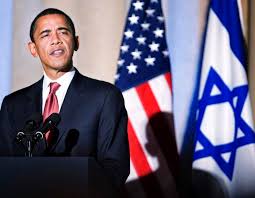
As President Barack Obama settles into the White House, there are two immediate issues facing the Israeli-U.S. relationship. The first relates to U.S. policy toward the Arab-Israeli Conflict in the aftermath of the fighting in Gaza and concerns possible official contacts between the United States and the Palestinian terrorist organization Hamas. The second issue concerns Iran and involves two basic questions: (1) How much time will Obama allot to “creative engagement” with Iran, and (2) will Obama, unlike George W. Bush, give Israel the “green light” to attack Iran’s nuclear installations to prevent Tehran from acquiring nuclear weapons?

Gaza and Hamas. Several foreign newspapers, normally not friendly toward Israel, have run stories stating that “unnamed members of the Obama Administration” are actively discussing the possibility of talks with Hamas, in order that the United States could rebuild its position in the Arab world after eight years of the pro-Israel Bush administration, and the devastation caused by the U.S.-backed Israeli military attack on Gaza.

Should Obama initiate talks with Hamas, it would be a massive reversal of a U.S. policy going back more than three decades which stated that the United States would not talk to Palestinian terrorist organizations until they renounced terrorism and formally recognized Israel. Indeed, the Reagan administration refused to talk to Yasser Arafat’s Palestinian Liberation Organization, until, in November 1988, the PLO formally recognized Israel’s right to exist and renounced terrorism. For its part, Hamas, despite a divided leadership between Gaza and Syria, continues to employ terrorism, both in the form of suicide bombings aimed at Israeli civilians and by firing missiles at Israeli cities. Hamas also continues to deny Israel’s right to exist as a Jewish state, proclaiming, very openly, its goal of destroying Israel and making the area between the Mediterranean an

However, how likely is it that the Obama administration would, in fact, speak with Hamas before it recognized Israel and renounced terrorism? In her mid-January 2009 confirmation hearings for the Cabinet position of Secretary of State, Hillary Clinton explicitly stated that the United States would not deal with Hamas until it changed its policies on terrorism and on recognizing Israel. In his inauguration speech, Obama himself stated emphatically that the United States would defeat those “who use terror and slaughter innocents”—a clear description of Hamas. In addition, if the Obama administration, following these statements, reversed its position on Hamas, Obama would not only massively hurt his credibility among large sectors of the U.S. public at a time when he is trying to preserve his political capital to reform the U.S. economy, he would also badly damage U.S. relations with Mahmoud Abbas, the Palestinian leader pledged to peace with Israel, and would also raise questions in the minds of the leaders of Jordan, Egypt and Saudi Arabia, all allies of the United States who oppose Hamas—and Iran, which backs Hamas.

If, however, as a result of its losses in the war with Israel, Hamas decides to reunite with Mahmoud Abbas’s PLO in a Palestinian national unity government, which restores Abbas’s control of Gaza, then one could perhaps expect U.S. interaction with the new Palestinian government, even if it contained Hamas representatives.

The Iran question. In a major change from the Bush administration, Obama has decided to “creatively engage” Iran in an effort to get it to halt its nuclear enrichment efforts. As Hillary Clinton stated in her confirmation hearings, the United States would follow “tough and principled diplomacy with the appropriate Iranian leader at the time and place of our choosing,” in an effort to convince Iran to abandon its “dangerous behavior” and become a “constructive regional actor.”

There are a number of questions raised by the new policy. First, given the enmity of Iran’s leaders toward the United States, will the Iranians really want to engage the United States? Indeed, Iranian President Ahmadinejad has made a change in Iran’s position toward the United States conditional on the withdrawal of all U.S. troops from the Middle East, something which the United States is highly unlikely to do. Second, even if the Iranians choose to talk with the United States—and it should be remembered that the Ayatollah Khamenei, and not Ahmadinejad is Iran’s top leader—how can the Obama administration be sure that the Iranian goal is not simply to string out the talks until Iranian scientists succeed in weaponizing Iran’s nuclear program and put nuclear warheads on Iran’s medium-range missiles that can reach Israel? Third, if and when the Obama administration decides that Iran is not serious about negotiations, will the United States be willing to use force to stop Iran’s nuclear program? Finally, if the Obama Administration is not willing to use force—despite Hillary Clinton’s assertion that ” all options are still on the table”—will Obama act to facilitate an Israeli attack on Iran?

Even the pro-Israel Bush administration refused to help Israel undertake an attack, denying it the bunker-busting bombs it had requested, and denying Israel permission to overfly Iraq on the way to Iran. These are the questions that Israel, and its supporters in the United States, will watch closely as the Obama administration conducts its policy toward Iran.

  • E-mail this story to a friend!
  • Facebook
  • Twitter
  • del.icio.us
  • Digg
  • Google Bookmarks
  • Technorati
  • StumbleUpon
  • Reddit

Posted in Hamas, Iran, Israel, Palestinians, Robert O. Freedman | No Comments

Comments are closed.

  • This Site

    Middle East Strategy at Harvard (MESH) is a project of the National Security Studies Program at the Weatherhead Center for International Affairs.
    • Read about MESH
    • Search MESH with Google
    • Receive MESH by email
  • Latest Posts

    • • Lebanon on UN Security Council by David Schenker
    • • Whither Yemen? by Mark N. Katz
    • • Saudis into Yemen by Daniel Byman
    • • Disrupting Iran’s weapons smuggling by Matthew Levitt
    • • MESH seeks support
    • • How the Saudis radicalized U.S. troops by Gal Luft
  • Comments

    MESH invites comments from its members and other analysts.
    • Read about comments
  • Latest Comments

    • Walter Reich on Bungled again: Israel and Goldstone
    • J. Scott Carpenter on Farewell and thanks
    • Michele Dunne on Farewell and thanks
    • Robert Satloff on Farewell and thanks
    • Stephen Peter Rosen and Martin Kramer on Farewell and thanks
  • Subscribe

    Subscribe to MESH by email Posts+Comments
    Feed Posts+Comments
    Subscribe to MESH by email Posts+Comments
    Posts+Comments
    AddThis Feed Button
  • RSS MESH Pointers

    • • Warming increases the risk of civil war in Africa
    • • Morocco: Jail Sentence for HR Activist
    • • Democracy Promotion: A New Approach
    • • Iran: Amnesty International and Others Urge an Independent Investigation into the Mysterious Death of an Iranian Doctor
    • • Washington and the Ivory Tower: How Government Can Engage Academe in the Service of U.S. Middle East Policy
  • Posts by Category

    • Administration (5)
    • Announcements (23)
    • Countries (245)
      • Afghanistan (11)
      • Arab Gulf (11)
      • Bahrain (1)
      • Caucasus (5)
      • Central Asia (2)
      • China (3)
      • Egypt (25)
      • France (2)
      • India (1)
      • Iran (77)
      • Iraq (35)
      • Israel (95)
      • Jordan (9)
      • Lebanon (28)
      • Pakistan (8)
      • Palestinians (52)
      • Qatar (1)
      • Russia (12)
      • Saudi Arabia (14)
      • Syria (18)
      • Turkey (15)
      • United Kingdom (3)
      • Yemen (5)
    • Members (266)
      • Adam Garfinkle (22)
      • Alan Dowty (19)
      • Andrew Exum (11)
      • Barry Rubin (14)
      • Bernard Haykel (9)
      • Bruce Jentleson (6)
      • Charles Hill (3)
      • Chuck Freilich (15)
      • Daniel Byman (17)
      • David Schenker (16)
      • Gal Luft (9)
      • Harvey Sicherman (11)
      • Hillel Fradkin (8)
      • J. Scott Carpenter (15)
      • Jacqueline Newmyer (6)
      • Jon Alterman (13)
      • Josef Joffe (17)
      • Joshua Muravchik (10)
      • Mark N. Katz (21)
      • Mark T. Clark (15)
      • Mark T. Kimmitt (6)
      • Martin Kramer (24)
      • Matthew Levitt (15)
      • Michael Doran (4)
      • Michael Horowitz (9)
      • Michael Mandelbaum (12)
      • Michael Reynolds (14)
      • Michael Rubin (8)
      • Michael Young (16)
      • Michele Dunne (16)
      • Philip Carl Salzman (32)
      • Raymond Tanter (16)
      • Robert O. Freedman (20)
      • Robert Satloff (17)
      • Soner Cagaptay (4)
      • Stephen Peter Rosen (13)
      • Steven A. Cook (14)
      • Tamara Cofman Wittes (18)
      • Walter Laqueur (20)
      • Walter Reich (11)
    • Subjects (269)
      • Academe (3)
      • Books (39)
      • Counterinsurgency (13)
      • Culture (21)
      • Democracy (16)
      • Demography (5)
      • Diplomacy (19)
      • Economics (1)
      • European Union (3)
      • Geopolitics (42)
      • Hamas (21)
      • Hezbollah (25)
      • Intelligence (9)
      • Islam in West (5)
      • Islamism (16)
      • Maps (27)
      • Media (5)
      • Military (19)
      • Nuclear (26)
      • Oil and Gas (13)
      • Public Diplomacy (10)
      • Qaeda (23)
      • Sanctions (6)
      • Taliban (3)
      • Technology (2)
      • Terminology (9)
      • Terrorism (30)
      • United Nations (7)
  • Archives

    • November 2009 (12)
    • October 2009 (8)
    • September 2009 (9)
    • August 2009 (9)
    • July 2009 (9)
    • June 2009 (12)
    • May 2009 (16)
    • April 2009 (11)
    • March 2009 (16)
    • February 2009 (11)
    • January 2009 (10)
    • December 2008 (12)
    • November 2008 (11)
    • October 2008 (19)
    • September 2008 (15)
    • August 2008 (17)
    • July 2008 (18)
    • June 2008 (12)
    • May 2008 (17)
    • April 2008 (20)
    • March 2008 (27)
    • February 2008 (19)
    • January 2008 (18)
    • December 2007 (19)
  • MESH Bookstore


    Recently featured:


  • Maps

    • Online atlas in construction
    Latest additions:
    Scriptless Flickr Badge Scriptless Flickr Badge
    Scriptless Flickr Badge Scriptless Flickr Badge
    Scriptless Flickr Badge Scriptless Flickr Badge
  • RSS Latest Iran

    • • Iran threatens minimum co-operation with IAEA (AFP)
    • • Ahmadinejad hails anti-US 'brothers' on Venezuela trip (AFP)
    • • Iran's leader makes inroads in Latin America (AP)
    • • Chavez calls Israel "murderous" U.S. arm (Reuters)
    • • Exclusive: ElBaradei says West won't meet Iran atom demand (Reuters)
  • RSS Latest Levant

    • • Israel's FM says peace depends on Palestinians (AP)
    • • Up to Palestinians after settlement offer: Israel (AFP)
    • • Lebanon agrees Hezbollah right to use arms against Israel (AFP)
    • • For Gaza's homeless, holiday is time for despair (Reuters)
    • • Israel halts some settlement, urges Abbas to talk (Reuters)
  • RSS Latest Iraq

    • • Iraqi PM: election dispute poses risks to security (AP)
    • • Joint drills help Iraq Kurd, Arab police thaw ties (Reuters)
    • • Iraqi journalists worry about media crackdown (Reuters)
    • • Night-time theater returns to Iraq as courage grows (Reuters)
    • • British inquiry hears of Iraq WMD doubts (AFP)
  • RSS New York Times

    • • Israel Offers a Pause in Building New Settlements
    • • Memo From Alexandria: Harnessing Darwin to Push an Ancient Intellectual Center to Evolve
    • • Iranian-American Faces New Spying Charge
    • • In Iraq, 2 Attacks Raise Fears of Sectarianism
    • • World Briefing | Middle East: Flu Fears May Curtail Pilgrimage
  • RSS Washington Post

    • • China's backing on Iran followed dire predictions
    • • Investment scandal hurts Hezbollah's image, even among backers
    • • At least 10 people reported killed in violence in Iraq
    • • U.S. hails Israeli plan on West Bank settlement building
    • • British panel investigating Iraq war begins public hearings
  • RSS NPR

    • • Israel Declares A 10-Month Settlement Freeze
    • • At Gaza Zoo, The Wild Things Return
    • • U.K. Begins Iraq War Inquiry
    • • British Panel Begins Inquiry On Iraq War
    • • N.C. Ophthalmologist Helps Train Iraqi, Afghan Doctors
  • Harvard Events

    Check upcoming events from the calendars of...
    • Weatherhead Center for International Affairs
    • Center for Middle Eastern Studies (CMES)
    • Belfer Center for Science and International Affairs
  • RSS Weatherhead

    • • Canada, The United States and Cuba: The Triangular Relation between 1959 and 1962 as seen in Cuban Diplomatic History Co-sponsored by...
    • • The Capabilities: View of Development
    • • Special Series on International Relations of East Asia The United States and Kaji Wataru in Wartime China and Occupied Japan Co-sponsored...
  • RSS CMES

    • • From Social Democracy to Islamic-Ottoman Multiculturalism: Origins of the Historic Reforms in State Policies Towards Ethnicity
    • • Turkey’s Opening: Negotiations with Iraqi Kurdistan and US Redeployment from Iraq
    • • Modernity's Aesthetic Turn: Art Education and the Nation in Japan and Egypt
    • • 2009-2010 Egypt Forum program
    • • Destinies Apart: Jewish Immigrants from the Atlas Mountains and from Ethiopia, Moshe Shokeid
    • • The Cartoons that Shook the World
    • • Middle East Film Screening: Edge of Heaven (2007, Turkey/Germany)
  • RSS Belfer

    • • Why Arab States Fear Islamist Regimes: Threat Perception and Soft Power Politics
    • • Youth Civic Engagement & Diversity through Social Entrepreneurship in Egypt
    • • REFLECTIONS ON THE REVOLUTION IN EUROPE: Immigration, Islam, and the West
    • • Political Costs of Nuclear Threats: Implications for Crisis Stability in South Asia
    • • Are Ambassadors Still Important?
    • • Air Supremacy and the Air Force, Closure and Introduction of Spring semester
    • • "Northern Ireland Peace Process: What Then, What Now, What Next?”
    • • "Let the Historians Decide"? Politics and the Past in Turkey and Japan
    • • Saudi Arabia and “Rentier Exceptionalism”: Oil Price Fluctuations, State Responses and Political Mobilization
    • • Two Concepts of Liberty: American Grand Strategy and the Liberal Tradition
  • Sponsor

  • Host

  • Rights

    Copyright © 2007-2009 President and Fellows of Harvard College
    Site Meter

Theme: MistyLook by Sadish


Protected by Akismet • Blog with WordPress

Bad Behavior has blocked 1 access attempts in the last 7 days.