• Home
  • About MESH
  • Members
  • Papers
  • Contact

Middle East Strategy at Harvard

National Security Studies Program :: Weatherhead Center

Feed on
Posts
Comments

Egypt and Gaza after the war

Feb 12th, 2009 by MESH

From Michele Dunne
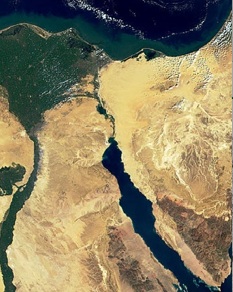
During the recent Israeli military operation and subsequent efforts to reach a durable ceasefire, Egypt demonstrated that it has two principal interests related to Gaza: first, avoiding taking on responsibility for the one and a half million Palestinians living there; and second, transferring control of Gaza back to the Palestinian Authority led by President Mahmud Abbas to the extent possible. These interests spring from long-standing Egyptian support for the creation of an independent Palestinian state in the West Bank and Gaza, as well as from concerns about stability inside Egypt itself.

There are at least two ways in which Egypt might be forced to take on responsibility for many, or all, Gazan Palestinians—and Egyptian President Husni Mubarak will try to avoid either one of them. First, there is the possibility that, due to a humanitarian crisis in Gaza, tens or hundreds of thousands of Palestinians could flood across the border into Sinai and stay on a semi-permanent basis. Egypt would then have to house them in refugee camps, creating a large and most likely restive refugee population in Sinai. This is not an idle fear; hundreds of thousands of Palestinians crossed the border illegally in January 2008 after Hamas militants bulldozed the fence to protest the closed border. President Mubarak thought it politically unwise to use lethal force against the unarmed Palestinians, and it took him nearly two weeks to persuade them to leave and then to regain control of Egypt’s international border. Egypt has since constructed a sturdier barrier—but it could still be breached.

Egypt will also resist suggestions that it should once again administer or occupy Gaza as it did between 1948 and 1967. Although the Israeli government has not adopted this idea as policy, the notion that Egypt and Jordan might take on much greater responsibility for Gaza and the West Bank respectively to secure their national interests has gained currency as prospects for the near-term creation of an independent Palestinian state have receded. Mubarak has addressed this prospect directly, warning in a December 30, 2008, speech that Egypt would resist attempts by Israel “to shirk its responsibility for Gaza and to over-task Egypt with its consequences.”

Realizing that governing hundreds of thousands of Gazans either in Sinai or Gaza itself would be a thankless task, President Mubarak also has reason to be concerned about the implications for his own country’s stability. Sinai is already a troubled area, populated largely by Bedouin with little loyalty to the Egyptian state, in which terrorists have carried out several large-scale attacks in recent years. The introduction of hundreds of thousands of Palestinians—perhaps including many militants from Hamas and Palestinian Islamic Jihad—would undoubtedly increase tensions.

Although many Egyptians have called on their government to extend greater diplomatic and humanitarian support to Gaza, actual Egyptian rule there (or a large Palestinian refugee presence in Egypt) would inflame anti-government sentiment. Egypt is already at a sensitive political juncture, facing widespread popular unhappiness with government performance and a likely presidential succession in the next few years. Protests against the government, mostly expressing local grievances related to the economy or human rights, have become a daily phenomenon. Since the 2000 outbreak of the second Palestinian uprising, a tradition has also developed of protests that begin by criticizing Israeli or U.S. actions but quickly turn to target Mubarak and demand an end to his rule of nearly three decades. Egypt’s principal opposition movement, the Muslim Brotherhood, supports Hamas fervently and often organizes such protests, either on its own or in conjunction with other opposition groups. While such protests currently do not threaten internal stability, that picture could change if Egypt were to take on significant responsibility for Gazans, a move many Egyptians would see as serving the interests of Israel more than those of the Palestinians.

The second principle motivating President Mubarak’s diplomatic efforts is the desire to restore the Palestinian Authority to a role in Gaza to the extent possible. Egypt takes a realist approach to Hamas; it would prefer that Hamas not rule Gaza but acknowledges that it is impossible to ignore the group. One constant in recent mediation efforts has been Egypt’s insistence on enforcing the terms of the 2005 Rafah agreement, which treats the Palestinian Authority as the responsible party on the Gaza side of the border. Egypt has also pressed Hamas to agree to resume reconciliation talks with Fatah (broken off in November 2008) under the supervision of Egyptian General Intelligence Director Omar Sulayman. Egypt would rather play the principal mediating role between Hamas and Fatah than allow another Arab country to do so, in order to preserve some influence over the terms of Palestinian reconciliation.

Egyptian Foreign Minister Aboul Gheit and other officials have repeatedly denied that significant arms have entered Gaza via the Sinai (claiming they have instead entered Gaza by sea), but in any case Egyptian officials are undoubtedly aware that there is now a spotlight on the arms smuggling issue. With the recent implementation of technical assistance from the U.S. Army Corps of Engineers (a $23 million program funded out of annual U.S. military assistance to Egypt) to detect tunneling and underground movements, Egypt should be able to improve significantly its performance in preventing arms trafficking into Gaza. The restoration of normal commerce in food and other essential goods through Rafah would also relieve pressure for smuggling, though not eliminate it altogether. Egypt has consistently resisted the idea of deploying international forces along its side of the border. There already are international troops in the Sinai under the guise of the Multinational Force and Observers as provided by the 1979 peace treaty with Israel, and Egypt will try to avoid what it sees as further infringements on its sovereignty.

The aftermath of the Gaza crisis affords some opportunities for the United States and Egypt to strengthen ties, which have been strained in recent years due to disagreements over U.S. actions in the Middle East as well as human and civil rights violations in Egypt. Egyptian goals in the region are generally consonant with U.S. goals, and this is true regarding Gaza. One difference is that Egypt is working explicitly for reconciliation between Fatah and Hamas, which the United States considers a terrorist organization. Even so, Egypt’s unspoken agenda in mediating between the two groups has always been to promote a greater role for Fatah in any unity government and the smallest role for Hamas that the traffic will bear. In addition, Egypt is playing a leading role in attempts to shore up Arab support for the Palestinian Liberation Organization headed by Abbas as the legitimate representative of the Palestinian people.

In the short term, U.S.–Egyptian cooperation on Gaza and other regional issues can help to restore bilateral ties. Over the longer term, however, it will be necessary for the two countries to reach an understanding on progress on human and civil rights in Egypt in order for the partnership to flourish.

Michele Dunne submitted this testimony to the Subcommittee on the Middle East and South Asia of the House Committee on Foreign Affairs on February 12.

  • E-mail this story to a friend!
  • Facebook
  • Twitter
  • del.icio.us
  • Digg
  • Google Bookmarks
  • Technorati
  • StumbleUpon
  • Reddit

Posted in Egypt, Michele Dunne, Palestinians, Qaeda | No Comments

Comments are closed.

  • This Site

    Middle East Strategy at Harvard (MESH) is a project of the National Security Studies Program at the Weatherhead Center for International Affairs.
    • Read about MESH
    • Search MESH with Google
    • Receive MESH by email
  • Latest Posts

    • • Lebanon on UN Security Council by David Schenker
    • • Whither Yemen? by Mark N. Katz
    • • Saudis into Yemen by Daniel Byman
    • • Disrupting Iran’s weapons smuggling by Matthew Levitt
    • • MESH seeks support
    • • How the Saudis radicalized U.S. troops by Gal Luft
  • Comments

    MESH invites comments from its members and other analysts.
    • Read about comments
  • Latest Comments

    • Walter Reich on Bungled again: Israel and Goldstone
    • J. Scott Carpenter on Farewell and thanks
    • Michele Dunne on Farewell and thanks
    • Robert Satloff on Farewell and thanks
    • Stephen Peter Rosen and Martin Kramer on Farewell and thanks
  • Subscribe

    Subscribe to MESH by email Posts+Comments
    Feed Posts+Comments
    Subscribe to MESH by email Posts+Comments
    Posts+Comments
    AddThis Feed Button
  • RSS MESH Pointers

    • • Morocco: Jail Sentence for HR Activist
    • • Does the U.S. Still Promote Democracy?
    • • Washington and the Ivory Tower: How Government Can Engage Academe in the Service of U.S. Middle East Policy
    • • Polling Wars: Hawks vs. Doves
    • • Nuclear Quagmire with Iran
  • Posts by Category

    • Administration (5)
    • Announcements (23)
    • Countries (245)
      • Afghanistan (11)
      • Arab Gulf (11)
      • Bahrain (1)
      • Caucasus (5)
      • Central Asia (2)
      • China (3)
      • Egypt (25)
      • France (2)
      • India (1)
      • Iran (77)
      • Iraq (35)
      • Israel (95)
      • Jordan (9)
      • Lebanon (28)
      • Pakistan (8)
      • Palestinians (52)
      • Qatar (1)
      • Russia (12)
      • Saudi Arabia (14)
      • Syria (18)
      • Turkey (15)
      • United Kingdom (3)
      • Yemen (5)
    • Members (266)
      • Adam Garfinkle (22)
      • Alan Dowty (19)
      • Andrew Exum (11)
      • Barry Rubin (14)
      • Bernard Haykel (9)
      • Bruce Jentleson (6)
      • Charles Hill (3)
      • Chuck Freilich (15)
      • Daniel Byman (17)
      • David Schenker (16)
      • Gal Luft (9)
      • Harvey Sicherman (11)
      • Hillel Fradkin (8)
      • J. Scott Carpenter (15)
      • Jacqueline Newmyer (6)
      • Jon Alterman (13)
      • Josef Joffe (17)
      • Joshua Muravchik (10)
      • Mark N. Katz (21)
      • Mark T. Clark (15)
      • Mark T. Kimmitt (6)
      • Martin Kramer (24)
      • Matthew Levitt (15)
      • Michael Doran (4)
      • Michael Horowitz (9)
      • Michael Mandelbaum (12)
      • Michael Reynolds (14)
      • Michael Rubin (8)
      • Michael Young (16)
      • Michele Dunne (16)
      • Philip Carl Salzman (32)
      • Raymond Tanter (16)
      • Robert O. Freedman (20)
      • Robert Satloff (17)
      • Soner Cagaptay (4)
      • Stephen Peter Rosen (13)
      • Steven A. Cook (14)
      • Tamara Cofman Wittes (18)
      • Walter Laqueur (20)
      • Walter Reich (11)
    • Subjects (269)
      • Academe (3)
      • Books (39)
      • Counterinsurgency (13)
      • Culture (21)
      • Democracy (16)
      • Demography (5)
      • Diplomacy (19)
      • Economics (1)
      • European Union (3)
      • Geopolitics (42)
      • Hamas (21)
      • Hezbollah (25)
      • Intelligence (9)
      • Islam in West (5)
      • Islamism (16)
      • Maps (27)
      • Media (5)
      • Military (19)
      • Nuclear (26)
      • Oil and Gas (13)
      • Public Diplomacy (10)
      • Qaeda (23)
      • Sanctions (6)
      • Taliban (3)
      • Technology (2)
      • Terminology (9)
      • Terrorism (30)
      • United Nations (7)
  • Archives

    • November 2009 (12)
    • October 2009 (8)
    • September 2009 (9)
    • August 2009 (9)
    • July 2009 (9)
    • June 2009 (12)
    • May 2009 (16)
    • April 2009 (11)
    • March 2009 (16)
    • February 2009 (11)
    • January 2009 (10)
    • December 2008 (12)
    • November 2008 (11)
    • October 2008 (19)
    • September 2008 (15)
    • August 2008 (17)
    • July 2008 (18)
    • June 2008 (12)
    • May 2008 (17)
    • April 2008 (20)
    • March 2008 (27)
    • February 2008 (19)
    • January 2008 (18)
    • December 2007 (19)
  • MESH Bookstore


    Recently featured:


  • Maps

    • Online atlas in construction
    Latest additions:
    Scriptless Flickr Badge Scriptless Flickr Badge
    Scriptless Flickr Badge Scriptless Flickr Badge
    Scriptless Flickr Badge Scriptless Flickr Badge
  • RSS Latest Iran

    • • Venezuela's Chavez calls Israel "murderous" U.S. arm (Reuters)
    • • Iran's leader makes inroads in Latin America (AP)
    • • Exclusive: ElBaradei says West won't meet Iran atom demand (Reuters)
    • • Mothers of Americans held in Iran send video (AP)
    • • IAEA chief: Iran must accept nuclear proposal (AP)
  • RSS Latest Levant

    • • Govt wants Israeli proposal to help revive peace talks (AFP)
    • • Abbas says to stay on until next Palestinian vote (Reuters)
    • • Israel proposes 10-month West Bank settlement halt (AP)
    • • 8 plead guilty to sending illegal money to Mideast (AP)
    • • US welcomes Israeli move on settlements (AFP)
  • RSS Latest Iraq

    • • British inquiry hears of Iraq WMD doubts (AFP)
    • • Officials say Iraq not UK's main worry before war (AP)
    • • Kuwait, Iraq discuss border oilfields (AFP)
    • • 6 family members killed in Iraq (AP)
    • • U.S., U.N. present proposals to end Iraq vote impasse (Reuters)
  • RSS New York Times

    • • Israel Offers a Pause in Building New Settlements
    • • Google Chief Announces Plan in Baghdad to Put Iraqi Artifacts Online
    • • Grand Jury Indicts 4 Men in Terror Case
    • • Netanyahu Plays Down Talk of a Prisoner Exchange
    • • Names of the Dead
  • RSS Washington Post

    • • White House praises Israel's settlement proposal
    • • Bombings in Iraq leave at least 10 dead
    • • For Jews, roiling Yemen no longer place to call home
    • • British panel investigating Iraq war begins public hearings
    • • Hezbollah official indicted on weapons charge
  • RSS NPR

    • • Israel Declares A 10-Month Settlement Freeze
    • • At Gaza Zoo, The Wild Things Return
    • • U.K. Begins Iraq War Inquiry
    • • British Panel Begins Inquiry On Iraq War
    • • N.C. Ophthalmologist Helps Train Iraqi, Afghan Doctors
  • Harvard Events

    Check upcoming events from the calendars of...
    • Weatherhead Center for International Affairs
    • Center for Middle Eastern Studies (CMES)
    • Belfer Center for Science and International Affairs
  • RSS Weatherhead

    • • Canada, The United States and Cuba: The Triangular Relation between 1959 and 1962 as seen in Cuban Diplomatic History Co-sponsored by...
    • • The Capabilities: View of Development
    • • Special Series on International Relations of East Asia The United States and Kaji Wataru in Wartime China and Occupied Japan Co-sponsored...
  • RSS CMES

    • • From Social Democracy to Islamic-Ottoman Multiculturalism: Origins of the Historic Reforms in State Policies Towards Ethnicity
    • • Turkey’s Opening: Negotiations with Iraqi Kurdistan and US Redeployment from Iraq
    • • Modernity's Aesthetic Turn: Art Education and the Nation in Japan and Egypt
    • • 2009-2010 Egypt Forum program
    • • Destinies Apart: Jewish Immigrants from the Atlas Mountains and from Ethiopia, Moshe Shokeid
    • • The Cartoons that Shook the World
    • • Middle East Film Screening: Edge of Heaven (2007, Turkey/Germany)
  • RSS Belfer

    • • Why Arab States Fear Islamist Regimes: Threat Perception and Soft Power Politics
    • • Youth Civic Engagement & Diversity through Social Entrepreneurship in Egypt
    • • REFLECTIONS ON THE REVOLUTION IN EUROPE: Immigration, Islam, and the West
    • • Political Costs of Nuclear Threats: Implications for Crisis Stability in South Asia
    • • Are Ambassadors Still Important?
    • • Air Supremacy and the Air Force, Closure and Introduction of Spring semester
    • • "Northern Ireland Peace Process: What Then, What Now, What Next?”
    • • "Let the Historians Decide"? Politics and the Past in Turkey and Japan
    • • Saudi Arabia and “Rentier Exceptionalism”: Oil Price Fluctuations, State Responses and Political Mobilization
    • • Two Concepts of Liberty: American Grand Strategy and the Liberal Tradition
  • Sponsor

  • Host

  • Rights

    Copyright © 2007-2009 President and Fellows of Harvard College
    Site Meter

Theme: MistyLook by Sadish


Protected by Akismet • Blog with WordPress

Bad Behavior has blocked 1 access attempts in the last 7 days.