• Home
  • About MESH
  • Members
  • Papers
  • Contact

Middle East Strategy at Harvard

National Security Studies Program :: Weatherhead Center

Feed on
Posts
Comments

‘From Bullets to Ballots’

Apr 6th, 2009 by MESH

MESH invites selected authors to offer original first-person statements on their new books—why and how they wrote them, and what impact they hope and expect to achieve. David L. Phillips is visiting scholar at Columbia University’s Center for the Study of Human Rights, adjunct associate professor in New York University’s Department of Politics, and senior fellow at the Atlantic Council. His new book is From Bullets to Ballots: Violent Muslim Movements in Transition.

From David L. Phillips
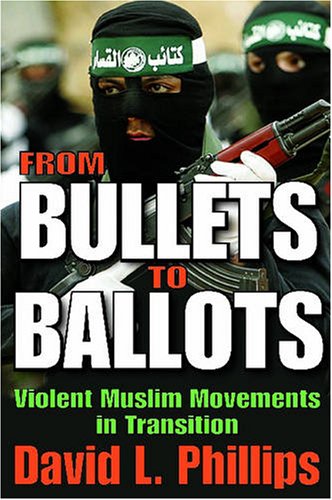
U.S. officials must be steely-eyed in confronting terrorist threats. However, we simply cannot kill all our adversaries. An effective counterterrorism strategy must go beyond confrontation and coercion. It must also be based on a deeper understanding of the disenfranchisement that gives rise to despair and the conditions that delude individuals into believing that sensational violence serves their cause.

My book is a post-mortem of George W. Bush’s counterterrorism policy. It is also intended as a guide for the Obama administration. Part of it consists of case studies of groups that are at various stages of abandoning violence and seeking their goals through political means: the Muslim Brotherhood of Egypt, Hamas, Hezbollah, the Kurdistan Worker’s Party, Free Aceh Movement, and the Jammu and Kashmir Liberation Front. Some of these groups are making progress; others are back-tracking; while some groups are dividing into various factions. These case studies are considered within the context of world affairs since Bush declared his “Global War on Terror,” of which the book is deeply critical.

The United States missed a golden opportunity after 9/11. The headline of Le Monde read: “Nous sommes tous Americains.” But instead of building on international sympathy, Bush squandered the world’s goodwill through a series of foreign policy blunders.

The UN Security Council supported U.S. military action to topple the Taliban. It also welcomed our pledge to democratize and rebuild Afghanistan. Unfortunately, the Bush administration’s failure to expend the required resources stirred doubt about the sincerity of its commitment.

The debacle in Iraq fueled further speculation. Using democracy to justify the U.S. occupation convinced detractors that democracy promotion was a Trojan horse for toppling governments averse to U.S. interests. Conspiracy-prone Iraqis were astonished by the post-war reconstruction fiasco. They wondered how the United States could vanquish Saddam’s Republican Guard, but fail to keep the electricity and water flowing.

Nothing eroded America’s credibility more than neglecting the Israeli-Palestinian peace process. Waiting until the final year of his administration to announce a major push for peace in the Middle East compounded concerns arising from the Bush administration’s support for corrupt, tyrannical, and (in the eyes of devout Muslims) impious regimes in the Muslim world.

I wrote From Bullets to Ballots in order to encourage the Obama administration to develop a deeper appreciation and different balance between confrontation, coercion, and co-optation of extremists.

The book is far from soft on terrorists. To be sure, every U.S. president has had the option—indeed the responsibility—to preempt an attack against the United States. I make the case, however, that Bush discredited this approach by conflating preemption and prevention. Preemption is justifiable when attack is imminent, whereas preventive war involves military action when there is no urgent threat.

The book insists that the United States can never condone torture, rendition, extra-judicial execution, or political assassinations. However, it acknowledges that targeted killings of armed combatants may be necessary under dire circumstances to prevent the killing of civilians.

When it comes to coercion, I advocate smart sanctions, which are more effective by targeting individuals with travel bans, freezing their overseas assets, and curtailing commercial operations in countries that sponsor terror. Financial intelligence can be used to choke off financial flows, and partnerships with local law enforcement can help disrupt hawala banking used by terror groups to move money. It is possible to interdict financing at its source by screening alms to radical clerics who misuse contributions as payments to “martyrs” or to support militant operations.

While observing the principle of free speech, the United States cannot stand idly by while the Internet is used to incite hatred, raise funds, recruit killers, and facilitate the command and control of terror operations. Unleashing viruses and computer worms can help address security risks. So can bombarding servers, redirecting traffic, and using a password assault to disrupt communications and penetrate websites used for nefarious purposes.

These confrontational and coercive measures are necessary options, but in the book I maintain that democracy and development assistance are also vital to the realization of US national security and global interests. All options explored in the book are explained in the context of case studies and the discussion of actual country conditions.

Democracy assistance has enjoyed bipartisan support for decades. To be effective, however, the United States should avoid arrogance and tread softly. In the book, I insist that leaving a heavy footprint alienates allies, risks undermining local initiative, and fomenting further violence.

Moreover, I underscore that democracy assistance is not about empowering leaders of whom the United States approves. One of Bush’s failings was to equate democracy with elections. Democratization is a process, not an event—one that must go beyond elections by including assistance to promote the rule of law, minority rights, and security sector reform, and enhance independent media and civil society thereby ensuring transparent and accountable governance.

Development assistance must also take into account national security considerations. The book points out that strengthening the formal education sector and increasing educational access for young girls undermines radical madrassas. I also advocate greater access to information and science education to help cultivate analytic thinking as a bulwark against extremism.

The most vulnerable persons must not be allowed to slip through the cracks and become victims of manipulation. To this end, hardship and resulting radicalization can be mitigated via a social safety net focusing on health services, as well as steps to develop community and national health systems. Additionally, viewing humanitarian assistance through a conflict-prevention lens both addresses basic needs and enhances stability, which is necessary to break the cycle of violence and counter extremism. Aid, trade, and debt forgiveness stimulate economic development and the emergence of a moderate middle class, thus helping to eradicate poverty, which is a potential breeding ground for extremism.

Eliminating the conditions that cause instability and give rise to extremism requires both U.S. leadership and international cooperation. Terrorism will continue to be the defining issue of our times. From Bullets to Ballots is grounded in the conviction that America will not be safe unless it finds the right balance between security, development and democratization. Moreover, foreign aid must be based on more than altruism. In light of today’s financial crisis, expenditures on democracy and development assistance are even more valuable when they also enhance U.S. national security.

Order from Publisher | Amazon

  • E-mail this story to a friend!
  • Facebook
  • Twitter
  • del.icio.us
  • Digg
  • Google Bookmarks
  • Technorati
  • StumbleUpon
  • Reddit

Posted in Books, Islamism, Terrorism | No Comments

Comments are closed.

  • This Site

    Middle East Strategy at Harvard (MESH) is a project of the National Security Studies Program at the Weatherhead Center for International Affairs.
    • Read about MESH
    • Search MESH with Google
    • Receive MESH by email
  • Latest Posts

    • • Lebanon on UN Security Council by David Schenker
    • • Whither Yemen? by Mark N. Katz
    • • Saudis into Yemen by Daniel Byman
    • • Disrupting Iran’s weapons smuggling by Matthew Levitt
    • • MESH seeks support
    • • How the Saudis radicalized U.S. troops by Gal Luft
  • Comments

    MESH invites comments from its members and other analysts.
    • Read about comments
  • Latest Comments

    • Walter Reich on Bungled again: Israel and Goldstone
    • J. Scott Carpenter on Farewell and thanks
    • Michele Dunne on Farewell and thanks
    • Robert Satloff on Farewell and thanks
    • Stephen Peter Rosen and Martin Kramer on Farewell and thanks
  • Subscribe

    Subscribe to MESH by email Posts+Comments
    Feed Posts+Comments
    Subscribe to MESH by email Posts+Comments
    Posts+Comments
    AddThis Feed Button
  • RSS MESH Pointers

    • • Warming increases the risk of civil war in Africa
    • • Morocco: Jail Sentence for HR Activist
    • • Democracy Promotion: A New Approach
    • • Iran: Amnesty International and Others Urge an Independent Investigation into the Mysterious Death of an Iranian Doctor
    • • Washington and the Ivory Tower: How Government Can Engage Academe in the Service of U.S. Middle East Policy
  • Posts by Category

    • Administration (5)
    • Announcements (23)
    • Countries (245)
      • Afghanistan (11)
      • Arab Gulf (11)
      • Bahrain (1)
      • Caucasus (5)
      • Central Asia (2)
      • China (3)
      • Egypt (25)
      • France (2)
      • India (1)
      • Iran (77)
      • Iraq (35)
      • Israel (95)
      • Jordan (9)
      • Lebanon (28)
      • Pakistan (8)
      • Palestinians (52)
      • Qatar (1)
      • Russia (12)
      • Saudi Arabia (14)
      • Syria (18)
      • Turkey (15)
      • United Kingdom (3)
      • Yemen (5)
    • Members (266)
      • Adam Garfinkle (22)
      • Alan Dowty (19)
      • Andrew Exum (11)
      • Barry Rubin (14)
      • Bernard Haykel (9)
      • Bruce Jentleson (6)
      • Charles Hill (3)
      • Chuck Freilich (15)
      • Daniel Byman (17)
      • David Schenker (16)
      • Gal Luft (9)
      • Harvey Sicherman (11)
      • Hillel Fradkin (8)
      • J. Scott Carpenter (15)
      • Jacqueline Newmyer (6)
      • Jon Alterman (13)
      • Josef Joffe (17)
      • Joshua Muravchik (10)
      • Mark N. Katz (21)
      • Mark T. Clark (15)
      • Mark T. Kimmitt (6)
      • Martin Kramer (24)
      • Matthew Levitt (15)
      • Michael Doran (4)
      • Michael Horowitz (9)
      • Michael Mandelbaum (12)
      • Michael Reynolds (14)
      • Michael Rubin (8)
      • Michael Young (16)
      • Michele Dunne (16)
      • Philip Carl Salzman (32)
      • Raymond Tanter (16)
      • Robert O. Freedman (20)
      • Robert Satloff (17)
      • Soner Cagaptay (4)
      • Stephen Peter Rosen (13)
      • Steven A. Cook (14)
      • Tamara Cofman Wittes (18)
      • Walter Laqueur (20)
      • Walter Reich (11)
    • Subjects (269)
      • Academe (3)
      • Books (39)
      • Counterinsurgency (13)
      • Culture (21)
      • Democracy (16)
      • Demography (5)
      • Diplomacy (19)
      • Economics (1)
      • European Union (3)
      • Geopolitics (42)
      • Hamas (21)
      • Hezbollah (25)
      • Intelligence (9)
      • Islam in West (5)
      • Islamism (16)
      • Maps (27)
      • Media (5)
      • Military (19)
      • Nuclear (26)
      • Oil and Gas (13)
      • Public Diplomacy (10)
      • Qaeda (23)
      • Sanctions (6)
      • Taliban (3)
      • Technology (2)
      • Terminology (9)
      • Terrorism (30)
      • United Nations (7)
  • Archives

    • November 2009 (12)
    • October 2009 (8)
    • September 2009 (9)
    • August 2009 (9)
    • July 2009 (9)
    • June 2009 (12)
    • May 2009 (16)
    • April 2009 (11)
    • March 2009 (16)
    • February 2009 (11)
    • January 2009 (10)
    • December 2008 (12)
    • November 2008 (11)
    • October 2008 (19)
    • September 2008 (15)
    • August 2008 (17)
    • July 2008 (18)
    • June 2008 (12)
    • May 2008 (17)
    • April 2008 (20)
    • March 2008 (27)
    • February 2008 (19)
    • January 2008 (18)
    • December 2007 (19)
  • MESH Bookstore


    Recently featured:


  • Maps

    • Online atlas in construction
    Latest additions:
    Scriptless Flickr Badge Scriptless Flickr Badge
    Scriptless Flickr Badge Scriptless Flickr Badge
    Scriptless Flickr Badge Scriptless Flickr Badge
  • RSS Latest Iran

    • • Iran threatens minimum co-operation with IAEA (AFP)
    • • Ahmadinejad hails anti-US 'brothers' on Venezuela trip (AFP)
    • • Iran's leader makes inroads in Latin America (AP)
    • • Chavez calls Israel "murderous" U.S. arm (Reuters)
    • • Exclusive: ElBaradei says West won't meet Iran atom demand (Reuters)
  • RSS Latest Levant

    • • Israel's FM says peace depends on Palestinians (AP)
    • • Up to Palestinians after settlement offer: Israel (AFP)
    • • Lebanon agrees Hezbollah right to use arms against Israel (AFP)
    • • For Gaza's homeless, holiday is time for despair (Reuters)
    • • Israel halts some settlement, urges Abbas to talk (Reuters)
  • RSS Latest Iraq

    • • Iraqi PM: election dispute poses risks to security (AP)
    • • Joint drills help Iraq Kurd, Arab police thaw ties (Reuters)
    • • Iraqi journalists worry about media crackdown (Reuters)
    • • Night-time theater returns to Iraq as courage grows (Reuters)
    • • British inquiry hears of Iraq WMD doubts (AFP)
  • RSS New York Times

    • • Israel Offers a Pause in Building New Settlements
    • • Memo From Alexandria: Harnessing Darwin to Push an Ancient Intellectual Center to Evolve
    • • Iranian-American Faces New Spying Charge
    • • In Iraq, 2 Attacks Raise Fears of Sectarianism
    • • World Briefing | Middle East: Flu Fears May Curtail Pilgrimage
  • RSS Washington Post

    • • China's backing on Iran followed dire predictions
    • • Investment scandal hurts Hezbollah's image, even among backers
    • • At least 10 people reported killed in violence in Iraq
    • • U.S. hails Israeli plan on West Bank settlement building
    • • British panel investigating Iraq war begins public hearings
  • RSS NPR

    • • Israel Declares A 10-Month Settlement Freeze
    • • At Gaza Zoo, The Wild Things Return
    • • U.K. Begins Iraq War Inquiry
    • • British Panel Begins Inquiry On Iraq War
    • • N.C. Ophthalmologist Helps Train Iraqi, Afghan Doctors
  • Harvard Events

    Check upcoming events from the calendars of...
    • Weatherhead Center for International Affairs
    • Center for Middle Eastern Studies (CMES)
    • Belfer Center for Science and International Affairs
  • RSS Weatherhead

    • • Canada, The United States and Cuba: The Triangular Relation between 1959 and 1962 as seen in Cuban Diplomatic History Co-sponsored by...
    • • The Capabilities: View of Development
    • • Special Series on International Relations of East Asia The United States and Kaji Wataru in Wartime China and Occupied Japan Co-sponsored...
  • RSS CMES

    • • From Social Democracy to Islamic-Ottoman Multiculturalism: Origins of the Historic Reforms in State Policies Towards Ethnicity
    • • Turkey’s Opening: Negotiations with Iraqi Kurdistan and US Redeployment from Iraq
    • • Modernity's Aesthetic Turn: Art Education and the Nation in Japan and Egypt
    • • 2009-2010 Egypt Forum program
    • • Destinies Apart: Jewish Immigrants from the Atlas Mountains and from Ethiopia, Moshe Shokeid
    • • The Cartoons that Shook the World
    • • Middle East Film Screening: Edge of Heaven (2007, Turkey/Germany)
  • RSS Belfer

    • • Why Arab States Fear Islamist Regimes: Threat Perception and Soft Power Politics
    • • Youth Civic Engagement & Diversity through Social Entrepreneurship in Egypt
    • • REFLECTIONS ON THE REVOLUTION IN EUROPE: Immigration, Islam, and the West
    • • Political Costs of Nuclear Threats: Implications for Crisis Stability in South Asia
    • • Are Ambassadors Still Important?
    • • Air Supremacy and the Air Force, Closure and Introduction of Spring semester
    • • "Northern Ireland Peace Process: What Then, What Now, What Next?”
    • • "Let the Historians Decide"? Politics and the Past in Turkey and Japan
    • • Saudi Arabia and “Rentier Exceptionalism”: Oil Price Fluctuations, State Responses and Political Mobilization
    • • Two Concepts of Liberty: American Grand Strategy and the Liberal Tradition
  • Sponsor

  • Host

  • Rights

    Copyright © 2007-2009 President and Fellows of Harvard College
    Site Meter

Theme: MistyLook by Sadish


Protected by Akismet • Blog with WordPress

Bad Behavior has blocked 1 access attempts in the last 7 days.