• Home
  • About MESH
  • Members
  • Papers
  • Contact

Middle East Strategy at Harvard

National Security Studies Program :: Weatherhead Center

Feed on
Posts
Comments

Global financial crisis and counterterrorism

May 6th, 2009 by MESH

From Daniel Byman
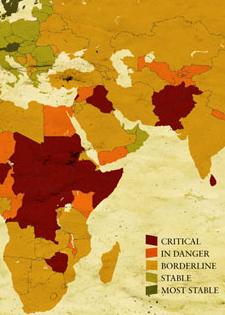
stable2008The threat of terrorism has faded from the minds of Americans as the unemployment soars and our IRAs shrink. Even though I specialize on counterterrorism, this is a welcome corrective: terrorism remains an important issue, but it should not always be the top priority for policymakers.

Yet as the Obama administration and American allies overseas focus on how to get the world’s economic wheels spinning again, they should recognize that the financial crisis is likely to have a dramatic impact on terrorism. Most obviously, though perhaps most difficult to specify, the economic crisis and the attendant misery will make many people around the world more willing to believe that the current system is corrupt and more open to radical ideologies—first steps toward embracing violent extremism.

More concretely, however, are the problems the crisis poses for effective counterterrorism. Strong governments usually have few terrorism problems, even if (like, say, North Korea today), they are brutally repressive and bring economic woe, not prosperity, to their citizens. However, weak governments, even if benign, are prone to domestic strife—and the financial crisis will further weaken many regimes. So looking around the world, it is not surprising that countries like Afghanistan, Lebanon, and Yemen suffer terrorism and civil strife and that less-governed regions of a country (e.g. tribal parts of Pakistan) are more prone to violence.

The financial crisis will lead new countries to join this unhappy club. In some countries, security services may not be paid, increasing their incentives for corruption and reducing their loyalty to the regime. In other instances, the government may curb the security services as part of regime change or to win over potential political opponents—and in so doing, weaken the services’ ability to stop terrorism.

Economic collapse may also lead to outright regime change as citizens demand new leadership in response to current regimes’ economic failures. As most governments around the world cooperate with the United States on counterterrorism, the prospect of a new regime taking power is of concern. In many countries (e.g. Iceland and Latvia), the impact will be negligible, but it is plausible that new leaders may replace current partners.

To offset pressure for regime change, some governments may reach out to different factions and power brokers in their own country. For the most part, this is positive as it widens the circle of democratic inclusion. However, not all these actors are positive from a counterterrorism point of view. Egypt, for example, has tried to coopt (largely successfully) the Muslim Brotherhood, and in so doing greatly weakened more radical groups like the Islamic Group and Egyptian Islamic Jihad. This cooptation, while effective in the short-term, empowers a group that, while avoiding a direct endorsement of violence, shares some of the teachings of the salafi jihadists and legitimates some of their actions. In other cases, such cooptation or autonomy may allow sympathetic local regimes to abet terrorists. Outside of terrorism, this cooptation has contributed to the rise of a more Islamicized Egypt, with upsetting consequences for non-Muslims in the country and women’s rights, among other issues.

The United States must also worry that the crisis will decrease local regimes’ willingness to cooperate openly with the United States. Despite the bump in favorable views of the United States with a new administration, the United States remains deeply unpopular in the Muslim world. As governments scamper for legitimacy to offset their losses for economic reasons, they may try to reduce, or play down, cooperation with the United States. High-profile counterterrorism measures that are unpopular with allies’ citizens (e.g. Predator strikes in Pakistan) may be particularly difficult to sustain.

So even as Obama administration officials press allies to step up their support, they must recognize how new economic pressures will complicate our efforts.

  • E-mail this story to a friend!
  • Facebook
  • Twitter
  • del.icio.us
  • Digg
  • Google Bookmarks
  • Technorati
  • StumbleUpon
  • Reddit

Posted in Daniel Byman, Terrorism | No Comments

Comments are closed.

  • This Site

    Middle East Strategy at Harvard (MESH) is a project of the National Security Studies Program at the Weatherhead Center for International Affairs.
    • Read about MESH
    • Search MESH with Google
    • Receive MESH by email
  • Latest Posts

    • • Lebanon on UN Security Council by David Schenker
    • • Whither Yemen? by Mark N. Katz
    • • Saudis into Yemen by Daniel Byman
    • • Disrupting Iran’s weapons smuggling by Matthew Levitt
    • • MESH seeks support
    • • How the Saudis radicalized U.S. troops by Gal Luft
  • Comments

    MESH invites comments from its members and other analysts.
    • Read about comments
  • Latest Comments

    • Walter Reich on Bungled again: Israel and Goldstone
    • J. Scott Carpenter on Farewell and thanks
    • Michele Dunne on Farewell and thanks
    • Robert Satloff on Farewell and thanks
    • Stephen Peter Rosen and Martin Kramer on Farewell and thanks
  • Subscribe

    Subscribe to MESH by email Posts+Comments
    Feed Posts+Comments
    Subscribe to MESH by email Posts+Comments
    Posts+Comments
    AddThis Feed Button
  • RSS MESH Pointers

    • • Morocco: Jail Sentence for HR Activist
    • • Does the U.S. Still Promote Democracy?
    • • Washington and the Ivory Tower: How Government Can Engage Academe in the Service of U.S. Middle East Policy
    • • Polling Wars: Hawks vs. Doves
    • • Nuclear Quagmire with Iran
  • Posts by Category

    • Administration (5)
    • Announcements (23)
    • Countries (245)
      • Afghanistan (11)
      • Arab Gulf (11)
      • Bahrain (1)
      • Caucasus (5)
      • Central Asia (2)
      • China (3)
      • Egypt (25)
      • France (2)
      • India (1)
      • Iran (77)
      • Iraq (35)
      • Israel (95)
      • Jordan (9)
      • Lebanon (28)
      • Pakistan (8)
      • Palestinians (52)
      • Qatar (1)
      • Russia (12)
      • Saudi Arabia (14)
      • Syria (18)
      • Turkey (15)
      • United Kingdom (3)
      • Yemen (5)
    • Members (266)
      • Adam Garfinkle (22)
      • Alan Dowty (19)
      • Andrew Exum (11)
      • Barry Rubin (14)
      • Bernard Haykel (9)
      • Bruce Jentleson (6)
      • Charles Hill (3)
      • Chuck Freilich (15)
      • Daniel Byman (17)
      • David Schenker (16)
      • Gal Luft (9)
      • Harvey Sicherman (11)
      • Hillel Fradkin (8)
      • J. Scott Carpenter (15)
      • Jacqueline Newmyer (6)
      • Jon Alterman (13)
      • Josef Joffe (17)
      • Joshua Muravchik (10)
      • Mark N. Katz (21)
      • Mark T. Clark (15)
      • Mark T. Kimmitt (6)
      • Martin Kramer (24)
      • Matthew Levitt (15)
      • Michael Doran (4)
      • Michael Horowitz (9)
      • Michael Mandelbaum (12)
      • Michael Reynolds (14)
      • Michael Rubin (8)
      • Michael Young (16)
      • Michele Dunne (16)
      • Philip Carl Salzman (32)
      • Raymond Tanter (16)
      • Robert O. Freedman (20)
      • Robert Satloff (17)
      • Soner Cagaptay (4)
      • Stephen Peter Rosen (13)
      • Steven A. Cook (14)
      • Tamara Cofman Wittes (18)
      • Walter Laqueur (20)
      • Walter Reich (11)
    • Subjects (269)
      • Academe (3)
      • Books (39)
      • Counterinsurgency (13)
      • Culture (21)
      • Democracy (16)
      • Demography (5)
      • Diplomacy (19)
      • Economics (1)
      • European Union (3)
      • Geopolitics (42)
      • Hamas (21)
      • Hezbollah (25)
      • Intelligence (9)
      • Islam in West (5)
      • Islamism (16)
      • Maps (27)
      • Media (5)
      • Military (19)
      • Nuclear (26)
      • Oil and Gas (13)
      • Public Diplomacy (10)
      • Qaeda (23)
      • Sanctions (6)
      • Taliban (3)
      • Technology (2)
      • Terminology (9)
      • Terrorism (30)
      • United Nations (7)
  • Archives

    • November 2009 (12)
    • October 2009 (8)
    • September 2009 (9)
    • August 2009 (9)
    • July 2009 (9)
    • June 2009 (12)
    • May 2009 (16)
    • April 2009 (11)
    • March 2009 (16)
    • February 2009 (11)
    • January 2009 (10)
    • December 2008 (12)
    • November 2008 (11)
    • October 2008 (19)
    • September 2008 (15)
    • August 2008 (17)
    • July 2008 (18)
    • June 2008 (12)
    • May 2008 (17)
    • April 2008 (20)
    • March 2008 (27)
    • February 2008 (19)
    • January 2008 (18)
    • December 2007 (19)
  • MESH Bookstore


    Recently featured:


  • Maps

    • Online atlas in construction
    Latest additions:
    Scriptless Flickr Badge Scriptless Flickr Badge
    Scriptless Flickr Badge Scriptless Flickr Badge
    Scriptless Flickr Badge Scriptless Flickr Badge
  • RSS Latest Iran

    • • Iran's Ahmadinejad arrives in Venezuela (AFP)
    • • Yemenis protest at Iran embassy over northern war (Reuters)
    • • Israel readying new arms to meet Iran challenge (AP)
    • • Iran's leader makes inroads in Latin America (AP)
    • • Venezuela opposition and Jews protest Iran visit (Reuters)
  • RSS Latest Levant

    • • US accuses 10 in Hezbollah weapons ring (AFP)
    • • Feds: Phila. plot to buy weapons for Hezbollah (AP)
    • • Men charged with attempting to support Hezbollah (Reuters)
    • • US offers $5M reward for 'Bomb Man' terror suspect (AP)
    • • Prisoner swap could win release of popular leader (AP)
  • RSS Latest Iraq

    • • 26 wounded in twin bombs in Iraq shrine city (AFP)
    • • British probe reveals lead-up to Iraq war (AFP)
    • • US military deaths in Iraq war at 4,365 (AP)
    • • US warns against Iraq election 'slippage' (AFP)
    • • Google to digitise Iraq Museum archives: CEO (AFP)
  • RSS New York Times

    • • Israel Offers a Pause in Building New Settlements
    • • Google Chief Announces Plan in Baghdad to Put Iraqi Artifacts Online
    • • Grand Jury Indicts 4 Men in Terror Case
    • • Netanyahu Plays Down Talk of a Prisoner Exchange
    • • Names of the Dead
  • RSS Washington Post

    • • For Jews, roiling Yemen no longer place to call home
    • • Hezbollah official indicted on weapons charge
    • • British panel investigating Iraq war begins public hearings
    • • digest
    • • Iraqi parliament passes another election law
  • RSS NPR

    • • At Gaza Zoo, The Wild Things Return
    • • U.K. Begins Iraq War Inquiry
    • • British Panel Begins Inquiry On Iraq War
    • • N.C. Ophthalmologist Helps Train Iraqi, Afghan Doctors
    • • Israel, Hamas Near Swap Of Prisoners For Soldier
  • Harvard Events

    Check upcoming events from the calendars of...
    • Weatherhead Center for International Affairs
    • Center for Middle Eastern Studies (CMES)
    • Belfer Center for Science and International Affairs
  • RSS Weatherhead

    • • Canada, The United States and Cuba: The Triangular Relation between 1959 and 1962 as seen in Cuban Diplomatic History Co-sponsored by...
    • • The Capabilities: View of Development
    • • Special Series on International Relations of East Asia The United States and Kaji Wataru in Wartime China and Occupied Japan Co-sponsored...
  • RSS CMES

    • • From Social Democracy to Islamic-Ottoman Multiculturalism: Origins of the Historic Reforms in State Policies Towards Ethnicity
    • • Turkey’s Opening: Negotiations with Iraqi Kurdistan and US Redeployment from Iraq
    • • Modernity's Aesthetic Turn: Art Education and the Nation in Japan and Egypt
    • • 2009-2010 Egypt Forum program
    • • Destinies Apart: Jewish Immigrants from the Atlas Mountains and from Ethiopia, Moshe Shokeid
    • • The Cartoons that Shook the World
    • • Middle East Film Screening: Edge of Heaven (2007, Turkey/Germany)
  • RSS Belfer

    • • "Northern Ireland Peace Process: What Then, What Now, What Next?”
    • • Why Arab States Fear Islamist Regimes: Threat Perception and Soft Power Politics
    • • Youth Civic Engagement & Diversity through Social Entrepreneurship in Egypt
    • • Saudi Arabia and “Rentier Exceptionalism”: Oil Price Fluctuations, State Responses and Political Mobilization
    • • REFLECTIONS ON THE REVOLUTION IN EUROPE: Immigration, Islam, and the West
    • • Air Supremacy and the Air Force, Closure and Introduction of Spring semester
    • • Political Costs of Nuclear Threats: Implications for Crisis Stability in South Asia
    • • "Let the Historians Decide"? Politics and the Past in Turkey and Japan
    • • Are Ambassadors Still Important?
    • • Two Concepts of Liberty: American Grand Strategy and the Liberal Tradition
  • Sponsor

  • Host

  • Rights

    Copyright © 2007-2009 President and Fellows of Harvard College
    Site Meter

Theme: MistyLook by Sadish


Protected by Akismet • Blog with WordPress

Bad Behavior has blocked 1 access attempts in the last 7 days.