• Home
  • About MESH
  • Members
  • Papers
  • Contact

Middle East Strategy at Harvard

National Security Studies Program :: Weatherhead Center

Feed on
Posts
Comments

Iran-Pakistan pipeline: Iran’s new lifeline

May 29th, 2009 by MESH

From Gal Luft
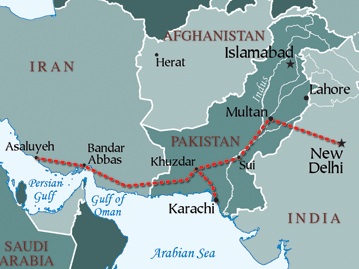
pipelineWhile the world’s eyes are focused on Iran and Pakistan, little attention has been paid to the two countries’ decision from last week to move ahead with their plans to connect their economies via a natural gas pipeline. What may seem like a standard energy project could have profound implications for the geopolitics of energy in the 21st century and for the future of south Asia, as well as for America’s ability to check Iran’s hegemony in the Persian Gulf.

For both Iran and Pakistan, the pipeline project would be highly beneficial. Iran sees in the pipeline not only an economic lifeline at a time when the United States and its European allies are trying to weaken it economically, but also an opportunity, should the pipeline be extended to India, to create an unbreakable long-term political and economic dependence of one billion Indian customers on its gas.

Pakistan, for its part, views the pipeline as the solution to its energy security challenge. Pakistan’s domestic gas production is falling and its import dependence is growing by leaps and bounds. By connecting itself with the world’s second-largest gas reserve, Pakistan would guarantee reliable supply for decades to come. If the pipeline were to be extended to India it could also be an instrument for stability in often tense Pakistan-India relations as well as a source of revenue for Islamabad through transit fees.

For the Obama administration, the signing of the pipeline deal is a diplomatic setback which could undermine its policy of weakening Iran economically. Unlike the Bush administration, which vocally opposed the project, the Obama team chose to remain mute, either in order to facilitate rapprochement with Tehran or due to its reluctance to burden U.S.-Pakistan relations at a volatile time when the Taliban is at Islamabad’s gate. Should the worst happen and a Taliban-style regime take over Pakistan, the economies of the world’s most radical Shiite state and that of what could be the world’s most radical Sunni state would be connected to each other for decades to come, like conjoined twins.

But all’s not lost for the United States. Years would elapse between the signing of the deal and the actual running of gas in the pipe. Baluchistan, where the pipeline is supposed to run, is one of Pakistan’s poorest and most restive provinces. In recent years it has been a battleground of militias belonging to Baluch tribes who hate the government of Tehran as much as they hate the one in Islamabad. Taliban or Al Qaeda members who have reportedly moved from the tribal border region to Baluchistan and who are known for their dislike of both governments may find common ground with the Baluch. One can rest assured that the Baluch Liberation Army (which for years has conducted sporadic attacks against water pipelines, power transmission lines and gas installations), and Al Qaeda members (who perfected the art of pipeline sabotage in Iraq) would not spare the Iran-Pakistan pipeline, causing delays in construction and perhaps even termination of the project altogether.

Open U.S. support for those opposition groups is unthinkable, as any collaboration—overt or covert—would severely cripple our relations with Islamabad. What the United States can do is minimize the pipeline’s damage to its strategic objectives by ensuring that it ends in Pakistan and does not extend further into India, as both Iran and Pakistan wish. To date, India has been hesitant to join the project and entrust its energy future in the hands of its unstable neighbors. The deterioration in the India-Pakistan relations following the terror attacks in Mumbai has effectively taken the project off the table. But this could easily change in the future as India’s energy crunch deepens: some 400 million Indians already suffer from energy poverty. This is what the Obama administration should preempt today, by increasing energy cooperation with India. Pressure on India to curtail its use of coal for power generation may help reduce carbon emissions, but it could force India to shift to cleaner burning natural gas and hence drive it right into the welcoming arms of Iran.

It is in the interest of the United States to help India increase its share of nuclear power and renewable energy while constructing liquefied natural gas terminals along the coasts of the Indian subcontinent to allow diversity of supply. Without active U.S. participation in the effort to alleviate India’s energy poverty, Iran could soon become to India what Russia is to Europe.

  • E-mail this story to a friend!
  • Facebook
  • Twitter
  • del.icio.us
  • Digg
  • Google Bookmarks
  • Technorati
  • StumbleUpon
  • Reddit

Posted in Gal Luft, Geopolitics, India, Iran, Oil and Gas, Pakistan | No Comments

Comments are closed.

  • This Site

    Middle East Strategy at Harvard (MESH) is a project of the National Security Studies Program at the Weatherhead Center for International Affairs.
    • Read about MESH
    • Search MESH with Google
    • Receive MESH by email
  • Latest Posts

    • • Lebanon on UN Security Council by David Schenker
    • • Whither Yemen? by Mark N. Katz
    • • Saudis into Yemen by Daniel Byman
    • • Disrupting Iran’s weapons smuggling by Matthew Levitt
    • • MESH seeks support
    • • How the Saudis radicalized U.S. troops by Gal Luft
  • Comments

    MESH invites comments from its members and other analysts.
    • Read about comments
  • Latest Comments

    • Walter Reich on Bungled again: Israel and Goldstone
    • J. Scott Carpenter on Farewell and thanks
    • Michele Dunne on Farewell and thanks
    • Robert Satloff on Farewell and thanks
    • Stephen Peter Rosen and Martin Kramer on Farewell and thanks
  • Subscribe

    Subscribe to MESH by email Posts+Comments
    Feed Posts+Comments
    Subscribe to MESH by email Posts+Comments
    Posts+Comments
    AddThis Feed Button
  • RSS MESH Pointers

    • • Kuwait: Saudi Campaign on Democracy
    • • Egypt: Soccer Distracts from Politics
    • • Washington and the Ivory Tower: How Government Can Engage Academe in the Service of U.S. Middle East Policy
    • • Polling Wars: Hawks vs. Doves
    • • Nuclear Quagmire with Iran
  • Posts by Category

    • Administration (5)
    • Announcements (23)
    • Countries (245)
      • Afghanistan (11)
      • Arab Gulf (11)
      • Bahrain (1)
      • Caucasus (5)
      • Central Asia (2)
      • China (3)
      • Egypt (25)
      • France (2)
      • India (1)
      • Iran (77)
      • Iraq (35)
      • Israel (95)
      • Jordan (9)
      • Lebanon (28)
      • Pakistan (8)
      • Palestinians (52)
      • Qatar (1)
      • Russia (12)
      • Saudi Arabia (14)
      • Syria (18)
      • Turkey (15)
      • United Kingdom (3)
      • Yemen (5)
    • Members (266)
      • Adam Garfinkle (22)
      • Alan Dowty (19)
      • Andrew Exum (11)
      • Barry Rubin (14)
      • Bernard Haykel (9)
      • Bruce Jentleson (6)
      • Charles Hill (3)
      • Chuck Freilich (15)
      • Daniel Byman (17)
      • David Schenker (16)
      • Gal Luft (9)
      • Harvey Sicherman (11)
      • Hillel Fradkin (8)
      • J. Scott Carpenter (15)
      • Jacqueline Newmyer (6)
      • Jon Alterman (13)
      • Josef Joffe (17)
      • Joshua Muravchik (10)
      • Mark N. Katz (21)
      • Mark T. Clark (15)
      • Mark T. Kimmitt (6)
      • Martin Kramer (24)
      • Matthew Levitt (15)
      • Michael Doran (4)
      • Michael Horowitz (9)
      • Michael Mandelbaum (12)
      • Michael Reynolds (14)
      • Michael Rubin (8)
      • Michael Young (16)
      • Michele Dunne (16)
      • Philip Carl Salzman (32)
      • Raymond Tanter (16)
      • Robert O. Freedman (20)
      • Robert Satloff (17)
      • Soner Cagaptay (4)
      • Stephen Peter Rosen (13)
      • Steven A. Cook (14)
      • Tamara Cofman Wittes (18)
      • Walter Laqueur (20)
      • Walter Reich (11)
    • Subjects (269)
      • Academe (3)
      • Books (39)
      • Counterinsurgency (13)
      • Culture (21)
      • Democracy (16)
      • Demography (5)
      • Diplomacy (19)
      • Economics (1)
      • European Union (3)
      • Geopolitics (42)
      • Hamas (21)
      • Hezbollah (25)
      • Intelligence (9)
      • Islam in West (5)
      • Islamism (16)
      • Maps (27)
      • Media (5)
      • Military (19)
      • Nuclear (26)
      • Oil and Gas (13)
      • Public Diplomacy (10)
      • Qaeda (23)
      • Sanctions (6)
      • Taliban (3)
      • Technology (2)
      • Terminology (9)
      • Terrorism (30)
      • United Nations (7)
  • Archives

    • November 2009 (12)
    • October 2009 (8)
    • September 2009 (9)
    • August 2009 (9)
    • July 2009 (9)
    • June 2009 (12)
    • May 2009 (16)
    • April 2009 (11)
    • March 2009 (16)
    • February 2009 (11)
    • January 2009 (10)
    • December 2008 (12)
    • November 2008 (11)
    • October 2008 (19)
    • September 2008 (15)
    • August 2008 (17)
    • July 2008 (18)
    • June 2008 (12)
    • May 2008 (17)
    • April 2008 (20)
    • March 2008 (27)
    • February 2008 (19)
    • January 2008 (18)
    • December 2007 (19)
  • MESH Bookstore


    Recently featured:


  • Maps

    • Online atlas in construction
    Latest additions:
    Scriptless Flickr Badge Scriptless Flickr Badge
    Scriptless Flickr Badge Scriptless Flickr Badge
    Scriptless Flickr Badge Scriptless Flickr Badge
  • RSS Latest Iran

    • • Iran's Ahmadinejad arrives in Venezuela (AFP)
    • • Yemenis protest at Iran embassy over northern war (Reuters)
    • • Israel readying new arms to meet Iran challenge (AP)
    • • Iran's leader makes inroads in Latin America (AP)
    • • Venezuela opposition and Jews protest Iran visit (Reuters)
  • RSS Latest Levant

    • • US accuses 10 in Hezbollah weapons ring (AFP)
    • • Feds: Phila. plot to buy weapons for Hezbollah (AP)
    • • Men charged with attempting to support Hezbollah (Reuters)
    • • US offers $5M reward for 'Bomb Man' terror suspect (AP)
    • • Prisoner swap could win release of popular leader (AP)
  • RSS Latest Iraq

    • • 26 wounded in twin bombs in Iraq shrine city (AFP)
    • • British probe reveals lead-up to Iraq war (AFP)
    • • US military deaths in Iraq war at 4,365 (AP)
    • • US warns against Iraq election 'slippage' (AFP)
    • • Google to digitise Iraq Museum archives: CEO (AFP)
  • RSS New York Times

    • • Grand Jury Indicts 4 Men in Terror Case
    • • Netanyahu Plays Down Talk of a Prisoner Exchange
    • • Soccer in Iraq: Another Field for Argument
    • • Google Chief Announces Plan in Baghdad to Put Iraqi Artifacts Online
    • • Names of the Dead
  • RSS Washington Post

    • • For Jews, roiling Yemen no longer place to call home
    • • Hezbollah official indicted on weapons charge
    • • British panel investigating Iraq war begins public hearings
    • • digest
    • • Iraqi parliament passes another election law
  • RSS NPR

    • • At Gaza Zoo, The Wild Things Return
    • • U.K. Begins Iraq War Inquiry
    • • British Panel Begins Inquiry On Iraq War
    • • N.C. Ophthalmologist Helps Train Iraqi, Afghan Doctors
    • • Israel, Hamas Near Swap Of Prisoners For Soldier
  • Harvard Events

    Check upcoming events from the calendars of...
    • Weatherhead Center for International Affairs
    • Center for Middle Eastern Studies (CMES)
    • Belfer Center for Science and International Affairs
  • RSS Weatherhead

    • • Canada, The United States and Cuba: The Triangular Relation between 1959 and 1962 as seen in Cuban Diplomatic History Co-sponsored by...
    • • The Capabilities: View of Development
    • • Special Series on International Relations of East Asia The United States and Kaji Wataru in Wartime China and Occupied Japan Co-sponsored...
  • RSS CMES

    • • From Social Democracy to Islamic-Ottoman Multiculturalism: Origins of the Historic Reforms in State Policies Towards Ethnicity
    • • Turkey’s Opening: Negotiations with Iraqi Kurdistan and US Redeployment from Iraq
    • • Modernity's Aesthetic Turn: Art Education and the Nation in Japan and Egypt
    • • 2009-2010 Egypt Forum program
    • • Destinies Apart: Jewish Immigrants from the Atlas Mountains and from Ethiopia, Moshe Shokeid
    • • The Cartoons that Shook the World
    • • Middle East Film Screening: Edge of Heaven (2007, Turkey/Germany)
  • RSS Belfer

    • • "Northern Ireland Peace Process: What Then, What Now, What Next?”
    • • Why Arab States Fear Islamist Regimes: Threat Perception and Soft Power Politics
    • • Youth Civic Engagement & Diversity through Social Entrepreneurship in Egypt
    • • Saudi Arabia and “Rentier Exceptionalism”: Oil Price Fluctuations, State Responses and Political Mobilization
    • • REFLECTIONS ON THE REVOLUTION IN EUROPE: Immigration, Islam, and the West
    • • Air Supremacy and the Air Force, Closure and Introduction of Spring semester
    • • Political Costs of Nuclear Threats: Implications for Crisis Stability in South Asia
    • • "Let the Historians Decide"? Politics and the Past in Turkey and Japan
    • • Are Ambassadors Still Important?
    • • Two Concepts of Liberty: American Grand Strategy and the Liberal Tradition
  • Sponsor

  • Host

  • Rights

    Copyright © 2007-2009 President and Fellows of Harvard College
    Site Meter

Theme: MistyLook by Sadish


Protected by Akismet • Blog with WordPress

Bad Behavior has blocked 1 access attempts in the last 7 days.