• Home
  • About MESH
  • Members
  • Papers
  • Contact

Middle East Strategy at Harvard

National Security Studies Program :: Weatherhead Center

Feed on
Posts
Comments

Obama chooses Egypt

May 14th, 2009 by MESH

From Tamara Cofman Wittes
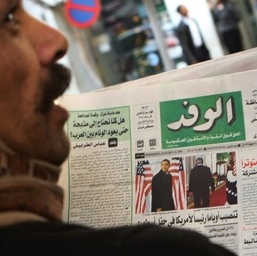
obamacairoThe selection of Egypt for President Obama’s long-awaited speech to the Muslim world was not an easy choice, but it is an audacious one. There was no easy option among the various Muslim capitals proposed for the address: a non-Arab capital risked alienating Arabs who view their region as the cradle of Islam, while each Arab capital carried its own risks, from security problems to policy backlash. Egypt may in fact be the riskiest of the available options, because it embodies many of the policy dilemmas the United States faces in the Muslim, and especially the Arab, world. That’s why the choice is so significant.

Egypt today is a crucible for challenges facing many Muslim societies:

  • Egypt is a staunch U.S. partner on major foreign policy issues in the Middle East, but one whose population is overwhelming opposed to American policy and to their government’s alliance with America.
  • Egypt boasts a strong central government and a cohesive national identity—yet the government relies on a mix of repression and cooptation to stay in power, preferring to trust the iron fist (with velvet glove for some) than the test of popular legitimacy.
  • Egyptian society has achieved many milestones in basic development—yet its economic performance has lagged far behind countries, like Brazil, that were once its peers. With one-third of its citizens under the age of majority, and one-fifth living in abject poverty, this underdevelopment breeds resentment and carries risks of instability.
  • Egyptian society is more and more religiously observant, while debates over the role of religion in the public sphere are increasingly contentious, threatening social cohesion (in a country that is 10 percent Christian) and inducing state repression.
  • Egypt faced Islamist terrorism in previous decades, and responded with brutal force. The crackdowns relieved the internal threat, but drove radicals like Ayman al-Zawahiri to other countries, where their impact has multiplied.

For the United States, Egypt also embodies the central dilemmas Washington faces regarding human rights and democracy in the wake of Bush’s Freedom Agenda. Egypt’s president, while formally elected through a competitive process, imprisoned his most recent opponent for three years. His regime continues to arrest and torture journalists, bloggers, and others who challenge government authority. Egypt’s human rights failings don’t stop at its own borders: Mubarak has been a prime sponsor of Sudan’s Omar al-Bashir, and his diplomats have been among those subverting the UN Human Rights Council, which Obama now seeks to rehabilitate.

Obama’s intentions on human rights and democracy remain unclear, but short-term exigencies (as well as a bitter Bush legacy) may militate against firm pressure for democratic progress. American policy makers worry that pushing Egypt’s government to improve its human rights practices and open its political process will goad Mubarak into limiting his foreign policy cooperation with Washington at a time when regional challenges loom. American policy makers also fear those who might succeed Mubarak through a democratic election: Islamists resolutely opposed to American policy preferences in the Middle East. These two concerns ultimately doomed Bush’s democracy push in the Middle East; will they prevent Obama from speaking up at all?

All these challenges make Egypt a particularly trying location from which Obama must speak to the Muslim world. But these same facts compel Obama to take the bull by the horns and articulate clear views toward these issues. Concerns over unpopular American policies, stagnant economies, repressive government and fraught mosque-state relations are all so obvious in Egypt that they cannot be ignored without vitiating the credibility of the speech—and rebuilding America’s credibility with Muslim publics is really what this speech is all about.

By choosing Egypt for this address, the Obama administration has swung for the fences. It has set a deadline of one month within which it must decide upon and publicize its basic attitude on two profound questions:

  1. How can America engage with governments of all types abroad, while simultaneously building trust and partnership with their citizens?
  2. How can America pursue its long-term interests in democratic growth alongside its urgent interests in regional stability?

Obama’s June 4 speech in Egypt cannot possibly provide full responses to these deep and important questions—but it must not fail to give some answer. It’s going to be a speech to watch.

  • E-mail this story to a friend!
  • Facebook
  • Twitter
  • del.icio.us
  • Digg
  • Google Bookmarks
  • Technorati
  • StumbleUpon
  • Reddit

Posted in Egypt, Public Diplomacy, Tamara Cofman Wittes | No Comments

Comments are closed.

  • This Site

    Middle East Strategy at Harvard (MESH) is a project of the National Security Studies Program at the Weatherhead Center for International Affairs.
    • Read about MESH
    • Search MESH with Google
    • Receive MESH by email
  • Latest Posts

    • • Lebanon on UN Security Council by David Schenker
    • • Whither Yemen? by Mark N. Katz
    • • Saudis into Yemen by Daniel Byman
    • • Disrupting Iran’s weapons smuggling by Matthew Levitt
    • • MESH seeks support
    • • How the Saudis radicalized U.S. troops by Gal Luft
  • Comments

    MESH invites comments from its members and other analysts.
    • Read about comments
  • Latest Comments

    • Walter Reich on Bungled again: Israel and Goldstone
    • J. Scott Carpenter on Farewell and thanks
    • Michele Dunne on Farewell and thanks
    • Robert Satloff on Farewell and thanks
    • Stephen Peter Rosen and Martin Kramer on Farewell and thanks
  • Subscribe

    Subscribe to MESH by email Posts+Comments
    Feed Posts+Comments
    Subscribe to MESH by email Posts+Comments
    Posts+Comments
    AddThis Feed Button
  • RSS MESH Pointers

    • • Kuwait: Saudi Campaign on Democracy
    • • Egypt: Soccer Distracts from Politics
    • • Washington and the Ivory Tower: How Government Can Engage Academe in the Service of U.S. Middle East Policy
    • • Polling Wars: Hawks vs. Doves
    • • Nuclear Quagmire with Iran
  • Posts by Category

    • Administration (5)
    • Announcements (23)
    • Countries (245)
      • Afghanistan (11)
      • Arab Gulf (11)
      • Bahrain (1)
      • Caucasus (5)
      • Central Asia (2)
      • China (3)
      • Egypt (25)
      • France (2)
      • India (1)
      • Iran (77)
      • Iraq (35)
      • Israel (95)
      • Jordan (9)
      • Lebanon (28)
      • Pakistan (8)
      • Palestinians (52)
      • Qatar (1)
      • Russia (12)
      • Saudi Arabia (14)
      • Syria (18)
      • Turkey (15)
      • United Kingdom (3)
      • Yemen (5)
    • Members (266)
      • Adam Garfinkle (22)
      • Alan Dowty (19)
      • Andrew Exum (11)
      • Barry Rubin (14)
      • Bernard Haykel (9)
      • Bruce Jentleson (6)
      • Charles Hill (3)
      • Chuck Freilich (15)
      • Daniel Byman (17)
      • David Schenker (16)
      • Gal Luft (9)
      • Harvey Sicherman (11)
      • Hillel Fradkin (8)
      • J. Scott Carpenter (15)
      • Jacqueline Newmyer (6)
      • Jon Alterman (13)
      • Josef Joffe (17)
      • Joshua Muravchik (10)
      • Mark N. Katz (21)
      • Mark T. Clark (15)
      • Mark T. Kimmitt (6)
      • Martin Kramer (24)
      • Matthew Levitt (15)
      • Michael Doran (4)
      • Michael Horowitz (9)
      • Michael Mandelbaum (12)
      • Michael Reynolds (14)
      • Michael Rubin (8)
      • Michael Young (16)
      • Michele Dunne (16)
      • Philip Carl Salzman (32)
      • Raymond Tanter (16)
      • Robert O. Freedman (20)
      • Robert Satloff (17)
      • Soner Cagaptay (4)
      • Stephen Peter Rosen (13)
      • Steven A. Cook (14)
      • Tamara Cofman Wittes (18)
      • Walter Laqueur (20)
      • Walter Reich (11)
    • Subjects (269)
      • Academe (3)
      • Books (39)
      • Counterinsurgency (13)
      • Culture (21)
      • Democracy (16)
      • Demography (5)
      • Diplomacy (19)
      • Economics (1)
      • European Union (3)
      • Geopolitics (42)
      • Hamas (21)
      • Hezbollah (25)
      • Intelligence (9)
      • Islam in West (5)
      • Islamism (16)
      • Maps (27)
      • Media (5)
      • Military (19)
      • Nuclear (26)
      • Oil and Gas (13)
      • Public Diplomacy (10)
      • Qaeda (23)
      • Sanctions (6)
      • Taliban (3)
      • Technology (2)
      • Terminology (9)
      • Terrorism (30)
      • United Nations (7)
  • Archives

    • November 2009 (12)
    • October 2009 (8)
    • September 2009 (9)
    • August 2009 (9)
    • July 2009 (9)
    • June 2009 (12)
    • May 2009 (16)
    • April 2009 (11)
    • March 2009 (16)
    • February 2009 (11)
    • January 2009 (10)
    • December 2008 (12)
    • November 2008 (11)
    • October 2008 (19)
    • September 2008 (15)
    • August 2008 (17)
    • July 2008 (18)
    • June 2008 (12)
    • May 2008 (17)
    • April 2008 (20)
    • March 2008 (27)
    • February 2008 (19)
    • January 2008 (18)
    • December 2007 (19)
  • MESH Bookstore


    Recently featured:


  • Maps

    • Online atlas in construction
    Latest additions:
    Scriptless Flickr Badge Scriptless Flickr Badge
    Scriptless Flickr Badge Scriptless Flickr Badge
    Scriptless Flickr Badge Scriptless Flickr Badge
  • RSS Latest Iran

    • • Iran's Ahmadinejad arrives in Venezuela (AFP)
    • • Yemenis protest at Iran embassy over northern war (Reuters)
    • • Israel readying new arms to meet Iran challenge (AP)
    • • Iran's leader makes inroads in Latin America (AP)
    • • Venezuela opposition and Jews protest Iran visit (Reuters)
  • RSS Latest Levant

    • • US accuses 10 in Hezbollah weapons ring (AFP)
    • • Feds: Phila. plot to buy weapons for Hezbollah (AP)
    • • Men charged with attempting to support Hezbollah (Reuters)
    • • US offers $5M reward for 'Bomb Man' terror suspect (AP)
    • • Prisoner swap could win release of popular leader (AP)
  • RSS Latest Iraq

    • • 26 wounded in twin bombs in Iraq shrine city (AFP)
    • • British probe reveals lead-up to Iraq war (AFP)
    • • US military deaths in Iraq war at 4,365 (AP)
    • • US warns against Iraq election 'slippage' (AFP)
    • • Google to digitise Iraq Museum archives: CEO (AFP)
  • RSS New York Times

    • • Grand Jury Indicts 4 Men in Terror Case
    • • Netanyahu Plays Down Talk of a Prisoner Exchange
    • • Soccer in Iraq: Another Field for Argument
    • • Google Chief Announces Plan in Baghdad to Put Iraqi Artifacts Online
    • • Names of the Dead
  • RSS Washington Post

    • • For Jews, roiling Yemen no longer place to call home
    • • Hezbollah official indicted on weapons charge
    • • British panel investigating Iraq war begins public hearings
    • • digest
    • • Iraqi parliament passes another election law
  • RSS NPR

    • • At Gaza Zoo, The Wild Things Return
    • • U.K. Begins Iraq War Inquiry
    • • British Panel Begins Inquiry On Iraq War
    • • N.C. Ophthalmologist Helps Train Iraqi, Afghan Doctors
    • • Israel, Hamas Near Swap Of Prisoners For Soldier
  • Harvard Events

    Check upcoming events from the calendars of...
    • Weatherhead Center for International Affairs
    • Center for Middle Eastern Studies (CMES)
    • Belfer Center for Science and International Affairs
  • RSS Weatherhead

    • • Canada, The United States and Cuba: The Triangular Relation between 1959 and 1962 as seen in Cuban Diplomatic History Co-sponsored by...
    • • The Capabilities: View of Development
    • • Special Series on International Relations of East Asia The United States and Kaji Wataru in Wartime China and Occupied Japan Co-sponsored...
  • RSS CMES

    • • From Social Democracy to Islamic-Ottoman Multiculturalism: Origins of the Historic Reforms in State Policies Towards Ethnicity
    • • Turkey’s Opening: Negotiations with Iraqi Kurdistan and US Redeployment from Iraq
    • • Modernity's Aesthetic Turn: Art Education and the Nation in Japan and Egypt
    • • 2009-2010 Egypt Forum program
    • • Destinies Apart: Jewish Immigrants from the Atlas Mountains and from Ethiopia, Moshe Shokeid
    • • The Cartoons that Shook the World
    • • Middle East Film Screening: Edge of Heaven (2007, Turkey/Germany)
  • RSS Belfer

    • • "Northern Ireland Peace Process: What Then, What Now, What Next?”
    • • Why Arab States Fear Islamist Regimes: Threat Perception and Soft Power Politics
    • • Youth Civic Engagement & Diversity through Social Entrepreneurship in Egypt
    • • Saudi Arabia and “Rentier Exceptionalism”: Oil Price Fluctuations, State Responses and Political Mobilization
    • • REFLECTIONS ON THE REVOLUTION IN EUROPE: Immigration, Islam, and the West
    • • Air Supremacy and the Air Force, Closure and Introduction of Spring semester
    • • Political Costs of Nuclear Threats: Implications for Crisis Stability in South Asia
    • • "Let the Historians Decide"? Politics and the Past in Turkey and Japan
    • • Are Ambassadors Still Important?
    • • Two Concepts of Liberty: American Grand Strategy and the Liberal Tradition
  • Sponsor

  • Host

  • Rights

    Copyright © 2007-2009 President and Fellows of Harvard College
    Site Meter

Theme: MistyLook by Sadish


Protected by Akismet • Blog with WordPress

Bad Behavior has blocked 1 access attempts in the last 7 days.