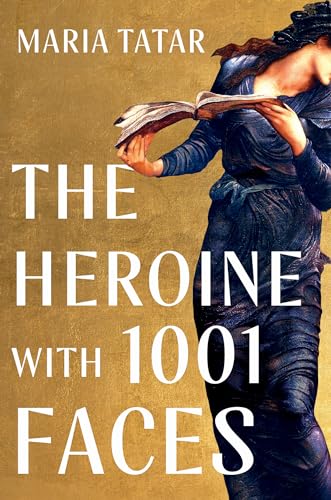
Helen of Troy
Read the Agamemnon, and see whether, in process of time, your sympathies are not almost entirely with Clytemnestra.
Virginia Woolf, “Mr. Bennett and Mrs. Brown”
Odd isn’t it, that so many see me as evil? My life has been turned into a cautionary tale, a warning about the toxic effects of beauty. What did I ever do to deserve that kind of treatment? Today I picked up another one of those books about Greek “mythology.” They now take our history and our religion, put them between the covers of a book, and promote “myths” as entertaining and instructive reading for the young. In the “lavishly illustrated” volume of Greek myths that came into my hands, I was given the usual totalizing identity treatment. I’m a woman of “legendary” beauty with “mythical” reach. I’m turned into a “lethal beauty” or “femme fatale.” One writer claims that I may be the most “fatale” of “femmes,” the deadliest woman of them all. After all, I led Greeks and Trojans alike into fierce rounds of fighting, as they deployed slings and hurled javelins and spears at each other in a massacre lasting ten long years. How on earth could my beauty, or any kind of beauty at all, unleash that kind of violence? And how in the world did my life story become a fable for educating the young?
Let me clear things up. Remember Peleus, the mortal who married Thetis, the sea nymph who gave birth to Achilles? When Zeus threw a wedding party for the parents of Achilles, Eris was excluded, and guess what? The goddess of Discord (wasn’t that name a tip-off to avoid insulting her?) got wind of the festivities, she crashed the wedding and plotted her revenge. What could create more ill will than an improvised beauty contest? “For the fairest”—that’s what Eris inscribed on a golden apple (τῇ καλλίστῃ), and, the next thing you knew, the apple landed among the guests.
No one caught the beautiful piece of fruit, a real work of art, but Hera, Athena, and Aphrodite each claimed it as their own. And dutiful goddesses that they were, they turned to Zeus for a decision. No fool, Zeus was not about to get involved, and he handed the apple over to his messenger Hermes, who promptly delivered it to Paris, the son of Priam. The King of Troy had been told that a son would one day bring ruin to his country, and, after his wife gave birth to a boy, he sent Paris off to Mount Ida, where he stayed out of trouble, living a perfectly contented life as a shepherd. Zeus declared that Paris would have the last word in that famous beauty contest. The goddesses would accept Paris’s decision, he added in his message, knowing full well that at least two of them would turn against the judge of the beauty contest.
Hera, Athena, and Aphrodite were also no fools. When Paris arrived to judge the beauty contest, they stripped down for him, whispered sweet nothings in his ear, and, when that didn’t work, they dangled bribes. Hera promised political power, telling Paris that she would make him ruler over Europe and Asia Minor. Athena offered wisdom and military power. As for Aphrodite, the goddess of love, what did she offer but beauty and love? She promised to help him abduct me, the world’s most beautiful woman, as I was known. True, I was already married, but all Paris had to do was travel to Sparta, and, as soon as King Menelaus left the house, he could whisk me away to his ships. That’s what Paris did, and before long a thousand Greek ships set sail, headed for Troy to bring me back home.
Maybe it will be helpful to know something about my birth. Guess who my father was? Yes, Zeus, and, as usual, he was up to his pranks. My mother, Leda (yes, that Leda), was the wife of King Tyndareus. She lived in Sparta and was renowned for her beauty—white as snow, lips red as blood, and eyes black as pitch. Sound familiar? Zeus thought it would be a good idea to disguise himself as a swan in this instance, and he forced himself on Leda, who soon found herself carrying four children: two by Tyndareus and two by Zeus (they say she slept with both husband and god in one night). The product of those unions? Castor and Clytemnestra (mortals whose father was Tyndareus), and then my brother Polydeuces, also known as Pollux, and me (Zeus was our father).
But there’s a juicier version of that story, one that I’m glad never made it into the PR on me. Zeus evidently had an interest in Nemesis, the goddess who punishes hubris, the pride that my culture found so intolerable. Nemesis was not willing, and she used her powers to shapeshift, turning herself into a goose. That’s when Zeus outsmarted her, turning herself into a swan and assaulting the goddess, who evidently then produced the egg from which I was born.
My sister Clytemnestra married young. You remember, she’s the one who threw a net over her husband Agamemnon, King of Mycenae, and then stabbed him to death. My father had a hard time arranging my marriage. Suitors lined up in droves, asking for my hand. Suitors! Why call those opportunistic brats suitors? Most of them are just hoping for an advantageous alliance, with a cash payout that I’ll never be able to touch. While they were milling around, Odysseus, who was also in the running, whispered a suggestion in my father’s ear, one that would avoid the possibility that those gathered would turn on each other. That man of twists and turns did not need to resort to convoluted logic in the plan he proposed. Just get all the suitors to agree that the man you choose will be supported by all the others, in times of peace but also in times of war, that is, if some fool tries to abduct the beautiful Helen. And sure enough, Paris showed up in Sparta, waiting until Menelaus had left the house to take me captive.
They say Eros shot an arrow through my heart when I set eyes on Paris, but that’s sheer nonsense. I didn’t “elope” with Paris. Did I have a choice? What would you do if armed soldiers appeared at your door, nodded politely, took you by the arm, and ordered you to follow them? Would you hesitate? Slam the door on them? Spit in their faces? No use calling for help. With Menelaus away, there was no one there to countermand their orders. Did I really want to risk a struggle that would most likely leave everyone in my chambers dead? And so I was obedient, following the men to the ship that took me to Troy. When we landed at last, I was slumbering peacefully in the arms of Paris.
You are “an exquisite agent of extermination,” one scholar whispers in my ear. I am heralded as the “gold standard” of outer beauty, my name used by Helen of Troy Ltd. to distribute beauty products. But I am also dangerous, an embodied paradox that combines power with vulnerability, perfection with destruction, a woman who arouses lust and revulsion alike. Have they forgotten my backstory? I was a girl when Theseus raped me. And then he left me locked in a fortress while he went off to chase Persephone. Thank goodness for my brothers, who rescued me and then, in retaliation, invaded Attica, laying waste to the country and enslaving Theseus’ mother. Oh yes, even as a child, I became the causus belli, the origin of conflict, violence, and bloodshed. The beautiful Helen, much admired and much reproached. Reproached for what?
Men chase me, abduct me, make love to me, rape me, and then they blame me. After all, it was my beauty that aroused them. I turned their heads, seduced them, and led them astray. It’s all my doing. Just like that exasperating creature named Eve, who lived in in the Garden of Eden and then stupidly talked Adam into taking a bite of forbidden fruit. Sure, it was fruit from the tree of knowledge, but everyone knows she was really barking up the tree of carnal knowledge and that she and the snake were up to no good. After all, she was responsible for bringing sin and evil into the world.
Just look at what the Church Fathers say about Eve. Look at Albrecht Dürer’s Adam and Eve, with Eve posed like Venus, an apple in both hands, the snake hovering over the apple. Artists love nothing more than naked women, and my favorite painting of Eve is John Stanhope’s “Temptation of Eve,” There she stands, next to the tree of knowledge, the snake, entangled in the bountiful tree, whispering into her ear, while she plucks an apple from the tree. She’s almost a twin of the anthropomorphized snake—a kindred spirit at the least—and at times you can’t tell whether it’s her long locks or its slithering body wrapping itself around the vertical figures. Snake, branches, hair, it’s all a phantasmagoria that makes me think of poor Medusa and her venomous locks. We are the serpents.
But there is one voice that stood up for me. For the ancient Greeks I became a symbol of “shameless beauty” and “betrayal,” a sharp contrast to my cousin Penelope, praised for fidelity to her straying spouse. I’m the treacherous wife, the libertine who chose pleasure over family. Yes, there is a counter-narrative, a story revealing that there was no real basis for the myth Homer—that blind bard—constructed. Truth be told, I never left home. Stesichorus, a sixth-century poet from Sicily, is the man who rehabilitated me. He once went along with the same old story, the one Homer told, and was struck blind for slandering me. And then, he recanted, and, presto, his sight was restored, unlike Homer, who remained forever blind. He tells god’s truth—I never sailed for Troy. The Greeks were fighting over my eidolon, a ghost, a shadow, an image of me. Stesichorus has the courage to stand up and say that the Trojan War was not fought for a woman but for a woman’s image, a mere fantasy, a will-o’-the-wisp, a delusion. After all, maybe the siege of Troy was driven by the greed of the Greeks, their eagerness to loot a city renowned for its resources, a treasure chest of shiny things to keep drowsy Emperors awake.
Homer: Not sure what all the fuss is about. I was just telling a story about war, and, yes, it all started with that reckless move by Paris, so cocksure that he could get away with kidnapping Helen. Dante, my friend, why do you insist on torturing her?
Dante: Well, there’s a place for her kind, and it’s right in the Second Circle, the place inhabited by the lustful, those who gave in to carnal desires.
Alexander Ross: She was a strumpet, not just in her younger years with Theseus but also when she was married to Menelaus. She became Paris’s whore and betrayed the city of Troy. She may be beautiful, but without any inner beauty at all, she is just a gold ring in a swine’s snout.
Ovid: You’re all wrong. I blame Menelaus. What did he think would happen when he left his wife alone with Paris, the two under the same roof with an absent husband? Do you trust a hawk with doves? Do you leave a wolf with sheep? I absolve Helen of all blame.
Sappho: Get real, guys. It was Aphrodite who led Helen astray. After all, golden, muscular Paris was irresistible, especially next to Menelaus. Of course Helen sailed away, abandoning her child and her parents, forsaking all others. What is more powerful than desire, and how could Helen possibly resist?
Colluthus: You’ve got that right. But there are two ways of looking at that story, and I captured both in my little poem about the abduction of Helen. First, I described how Helen could not take her eyes off Paris. She fell under the spell of those “sparkling eyes” and the “splendors” of his face and ordered Paris to take her to Troy. Then I gave a different account, the one dreamt up by Helen’s daughter Hermione. “Don’t blame me,” Helen insists. “The man who came yesterday was a deceiver who abducted me.” It was a clever move on my part. I made sure that no one will ever know the truth. Maybe it happened one way, maybe another. And by the way, each time the story is told, zest and flavor is added, another ingredient in the great cauldron of tales. I doubled the pleasure with my poem, and what’s more, I gave the Greeks something to talk about, a riddle wrapped in a mystery inside an enigma. And guess what? She’s still the talk of the town.


 When the Brothers Grimm set out to record tales drawn from oral storytelling traditions, they chose a revealing title, one that pointed to the sites where folkloric traditions flourished. Kinder- und Hausmärchen has always been a challenge to capture accurately in English, since it points at once to the audience for the collected tales (children) and to the spaces where stories where told (home). The Grimms made a point of emphasizing that the twin forces of urbanization and industrialization were driving out stories that thrived in rural areas, with storytelling figuring as one of the domestic crafts deployed in spaces dominated by women