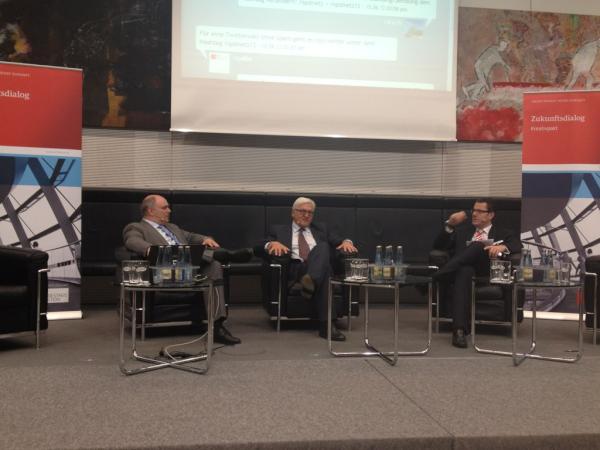
I had the pleasure to deliver a keynote last Friday in Berlin at the first Congress on Internet Policy organized by the German SPD-Bundestagsfraktion and discuss principles of good Internet policy making with Frank-Walter Steinmeier. Please find the manuscript of my speech below (in German).
Sehr geehrte Damen und Herren,
Ich freue mich sehr, heute mit Ihnen Gedanken zur Frage des angemessenen Umgangs mit den vielgestaltigen Herausforderungen und Chancen der digital vernetzten Gesellschaft auszutauschen. Mein Argument geht im Kern dahin, dass der längerfristig erfolgreiche – mithin politisch erfolgreiche – Umgang mit der digitalen Revolution von drei wesentlichen Faktoren und ihrem Zusammenspiel abhängt:
(1) Der erste Faktor betrifft unsere Bereitschaft und Fähigkeit, das Phänomen Internet und seine Auswirkungen auf die verschiedenen Gesellschaftsbereiche besser zu verstehen – oder genauer: verstehen zu lernen. Dabei geht es zunächst einmal um ein verbessertes Verständnis der Funktionsweise digitaler Technologien, aber auch um die Erforschung der humanen, organisationellen, und institutionellen Zusammenhänge. Dabei wird in Zukunft die Interoperabilität zwischen Forschung und Politik wesentlich zu erhöhen sein. Ich werde diese Herausforderung im Folgenden als die gemeinsame analytische Herausforderung in der Digitalgesellschaft bezeichnen.
(2) Die mit dem Internet einhergehenden tektonischen Verschiebungen durchdringen fast alle Lebensbereiche. Ihre Komplexität wird zusätzlich gesteigert, indem sie mit anderen gesellschaftlichen Umwälzungen interagiert. Zu erwähnen sind insbesondere die Ausbildung eines netzwerkorientierten Individualismus und die globale mobile Revolution. Diese Veränderungsprozesse, die in einem neuen „gesellschaftlichen Betriebssystem“ resultieren, fordern nicht nur bestehende Normsysteme und damit Institutionen wie etwa das Recht heraus. Sie gehen auch mit einer Verschiebung der Bewertungsgrundlagen selbst einher. Zusammengenommen stehen wir als Individuen und als Kollektiv somit zweitens vor einem veritablen Bewertungsproblem, das die Kurz- und Langzeitfolgen des Internets anbelangt.
(3) Der dritte Erfolgsfaktor betrifft den angemessenen, d.h. effektiven, effizienten und flexiblen Einsatz der vorhandenen Ressourcen, Ansätze und Strategien zur zukünftigen Gestaltung der Internet-basierten Gesellschaft. Diese Gestaltungsaufgabe beinhaltet auch eine Erweiterung unseres institutionellen Repertoirs, was den Umgang mit dem Internet-Phänomen betrifft. Die erfolgreiche Bewältigung dieser Aufgabe ist mit den genannten analytischen und normativen Ebenen eng verzahnt: Erfolgreiches Gestalten setzt Kenntnis der Materie sowie einen geeichten normativen Kompass voraus. Diese Erkenntnis ist keineswegs neu oder auf das Internet beschränkt, verdient aber gerade mit Blick auf kontroverse Regulierungsvorhaben der jüngeren Zeit eine Betonung.
Im Folgenden will ich die drei genannten Erfolgsfaktoren im Sinne einer „Zwischenbilanz aus dem Maschinenraum“ anhand ausgewählter Beispiele näher erläutern und dabei auch einige Kernfragen für die nachfolgende Diskussion herauskristallisieren. Meine Beobachtungen basieren dabei auf meiner Tätigkeit in einem stark international und interdisziplinär ausgerichteten Forschungsumfeld rund um den Themenbereich „Internet und Gesellschaft“. Sie sind zudem von meinem persönlichen Interesse an Fragen der Informationsregulierung geprägt. Diese einführenden Gedanken sind im Verlaufe des Nachmittags selbstverständlich durch weitere und teilweise alternative Sichtweisen zu ergänzen und zu vertiefen.
Wenden wir uns zunächst den Herausforderungen zu, was die Analyse des Internet-Phänomens und der damit verbundenen Chancen und Risiken für die Gesellschaft betrifft. Hier ist natürlich vorab die Wissenschaft gefordert, die sich beim digitalen Phänomen wie in anderen Forschungsbereichen der Gegenwart – von der effizienten Energienutzung bis hin zur Frage der Sanierung des Gesundheitswesens – mit einer ungeheuren Vielfalt von Fragen an der Schnittstelle von Technologie, Markt, Recht und sozialen Normen konfrontiert sieht. Lassen sie mich unter Bezugnahme auf eigene Forschungsarbeiten einige ausgewählte Charakteristika herausschälen, die für die analytischen Herausforderungen stellvertretend sind, denen wir uns stellen müssen.
Zunächst ist die Erforschung des Internet-Phänomens darauf angewiesen, dass Wissensbestände und Methodologien aus verschiedenen Disziplinen zusammengeführt und in ihrem Zusammenspiel orchestriert werden. Am Berkman Center haben wir uns zum Beispiel vertieft mit den Chancen und Risiken befasst, die sich für Kinder und Jugendliche im Internet ergeben, und Interventionsmöglichkeiten erforscht. Eine solche Analyse setzt das Zusammenspiel von Experten aus den Erziehungswissenschaften und der Psychologie ebenso voraus wie den Beizug von Neurowissenschaften, Ökonomen, Juristen und Ethnographen. Dabei ist der Einbezug von Kindern und Jugendlichen sowie deren Eltern ebenfalls wichtig, etwa was die Formulierung der Forschungsfragen betrifft.
Weiter ist das Internet bekanntlich ein globales Informations- und Kommunikationsmedium. Internetforschung hat vor diesem Hintergrund internationale Gesichtspunkte und Implikationen in vielen Bereichen mindestens zu berücksichtigen. In einem Projekt befassen wir uns derzeit beispielsweise mit Fragen des rechtlichen und regulatorischen Umgangs mit Cloud Computing als zukünftige Kerninfrastruktur unserer Informationsgesellschaft, die hohe Effizienzgewinne und Wirtschaftswachstum verspricht. Wir untersuchen unter anderem, inwiefern die Realisierung der wirtschaftlichen Vorteile eine Harmonisierung der Datenschutzanforderungen voraussetzt. Solche Projekte können nur in internationalen Forschungsnetzwerken bewältigt werden, die sich in diesem Bereich indes erst im Aufbau befinden.
Ein weiteres Merkmal der Internetforschung besteht darin, dass uns Forschenden eine Unmenge von Daten zur Auswertung zur Verfügung steht; „big data“ ist in aller Munde. Denn bekanntlich hinterlässt fast jeder Klick einen digitalen Fingerabdruck, was die detaillierte Analyse etwa von Kommunikationsbeziehungen und Informationsflüssen möglich macht. Diese massiven Datensets sind indes nicht ohne weiteres fruchtbar zu machen. Die Entwicklung eines neuen „Mikroskops“ für die sozialwissenschaftliche Forschung, das den Fluss von Themen und Traktanden im Internet und über seine Grenzen hinaus empirisch messen lässt, hat uns beispielsweise fast eine Dekade gekostet. Darüber hinaus bestehen erhebliche datenschutzrechtliche Bedenken, was den forscherischen Umgang mit grossen Datensets (etwa unter Zugriff auf soziale Netzwerke) betrifft. So lassen sich etwa in grossen Datensets die bisher gebräuchlichen Anonymisierungstechniken durch Algorithmen rückgängig machen.
Grosse Herausforderungen bestehen aber im Bereich der Internetforschung nicht nur auf der methodischen, sondern auch auf der theoretischen Ebene. Wiederum mag ein Beispiel aus dem eigenen Forschungsalltag der Illustration dienen. Seit einigen Jahren befassen wir uns mit der Frage, wie es um die Qualität der Information bestellt ist, wenn wir von einer analogen auf eine digitale Informationswelt umstellen. Welche Folgen hat es, wenn traditionelle Qualitätsinstanzen wie beispielsweise Redaktionen an Bedeutung verlieren und heute jedermann Inhalte produzieren und verteilen kann (Stichwort: Wikipedia), aber auch neue und weitgehend unregulierte Informationsintermediäre wie beispielsweise YouTube die Arena betreten? Diese qualitätsrelevanten strukturellen Veränderungen erfordern eine Erweiterung des alten Konzepts der „credibility“ aus den 40er und 50er-Jahren hin zu einem stärker prozessorientierten Framework der Informationsqualität, das auch das Phänomen nutzergenerierte Inhalte integriert.
Eine letzte hervorhebungswürdige analytische Herausforderung besteht darin, dass das Internet als Studienobjekt ein bewegliches Ziel ist. Die heute verfügbaren Daten hinken der rasanten Entwicklung der Technologie und der Nutzungsgewohnheiten in wichtigen Bereichen hinterher. Erst allmählich haben wir etwa verlässliche Erkenntnisse zu bestimmten Aspekten der Facebook-Nutzung. Wie erinnerlich hat Facebook heute über 900 Millionen Nutzer, war aber vor 10 Jahren noch nicht einmal geboren. Die Forschung teilt hier das Schicksal der Gesetzgebung. Sie muss die Eigenzeit mit den kürzeren Einheiten der Internet-Zeitrechnung synchronisieren.
Wie bereits erwähnt, ist es primär Aufgabe der Forschung, diese Herausforderungen inhaltlich, aber auch institutionell zu bewältigen und damit ein vertieftes Verständnis des Internet-Phänomens zu ermöglichen. Gleichzeitig bestehen aber zumindest in zweierlei Hinsicht wichtige Berührungspunkte zum bildungspolitischen System. Zum einen ist die erfolgreiche Erforschung der Bedingungen und Folgen der digitalen Revolution von der Bereitstellung von finanziellen und personellen Ressourcen abhängig. Dazu gehört eine Modernisierung der Forschungsumgebung und Forschungskultur – namentlich in der Zuwendung hin zu einer echten interdisziplinären Forschung. Ein Blick auf die europäische und mithin deutsche Forschungslandschaft zeigt, dass wir hier noch einen langen Weg gehen müssen, trotz Ausnahmen wie etwa dem neu gegründeten, von privater Seite initiierten und anschubfinanzierten „Alexander von Humboldt Institut für Internet und Gesellschaft“ in Berlin.
Zum andern bedarf der Wissenstransfer zwischen Forschung und Politik der Ausbildung von durchlässigen Schnittstellen. Nötig ist dabei insbesondere auch die Bereitschaft von Politikerinnen und Politikern, sich mit den oft nuancierten und auf den ersten Blick wenig attraktiven Forschungsergebnissen systematisch auseinanderzusetzen und diese auf ihre gesellschaftliche Relevanz abzufragen. Sachgerechte Internet-Politik ist vital auf die vertiefte Zuwendung zur datengeleiteten Problemanalyse angewiesen. Diese steht oftmals in scharfer Konkurrenz zu den kurzfristigen Anreizen einer Headline-orientierten und umfragegetriebenen politischen Realität.
Dabei muss im Sinne der „übersetzenden Forschung“ (sog. „translational research“) nicht nur klar und verständlich kommuniziert werden, was wir wissen, sondern auch, wo Wissenslücken bestehen oder welche wissenschaftlichen Analysen erst auf dem Wege sind. Gerade in Übergangsphasen sind wir angesichts dieses Halbwissens der Gefahr der Mythenbildung ausgesetzt. So hält sich etwa die Vorstellung hartnäckig, dass junge Internetnutzerinnen und –nutzer jeglichen Sinn von Privatsphäre verloren haben. Dagegen belegen jüngste Forschungsergebnisse, dass es sich um differenzierte Verschiebungen in der Erwartung der Reichweite von offengelegten persönlichen Informationen handelt. Oder es wird der Mythos verbreitet, die intensive Internetnutzung mache uns zu Einsiedlern, obwohl das vorhandene Datenmaterial zeigt, dass gerade intensive Internetnutzer auch mehr Freunde und Sozialkontakte offline pflegen – mit Ausnahme von Extremspielern.
Als Zwischenfazit legen diese Betrachtungen zu den analytischen Herausforderungen im Umgang mit den Chancen und Risiken der Digitalgesellschaft nahe, dass wir sowohl als Forschende wie auch als Teilnehmer am politischen System unter Ungewissheits- und Komplexitätsbedingungen operieren müssen. Nicht nur das Politikerwissen, sondern auch das Expertenwissen steht im Bereich der Internetforschung eher am Anfang als am Ende der Geschichte. Dies trotz wichtiger Erkenntnisfortschritte in den letzten Jahren.
Wenden wir uns den normativen Herausforderungen im gesellschaftspolitischen Umgang mit der digitalen Technologie zu. Ausgangspunkt bildet die Beobachtung, dass das Internet strukturelle Veränderungen im informationellen Ökosystem auslöst, die typischerweise „störenden“ Charakter haben. So bedrohen die Veränderungen hinsichtlich der Herstellung und Verbreitung sowie des Zugangs und der Nutzung von Information zum Beispiel viele tradierte Geschäftsmodelle. Überdies fordern sie angestammte institutionelle Arrangements massiv heraus – man denke etwa an das Urheberrecht oder den Datenschutz. In diesem Sinne ist das Medium „Internet“ im Blick auf seine Folgen wohl nicht deterministisch, aber eben auch keineswegs neutral. Vielmehr trägt es einen „bias“ in seiner DNA, wer mit wem unter welchen Bedingungen und unter wessen Kontrolle über welche Kanäle kommunizieren kann.
Die mit diesen Veränderungen einhergehenden Chancen und Risiken sind im Einzelnen oft sehr schwierig zu bewerten. Wiederum mögen einige Beispiele aus der Forschung am Berkman Center die normativen Komplikationen illustrieren. Wir haben uns beispielsweise in der vergangenen Dekade mit den tiefgreifenden Umwälzungen in der Unterhaltungsgüterindustrie befasst. Aus der Sicht der angestammten Musik- und Filmindustrie wird das Internet, – wen erstaunt es, – dabei mehrheitlich als Bedrohung wahrgenommen. In der Tat hat die weitverbreitete Nutzung von Peer-to-Peer-Tauschbörsen – notabene popularisiert durch die Programmierkünste eines College Studenten – zu Beginn dieses Jahrhunderts zum de-facto-Zusammenbruch des traditionellen Geschäftsmodells der Musikbranche geführt und Wesentliches zur Fundamentalkrise des Urheberrechts beigetragen. Aus der Perspektive innovativer Unternehmen wie Apple oder Netflix, aber etwa auch innovativer Künstlerinnen und Künstler stehen heute indes vor allem die Möglichkeiten im Vordergrund, welche die digitale Revolution im Musik- und Filmbereich eröffnet haben. Hier scheint sich die Geschichte zu wiederholen: Bereits bei der Einführung der Video-Kassettengeräte hat die Urheberrechtsindustrie ihren Untergang beklagt, während sich wenig später aus dieser Bedrohung mit dem Verleih von Videos eine der Haupteinnahmequellen der Branche entwickelt hat.
Die normative Beurteilung der Effekte des Internets ist indes nicht nur von der Perspektive und jeweiligen Interessenlage der Betroffenen abhängig. Diese verändert sich, wie im eben genannten Beispiel, typischerweise im Verlaufe der Zeit. Die Bewertung wird dadurch erschwert, dass Chancen und Gefahren in fast allen digitalen Lebensbereichen durchmischt und oft nur schwer voneinander zu trennen sind. Digitale Technologie hat beispielsweise unsere Arbeit in mancherlei Hinsicht effizienter oder zumindest interessanter gemacht. Gleichzeitig bringt der Siegeszug des Digitalen im Arbeitsalltag auch ernsthafte Probleme mit sich. Man denke nur an die Gefahr des Leckschlagens vertraulicher Informationen, die weitreichende Überwachung der Arbeitnehmerinnen und Arbeitnehmer, oder die ständige Erreichbarkeit mit negativen psychischen Folgen.
Diese typische Gemengenlage betreffend Risiken und Chancen macht das Abwägen zwischen Vor- und Nachteilen des Internets oftmals zur Glaubenssache. Um ein Beispiel aus meiner Heimat zu nennen: Der Schweizer Gesetzgeber hat aus relativ abstrakten Risikoüberlegungen und trotz einer ganzen Reihe von erfolgreichen Testläufen in Kantonen auf die flächendeckende Einführung des E-Votings bisher verzichtet. Über dieses Beispiel hinaus bestehen heute weiterhin Bewertungsunsicherheiten, was den Einsatz des Internets in der politischen Kommunikation betrifft. Wirkt sich dieser längerfristig partizipationsfördernd aus? Was ist mit der Qualität und Nachhaltigkeit der Entscheide in einer Internet-basierten „liquid democracy“? Diese und andere schwierige Bewertungsfragen harren der Klärung.
Trotz normativen Unsicherheiten ist klar, dass sich die grossen gesellschaftlichen Probleme der Gegenwart ohne Internet-basierte Technologien nicht lösen lassen. Ob effizienzsteigernder IT-Einsatz im Gesundheitswesen oder das Smart Grid im Energiebereich, das Internet ist bereits zur kritischen Infrastruktur geworden. Entsprechend erfolgt die Abwägung von Risiken und Chancen derzeit oft ad hoc und im Nachhinein. Unsere Forschung zur Interoperabilität zeigt indes die Gefahren eines solchen Ansatzes auf. Sind komplexe Systeme einmal hochvernetzt, aber hinsichtlich ihres Zusammenspiels nicht optimal justiert – etwa durch den bewussten Einbau auch von „digitalen Wellenbrechern“ –, wird es sehr schwierig, einen optimalen Grad an Vernetzung nachträglich herbeizuführen, der zum Beispiel datenschutzrechtliche oder Sicherheitsbedenken angemessen berücksichtigt.
Unsere Empfehlung geht dahin, bereits beim Design solcher Systeme verschiedene Szenarien durchzuspielen und anhand von Wertungsgesichtspunkten wie z.B. „Innovation“, „Nutzerautonomie“ oder „Systemdiversität“ zu bewerten. Dabei kommt es regelmässig zu schwierigen „Value Tradeoffs“ oder Zielkonflikten, die nur normativ bewältigt werden können. So mögen digitale Strategien der Vernetzung beispielsweise enorme Effizienzsteigerungen bringen – man denke an digitale Patientendossiers –, anderseits aber auch die Risiken hinsichtlich sensitiver Daten erhöhen. Dies sind die unerwünschten Nebenwirkungen von Interoperabilität. Immerhin sind solche Probleme keineswegs neu, obwohl das Internet angesichts der genannten Bewertungsunsicherheiten die Zielkonflikte wahrscheinlich noch akzentuiert.
Ein weiterer Aspekt kommt hinzu. Das Internet scheint zumindest bereichsweise zu einer Verschiebung der Bewertungsgrundlagen, d.h. der Wertmassstäbe und Wertungen selbst zu führen. Dies erschwert den gesellschaftlichen Umgang mit Risiken und Gefahren zusätzlich. Die Proteste gegen das ACTA-Abkommen hier in Europa, oder die Mobilisierung gegen die Gesetzesentwürfe SOPA/PIPA zum Schutze des geistigen Eigentums in den USA sind lediglich die gut sichtbaren Spitzen des Eisbergs dessen, was Kollege Beckedahl als „Sollbruchstelle“ bezeichnet. In der Tat haben das Internet und die darauf aufgesetzten Angebote die Normen rund um den Austausch von Informationen verändert. Das Teilen – und damit aufgrund der Funktionsweise der Technologie das Kopieren – von Information ist in der Architektur des Internets angelegt. Bewusste Designentscheide wichtiger Plattformanbieter wie Twitter, Google, oder Facebook verstärken diese Eigenschaft im Sinne eines „Charismatic Code“.
Von dieser normativ aufgeladenen, auf Austausch gerichteten digitalen Logik bleiben auch Sonderkategorien von Informationen wie etwa das Geheimnis oder urheberrechtlich geschützte Inhalte bekanntlich nicht verschont. Namentlich für das Rechtssystem stellen sich angesichts sich wandelnder sozialer Normen heikle Bewertungsfragen. Wann und unter welchen Bedingungen sollen sich rechtliche Institutionen – wie etwa das Urheberrecht – den neuen Realitäten des digitalen Zeitalters anpassen? Und in welche Richtung? Es wäre m.E. voreilig, von einem Primat digitaler Erwartungserwartungen über das Recht auszugehen. Das Recht wird zwar belächelt, weil es der Technologie oft zwei Schritte hinterher hinkt; aber letztlich hat es eben eine wichtige Funktion der Verlangsamung gesellschaftlichen Wandels, um Diskussionsräume und -zeiten zu schaffen. Hinzu kommt im genannten Beispiel, dass sich die Bedeutung der geistigen Schöpfung im digitalen Raum nicht auflöst, sondern wandelt. Untersuchungen mit Kindern belegen etwa, dass diese nur bereit sind, Inhalte mit anderen Digital Natives auszutauschen, wenn ihre Urheberschaft anerkannt wird. Wiederum bedarf es also eines differenzierten Blicks auf diejenigen sozialen Normen der Internetnutzer, die unsere rechtlichen Institutionen herauszufordern scheinen.
Als zweites Zwischenergebnis will ich festhalten, dass die bereits diagnostizierten analytischen Herausforderungen im Umgang mit den digitalen Chancen und Risiken durch die hier nur grob skizzierten Bewertungsprobleme extrapoliert werden. Die Politik im Allgemeinen und die Gesetzgebung im Besonderen haben die wenig beneidenswerte Aufgabe, mit den vom Internet ausgehenden Schockwellen trotz dieser faktischen und normativen Unsicherheiten angemessen umzugehen. Und das heisst auch: die Phasen der Ungewissheit auszuhalten. Dies führt mich zum letzten Teil meines Vortrags: der Gestaltungsherausforderung.
Lassen Sie mich gleich zu Beginn festhalten, dass meine Einschätzung der Einflusschancen von Politik und Gesetzgebung auf die zukünftige Gestaltung des Internets anders ausfällt als das Urteil vieler meiner Kollegen. Wiewohl natürlich die eingangs skizzierte Architektur des digitalen Raumes Rechtssetzung und Rechtsdurchsetzung in vielerlei Hinsicht erschwert, ist das Medium „Internet“ selbst ganz wesentlich von Politikentscheidungen mitgeprägt und durchdrungen. In vielerlei Hinsicht waren es gerade Politik und Gesetzgebung, die das Internet sowohl im technischen Sinne als auch als sozialen und kommerziellen Raum ermöglicht haben. Nicht nur waren Politikentscheide Ende der 50er-Jahre nötig, um die Mittel für die Entwicklung der Vorläufer des Internets bereitzustellen. Es waren auch politische Entscheide dafür verantwortlich, dass in den frühen 90er-Jahren die damalige NSFnet Backbone für den kommerziellen Datenverkehr überhaupt geöffnet wurde. Gesetzgebungen wie etwa die Europäische E-Commerce Richtlinie oder der amerikanische Communications Decency Act mit ihren „Safe Harbor“ Vorschriften zum Schutz von Internet Service Providern waren entscheidend mitverantwortlich für das Entstehen des heutigen Ökosystems. Die online Dienste, die wir mit grosser Selbstverständlichkeit benutzen – von Google, Hotmail, über Facebook zu YouTube – wären ohne das Vorhandensein von Recht nicht denkbar. Die Reihe von Beispielen liesse sich fortsetzen.
Aus der Vergangenheit lässt sich für die Zukunft lernen, auch in der Netzpolitik als Teil der Gesellschaftsgestaltung. Gleichzeitig ist klar, dass die heutigen Gestaltungsherausforderungen längst nicht mehr binär (Regulierung ja/nein, Schutz ja/nein), sondern vor dem Hintergrund der geschilderten phänomenologischen und normativen Ausgangsbedingen äussert komplex sind – vom Kampf gegen die Kinderpornographie angefangen bis hin zur Erarbeitung eines zukunftstragenden Datenschutz- und Cybersecurity-Konzepts. Im Kern geht es dabei um die grosse Frage, wie wir als Gesellschaft die Chancen der digitalen Technologien strategisch fördern, nutzen und langfristig absichern, und dabei mit den vieldiskutierten Risiken angemessen umgehen bzw. diese auf ein erträgliches Mass reduzieren.
Bei der Bearbeitung dieser schwierigen Aufgabe kann es hilfreich sein, drei Dimensionen guter Internetpolitik zu unterscheiden, die in ihrem Zusammenspiel auch die Frage der Legitimation von Gestaltungsentscheiden und die Verantwortung für ihre Folgen betreffen. Angesichts der Ungewissheits- und Komplexitätsbedingungen stehen wir als Entscheidträger zunächst vor dem grossen Problem, aus einer Vielzahl von Planungsvarianten und normativen Szenarien die sachlich angemessene Lösung zu wählen – sei es im Kontext von E-Government und Cloud Computing, der Erneuerung des Datenschutzregimes, oder bei der weiteren Ausgestaltung des Schutzes des geistigen Eigentums im digitalen Umfeld.
Diese inhaltliche Richtigkeit – oder besser: Angemessenheit – der von uns gewählten Massnahmen im Hinblick auf bestimmte Ziele wird längerfristig die entscheidende Messlatte sein. Mit den Worten des Schweizer Staatsrechtlers Georg Müller:
„Wenn der Gesetzgeber mangels Sachkenntnis oder aufgrund einer fehlerhaften Prognose eine Regelung erlässt, die ihren Zweck nicht erfüllt, nützt die demokratische Legitimation nichts, im Gegenteil: Das demokratische System wird unglaubwürdig“.
Und im Zusammenhang mit der Frage nach der „Wirksamkeit“ staatlicher Interventionen schreibt Müller:
„Der Erlass unwirksamer Anordnungen untergräbt … das Vertrauen in die Institutionen der Demokratie“.
Den Ruf nach hinreichender Sachkenntnis zu erfüllen, die alsdann in wirksame Massnahmen übersetzt werden kann, ist gerade im Bereich der Internetpolitik kein leichtes Spiel. Wie eingangs dargestellt, ist dabei auch der in solchen Situationen beinahe reflexartige Beizug von Experten – etwa im Rahmen einer Enquette Kommission wie hier in Deutschland – wohl sinnvoll und hilfreich, aber angesichts beschränkten Expertenwissens kein Erfolgsgarant. Vielmehr ist, und ich werde diesen Punkt ganz am Ende nochmals kurz aufgreifen, das gesamte Gestaltungssystem, inklusive Recht, auf Lernfähigkeit zu programmieren.
Im Zitat von Prof. Müller ist es bereits angeklungen: Die inhaltliche Output-Qualität unserer Netzpolitik hängt mithin von der Wahl geeigneter Instrumente ab. Dies ist die zweite Dimension der Gestaltungsherausforderung. Hier liegt meiner Auffassung nach hinsichtlich des guten Umgangs mit der Digitalgesellschaft vielleicht das grösste Potential verborgen. Wir müssen dringend unseren „Werkzeugkasten“ überdenken und gegebenenfalls neu bestücken, um die Instrumente besser auf die skizzierten Realbedingungen des digitalen Phänomens einzustellen.
Dies betrifft zunächst einmal die Erweiterung des gesetzgeberischen Repertoirs. Es ist beispielsweise erstaunlich, wie beliebt in der Internet-Gesetzgebung beidseits des Atlantiks der Gebrauch des altgedienten, aber im Internet-Kontext erfahrungsgemäss wenig griffigen Instrument des „Verbots“ noch immer ist. Geplante oder eingeführte Verbote von Killerspielen oder das in den USA beliebte Verbot der Facebook-Nutzung in Schulen sind nur zwei Beispiele aus einer langen Liste von Internet-Verboten. Um klarzustellen: In manchen Bereichen, wie etwa bei brutalen Killerspielen, mögen Verbote zumindest im Sinne der symbolischen Gesetzgebung einen Wert haben, d.h. als Ausdruck der gesellschaftlichen Missbilligung bestimmter Handlungsweisen oder Anwendungen. Solche Signalwerte sind gerade in Zeiten der beschriebenen Bewertungsunsicherheit nicht unerheblich. Aber der Beitrag zur effektiven Problemlösung bleibt bei solchen Verboten oft sehr beschränkt.
Unser Instrumentarium ist allerdings über die Regulierungstechnik hinaus, d.h. auch im grösseren institutionellen Zusammenhang zu erweitern. In vielen Bereichen bedarf der gewinnbringende Umgang mit den digitalen Chancen und Risiken des Zusammenwirkens verschiedner Akteure. Ich habe die Forschung zur Internetnutzung von Kindern und Jugendlichen als Beispiel bereits erwähnt. Dort sehen wir deutlich, wie die Heranwachsenden selbst, ihre Eltern, Lehrer, Freunde, aber auch Technologieanbieter und der Staat Hand in Hand arbeiten müssen, um das enorme Potential des Internets etwa für die Ausbildung und das Lernen zu nutzen und Teilhabelücken zu schliessen. Gleiches gilt für die effektive und nachhaltige Bewältigung der Gefahren wie beispielsweise Cyberbullying, Spielsucht, oder Verletzung der Privatsphäre.
Es ist ermutigend zu sehen, dass die Wichtigkeit dieses Zusammenspiels der Akteure auch in der Internetpolitik erkannt ist und Eingang in entsprechende Positionspapiere gefunden hat. In einem nächsten Schritt müssen wir aber auch die entsprechenden institutionellen Arrangements erarbeiten – und absichern. Neue Modelle wie die auch hierzulande und in diesem Bereich beliebte Co-Regulierung können den Weg weisen, sind aber etwa hinsichtlich Legitimierung und Partizipation durchaus erweiterungs- und verbesserungsfähig.
Der dritte und letzte Aspekt, den ich im Rahmen der Gestaltungsherausforderung aufgreifen möchte, betrifft die Prozesse, in denen wir unsere internetbezogenen Wertfragen verhandeln, Gestaltungsziele diskutieren sowie die Wahl der Mittel definieren. Hier ist zunächst festzuhalten, dass das Internet zu einem ungeheuren Transparenzdruck beigetragen hat. Wiewohl es m.E. geschützter Räume gerade auch im politischen Bereich bedarf, in denen Szenarien durchgespielt und Lösungsvarianten ohne Angst vor negativen Schlagzeilen diskutiert werden können, ist die Absicherung solcher Räume heute praktisch chancenlos. Wikileaks oder die „geleakten“ Berichte aus dem Oval Office zu Präsident Obama’s streng geheimen Cyberwar-Massnahmen sind nur zwei Beispiele. Angesichts des Regulierungsobjekts „Internet“ und der davon betroffenen Akteure müssen wir uns aller Voraussicht nach auf voll transparente Verfahren einstellen. Geheimverhandlungen à la ACTA werden von der diffus und ad hoc definierten, aber zunehmend strategisch operierenden Internet-Community jedenfalls nicht mehr akzeptiert.
Eng mit dem Transparenzerfordernis verbunden ist die Frage der Mitwirkung an gestalterischen Entscheiden, die das Internet betreffen. Auch hier besteht Innovationsbedarf, was unsere angestammten Institutionen betrifft – gerade auch, um den eingangs genannten internationalen Dimensionen Rechnung zu tragen. Dass die Debatten heute nicht mehr nur national geführt werden können, sehen wir nicht nur, wenn es um globale Regulierungsvorhaben etwa im Rahmen der ITU oder der WIPO geht – oder hier in Deutschland um die Umsetzung bzw. Nichtumsetzung der Richtlinie über die Vorratsdatenspeicherung. Der Bedarf nach neuen Formen der Mitwirkung ist auch dort deutlich erkennbar, wo die Spielregeln des Internets uni- oder bilateral durch private Akteure gesetzt werden, wie etwa das inzwischen gescheiterte „Google Book Settlement“ und Reaktionen darauf illustrieren.
Natürlich ist es naheliegend, gerade hinsichtlich der Frage nach neuen Formen der Teilhabe das Internet selbst fruchtbar zu machen. Interessante institutionelle Versuche wie e-Rulemaking und e-Budgeting sind im Gange, wobei in Europa wahrscheinlich Estland diesbezüglich das grösste und bisher erfolgreichste digitale Laboratorium darstellt. Brasilien und die USA sind weitere interessante Fallstudien in diesem Bereich. Vielleicht noch interessanter als der Einbau solcher digitaler Kanäle in bestehende institutionelle Set-ups sind neuartige hybride Organisationen wie etwa ICANN oder das Internet Governance Forum (IGF). Die Beurteilung der Leistung dieser neuartigen Institutionen bleibt allerdings weiterhin umstritten. Meines Erachtens wird deren Potential und Bedeutung aus der Optik der institutionellen Innovation allerdings gemeinhin unterschätzt.
Lassen Sie mich mit einem Gedanken schliessen, der mich seit längerer Zeit beschäftigt. Wie würden angesichts der hier skizzierten analytischen, normativen, und gestalterischen Herausforderungen die kategorischen Imperative – oder zumindest Postulate – guter Internetpolitik lauten? Vor dem Hintergrund des hier Ausgeführten wage ich einen ersten Versuch und freue mich auf die Diskussion mit Ihnen:
Postulat 1: Gute Internetpolitik gebietet es, an der Generierung von Wissen über das Internet-Phänomen teilzuhaben und dieses Wissen auszutauschen.
Postulat 2: Vor regulatorischen Eingriffen sollte Klarheit herrschen, was wir wissen und was nicht. Vor allem im Bereich des Handelns unter Nichtwissen sind die Entscheide und Instrumente auf Lernfähigkeit einzustellen, d.h. auch revidierbar zu halten.
Postulat 3: Gute Internetpolitik vermeidet oder reduziert zumindest die Gefahr, die Generativität des Internet als Prinzip nachhaltig zu verletzen, und bewahrt damit seine Innovationskraft.
Postulat 4: Muss unter analytischer und normativer Unsicherheit entschieden werden (was auch den Entscheid des Nicht-Handelns beinhalten kann), sind Entscheidvarianten zu bevorzugen, die auf Interoperabilität angelegt sind und Möglichkeitsräume für zukünftige Entscheide offen halten.
Ich danke Ihnen für Ihre Aufmerksamkeit.