~ Archive for Links ~

Real Estate and VRM

1

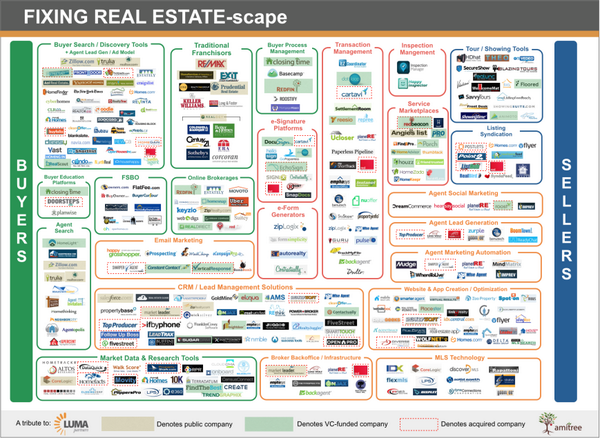
Bill Wendel of Real Estate Cafe is one of the first people I met after becoming a fellow at the Berkman Center three years ago. What he’s been doing for a long time is right up the VRM alley: equipping users (whether buyers or sellers) with the means to become independent of controlling institutions and ways of doing business — and improving the marketplace while saving themselves money and hassle.

Bill will be at VRooM Boston 2009 and has told me he would like to bring up real estate as a session topic. I encouraged Bill to do that, and I encourage others to jump in and talk about it (and move some balls down the field too). Looking forward to it.

Civilizing the Personal Data Frontier

6

gettingpersonal

A panel at

9:30am, 13 October 2009
John Chipman Gray Room • Pound Hall
Harvard Law School

Who likes being tracked like an animal by big business, big government, and every tech hustler looking to make a buck from both? Not the developers of and . These hot new categories are both driven by a growing sense that primary responsibility for gathering personal data and putting it to use belongs to individuals — not to companies, governments or anybody else.

These tools help individuals become both the for their own data, and the primary authority for what gets done with that data.
Self-tracking is how individuals collect data about themselves, while personal informatics is how individuals organize that data, determine purposes for it, and share it selectively. Together these tools inform individuals’ relationships with themselves, with their social networks, with the organizations to which they belong — and with sellers of all kinds.

Tools for self-tracking and personal informatics are new, already becoming popular, and in need of much thinking about how personal data is gathered, stored and shared. Each panelist is either developing tools in these categories or has experience with new tools and the issues involved. Doc Searls, of the Berkman Center and ProjectVRM, will moderate the panel, and we expect discussion with participants (there will be no “audience” here) to be lively and informative.

The panel kicks off Day Two of VRooM Boston 2009. It’s a free event, and everybody attending the panel is invited to stay, keep the discussions going, and help developers already working on these new tools. It would be nice if you registered here, so we get an idea of how many people will attend; but it’s ot necessary.

Panelists

Health Care Relationship Management

5

Health 2.0 is going on today and tomorrow in Boston. So is HealthCamp Boston. Says Mark Scrimshire, about the latter,

We are using CoverItLive as one of the methods of helping you track the event.

We are encouraging all participants to Blog, Tweet and upload photos and videos using the #HCBos and #SocPharm hashtags.

Click Here for the CoverItLive feed or follow the CoverItLive Feed on Mark Scrimshire’s EKIVE blog: http://ekive.blogspot.com/

The CoverItLive RSS Feed is here.

Wish I could be there. (Boston is our home during the academic year, but rigtht now we’re getting some R&R at our perma-home in Santa Barbara.) Meanwhile I suggest that everybody who cares about VRM consider the matter of HCRM — Health Care Relationship Management. (A term I just made up. HRM might be better if it wasn’t about HR.) Health 2.0’s concern is user-generated health care, its about page says. That puts it in VRM territory right there.

Here’s the agenda for Health 2.0. HealthCampBoston is more on the BarCamp model. A DIY agenda.

Among the biggest topics in HCRM in recent years has been PHR, for Personal Health Records. Search for that, with quotes, and you get over half a million results. Leave off the quotes and you get fifty-five million results. The more specific (and less confusing, with Physicians for Human Rights) EHR, for Electronic Health Records, gets nearly five million results.

This is a huge topic, of a degree of importance that verges on the absolute. It’s also perhaps the most sisyphean of VRM categories. I find that daunting, but there are many professionals in health care and related fields who have been doing a great job pushing big rocks long distances. These people are heroes, even if they don’t know or acknowledge that. Here are some links to get started:

Send me more, or comment below, and I’ll add them here.

Tags:

  • #ehr
  • #emr
  • #HealthcareIT
  • #health20con
  • #hrm

There’s much more, of course. To get thinking rolling among the VRMerati, consider this mind-bender at ePatients.net., and this follow-up, both by ePatientDave:

Imagine that for all your life, and your parents’ lives, your money had been managed by other people who had extensive training and licensing. Imagine that all your records were in their possession, and you could occasionally see parts of them, but you just figured the pros had it under control.

Imagine that you knew you weren’t a financial planner but you wanted to take as much responsibility as you could – to participate. Imagine that some money managers (not all, but many) attacked people who wanted to make their own decisions, saying “Who’s the financial planner here?”

Then imagine that one day you were allowed to see the records, and you found out there were a whole lot of errors, and the people carefully guarding your data were not as on top of things as everyone thought.

Also this piece of intelligence, about Twitter and hospitals.

Loose links

0

Lots of VRM Hub action. Here’s the page for the one coming up on 30 March. Be sure not to miss the related VRM Labs. Here’s a review there of chi.mpVRM Hub last night and this post by Graham Sadd both report on the latest. So does Jake at omelette.es.

Nic Brisbourne sources Joe Andrieu in If You Love Your Customer, Set Her Free. Joe also sees $300 million in the One night stand use case.

Also in London, The Mine! Project has a developer meeting coming up next week. In a parallel way, other VRMers, including Iain Henderson (coming over from the London hotbed) will be coming to SXSW in Austin, where we plan to bring VRM up at a Barcamp there.

Jeff Jarvis brings up VRM in his end of a volley with Richard Edelman. (I had posted a long response here, but half of it got lost and I yanked it off the blog. Maybe I’ll give it another try soon.)

Live From Gartner CRM Summit UK: Customers Take Ownership. No VRM, but “social CRM” and “customer managed relationships.” Via Graham Hill. Geoff finds no VRM here, either.

Get ready for “fourth party” services. An intro to user-driven services. A new category driven by customers. Brings up PayChoice. So does Echovar.

Here’s a podcast of a call in which I explain VRM to skeptics.

Loose Links

3

Much happening in the UK. Follow the VRM Hub blog to see what’s up. (Wishing I could make every one of these.) The next meeting is on 26 February. Latest posts by Adriana Lukas:

  • Retail, VRM and students.think of VRM as a framework for developing tools and technology to enable individuals to transact on their own terms.
  • Anonymised data a relationship doesn’t make. relationships cannot exist via anonymised data – the whole point of my approach to VRM is to focus on a ‘relationship’ with the vendor, one that is more equal than the current one. The data I voluntarily provide to vendors is a proxy for my relationships with them. The value is not in the data ‘dump’ but in the data flow, which can be cut off at any point the vendor abuses the relationship

Contributor Relationships and VRM? at GenerosityPath.

Twenty Theses for Government 2.0, Cluetrain Style, which has this line: Social media is not driven by the position, the title, or the department, it’s driven by the person.

Why Twitter won’t replace Google search- but will overtake it, by Dan Thornton, has this line: …it’s about increasingly moving towards Vendor Relationship Management, rather than Customer Relationship Management.

Here’s an audio file of my virtual appearance at Blueprinting the Information Valet Economy in December. It’s in the audio corner of the Media Giraffe Project.

Natalie Stovall gives a good example of why the hospitality business needs VRM.

WelCome has Answers to a few questions about VRM. An excerpt: I would suggest that VRM is first and foremost about providing value for the user with any vendor, as opposed to using social networking tools with a particular vendor. VRM is vendor agnostic and silo-adverse. The goal is to catalyze the development of tools for individuals through protocols and standards that let them work with any vendor seamlessly, without loss of functionality or services. (The words are Joe Andrieu’s. See here.

The Kynetx White Paper on Structured Browsing has VRM implications. Joe Andrieu has a long response that’s all about VRM as well.

Who in CRM 2.0 will help VRM 0.1?

8

I like following Paul Greenberg’s blog, which focuses on what he calls CRM 2.0. He’s hip to VRM, calls it a “labor movement for customers”, and kindly lists it as one of the developments to watch (or places to watch for developments) in 2009.

Here he ists CRM companies to watch for in 2009. Before reading that list, I had barely heard of any of them. Mostly I’ve been looking at big companies like Oracle, Salesforce and Microsoft and SAP.

So now I’m wondering which, if any, of these companies (including Oracle and the rest) are following VRM and might like to work with us on customer-side tool development.

Meanwhile, it’s interesting to see what’s hapening with the CRM entry on Wikipedia. The 11:10, 19 January 2009 was the last to include a “Market Structure” section with a table of companies, which I found quite helpful. The next version, 06:43, 20 January 2009, by 122.168.243.254, cut most of that section out, and considerably shortened the entry.

Here’s a comparison. I think somebody is working on the entry as I write this. If they’re following this, it would be nice to get the missing table back. (My MediaWiki editing skills aren’t up to it, and I don’t feel qualified to do it anyway. Just watching along here.)

VRM in 2009

0

This blog is #19 and Chris Carfi’s Social Customer Manifesto is #7 on Chris Bucholtz’s Best CRM Blogs of 2008, at Inside CRM. About this blog, Chris wrote,

The bumpy economy has perhaps been unkind to forward-looking philosophies like vendor relationship management, but that has not curtailed Searls’ explorations of what will be when the business world finally understands that the customer is now running the show. He makes a convincing argument that companies are leaving dollars on the table already by refusing to admit that this is a consumer-driven world. As Searls wrote, “I’d rather have ‘-driven’ than ‘-centric.’ Because being ‘-centric’ doesn’t require you to relate. Being driven does.”

I never thought about this as a CRM blog, but to the degree that CRM and VRM will work together, it makes sense.

It will be interesting to see which CRM companies realize that customers are driving with VRM. Some are already waiting to see VRM tools show up in customer hands. At a recent ProjectVRM committee meeting, one of the attendees from a CRM company reported that the top honcho at his outfit said “Whoever wins at VRM wins at CRM.” That’s good to hear. VRM will give CRM much more to engage with.

Anyway, Larry Dignan seconds Paul Greenberg’s expectation that 2009 will be VRM’s breakout year. He adds this:

Simply put, a VRM tool would be something customers use to relate and manage multiple vendors. Greenberg thinks that 2009 will be the year in which VRM becomes more than just a concept. What’s ironic is that vendors that have the most tentacles into companies (Oracle, for instance) may become players. Just imagine the following: here’s a VRM tool from a big vendor so you can better manage it.

Well, if the tool only helps you manage one vendor, it’s not a VRM tool. But the irony risk is not small. That’s why I’m still not eager to promote VRM before we have working code and ways of demonstrating how VRM tools make you both independent of vendors and better able to engage with them.

May the best customers win.

Answering tweeted questions about VRM

1

So, with the help of vangeest and Twitter Search for #vrmevent, I’m addressing questions tweeted from the virtual floor here at the VRM Event in Amsterdam. Here goes…

vangeest: @dsearls: retweet @vangeest: #vrmevent: what is the relationship between the good old B2B marketplaces like Ariba and VRM?

As an idea VRM owes something to B2B, for the simple reason that B2B relationships tend to be between equals. Thus they can be rich and complex as well. B2C tend to be simplified on the B side, mostly so maximum numbers of templated Cs can be “managed”. Iain Henderson has talked about how there are thousands of variables involved in B2B VRM, while only a handful with CRM, which is B2C.

VRM essentially turns B2C into a breed of B2B — to the degree that both terms no longer apply. VRM equips individuals to express their demand in ways that B2C never allowed, and B2B never included.

But VRM is not a site, or a marketplace. That makes it different from Ariba, eBay, or online marketplaces. VRM may happen inside of those places, but VRM is not about those places.

Most importantly, VRM is not something that companies give to customers. It’s something customers bring to companies.

zantinghbozic: #vrmevent ichoosr: vrm is socialism 2.0 – http://mobypicture.com/?pcg0qr

This reports a provocative tease by Bart Stevens of iChoosr in his opening slide. I don’t agree with the statement, but his deeper point rings true: it involves a shift in power in the marketplace, from producers to consumers. Except I wouldn’t use the word consumers. I’ll explain that later.

It’s VRM Weeks on the West Coasts

1

… of both Europe and the U.S., that is.

Got up at 5am this morning in Mountain View, Pacific Time. It was easy because my body is still partly on East Coast time (8am) and GMT (noon). That’s because I’m still fresh from London, and more VRM conversations than I can count — in addition to the excellent VRM Hub event (part of Unlocking the See-Saw*) held at Sun’s facility there, which got started for me when I walked out of the Monument tube station and stright into Geoff Jones, with whom I promptly went off to a pub. Alec Muffett shot video of the whole thing. More at Peter’s post, and  here.

It all continues starting this afternoon at IIW2008b, at the Computer History Museum (Shoreline &101). There are more meetings before and after, then a Public Media BarCamp in Santa Cruz from Friday to Sunday. VRM will be in play there too.

THEN, I’m off next week to Amsterdam for the VRM Event there.

Meanwhile, here are VRM posts by Peter Parkes, Jonathan MacDonald, Richard Muscat and Graham Saad. There are more, but no time to find them right now.

Meanwhile, a nice paragraph from Steve Bowbrick of the BBC:

User data is a valuable asset but it’s one that belongs to its subject – that’s you. Without wishing to wander too far off topic, Mark’s plan also hooks in nicely with the wider trend away from old-fashioned CRM (‘Customer Relationship Management’) to its much groovier, network-native successor VRM (‘Vendor Relationship Management’). In a VRM world your personal data is your own and you share it only with those you trust: VRM systems will allow you to rent your data to businesses who want to sell you stuff and withdraw it whenever you feel like it. It’s appropriate for the BBC to build a user-centric, VRM-style data infrastructure.

* Adriana explains more about the UK events in her comment below.

VRM catch-up

2

I just added VRM Hub Blog to the ‘roll on the right. Lots going on there, as in the Hub itself. Of special note are Ownership of data, privacy policies and other VRM creatures and Whose data is it anyway? In those Adriana unpacks some of what she’s slso been posting to the ProjectVRM list. Adriana also posts her own notes from the latest meeting.

Jay Deragon asks, Does Disequilibrium Precede Disruption?

In Venn and the Art of Data Sharing, Eve Maler presents this useful graphic:

She explains,

VRM partly involves what could be called restriction of data flow — undoing vendors’ grip on users’ info in a way that’s familiar to proponents of privacy-enhanced and user-controlled IdM. But other VRM scenarios involve enhancement of individuals’ opportunities to share personal information, for example by issuing a personal RFP to potential vendors. As Doc Searls has said, VRM is “personal first and social second”, so it seems to have a closer kinship with digital identity but could provide new social opportunities as well.

Eve does a good job describing how VRM can get social while not subordinating to social networking, its scenarios or its technologies. The same goes for VRM and identity. This last point is especially significant in respect to a pair of upcoming identity events: next week’s Digital ID World (DIDW), and the Internet Identity Workshop () coming up on November 10-12 (and about which Phil Windley says more here). VRM can contribute to identity conversation and tech development — and even be part of that work — without being a subset of that work. I’ll be talking more about this in my keynote at DIDW this coming week.

By the way, mark your calendars for the next VRM Workshop (VRM2008b), scheduled for the day after IIW in the Bay Area. The location is not yet determined. (If you have any good ideas, suggest them.)

Log in
Protected by AkismetBlog with WordPress