Daily Diigo Public Link 12/21/2007
December 20, 2007 at 5:39 pm | In links |At 71, Physics Professor Is a Web Star - New York Times Annotated
“Walter H. G. Lewin, 71, a physics professor, has long had a cult following at M.I.T. And he has now emerged as an international Internet guru, thanks to the global classroom the institute created to spread knowledge through cyberspace.”
The professor, who is from the Netherlands, said that teaching a required course in introductory physics to M.I.T. students made him realize “that what really counts is to make them love physics, to make them love science.”
He said he spent 25 hours preparing each new lecture, choreographing every detail and stripping out every extra sentence.
“Clarity is the word,” he said.
Fun also matters.
Crosscut Seattle - Amazon joins a parade of high tech to the urban core Annotated
- article by Margaret Pugh O’Mara, which asks some pretty good questions about how the transfer of “new economy” businesses from the suburbs back to the center city has implications for urbanism, as well as for what type of new economy businesses move to the core.
The New Economy started in the suburbs, but the new trend is back to urban neighborhoods. Amazon is a good match for South Lake Union, but the danger is that it could be too big, with too few small companies clustering around.
New-economy companies are clustering in old manufacturing and warehouse districts in cities from San Francisco to Vancouver to Barcelona. These and many other cities worldwide have redeveloped broad swaths of urban industrial land for new high-tech campuses only minutes from downtown. Drawing on a creative, young workforce who prefer city life, high-tech companies use an urban location as a recruitment and retention tool to show that they are not only innovative, but they are also cool.
- - Vancouver? Really? Downtown Vancouver? - post by lampertina
These landscapes are a departure from high-tech and biotech companies’ usual habit of locating in self-contained campuses, separated from other kinds of industries and land uses – landscapes that American suburbs have been very good at providing. Techies were among the first white-collar workers to move to the suburbs, and research park developers were among the first to create grade-A suburban commercial real estate.
technology seemed to occupy a particularly anonymous kind of suburban space in the public imagination. Pundits called these “technoburbs” and “nerdistans”; boosters called them “Silicon Valley” and “Silicon Prairie” and “Silicon Forest,” but never “Silicon City.”
- - ha! well-put! - post by lampertina
The gradual emergence of an alternative, more-urban model for the high-tech district is a result of the growth and diversification of the technology industry and its workforce. Larger urban trends have also paved the way for this change. It is hardly a coincidence that technology industries returned to older urban centers after a decade of national prosperity and declining crime rates during which big cities “came back” and once again became desirable locations for the professional class.
Remodeling older buildings as airy live-work lofts and building glass-clad towers on the sites of low-rise midcentury structures and surface parking lots, new-economy companies have helped to drive a huge transformation of the urban fabric.
These areas have prospered also because they have been able to create the kind of self-contained, amenity-rich environment that drew tech companies to suburbs in the first place. Technology and other knowledge-intensive industries tend to thrive when located in a place that is built for them, surrounded by other companies like them, filled with features that educated workers want and need.
This is another kind of high-tech bubble, one built not on company valuations but created instead by the actual physical environment of a place. The most successful dot-com and knowledge-worker districts in big cities across the world have managed to recreate this bubble in an urban setting, while managing to retain enough funk to keep the neighborhood interesting.
- - that actually sounds kind of ominous, casting these businesses as part of a homogenizing force, a sort of business-based “oversuccess” (Jane Jacobs)… - post by lampertina
However, older large cities still have something that suburbs, by and large, do not. City neighborhoods can be more diverse and interesting architecturally, economically, and demographically. History gives the urban fabric an interesting quality that is hard to replicate in a newer suburban setting. The funkiness that urban high-tech districts retain – whether accomplished by rehabilitating older buildings or keeping the homegrown retailers – is what gives the city a competitive edge over the suburb.
- - that sort of contradicts the “homogenization” aspect, but if things go wrong and veer into homogenization, it probably is a question of “oversuccess” v. simply “success” - post by lampertina
The other ways that urban tech districts can set themselves apart from suburban developments – both the high-tech campuses and the “urban villages” – is by recruiting the right kind of tenants. Not all knowledge-economy firms are created equal when it comes to creating and maintaining a vibrant urban environment. Firms engaged in sensitive research, like many biotech firms, must have elaborate building security systems that make it difficult for people to enter – and for workers to go out for lunch, or pick up clothes at the dry cleaner, or shop in local stores. They may need to be surrounded by walls or gates, without street-level windows. The need for this kind of security is part of what drove technology firms to suburban campuses in the first place.
Size is the other thing that sets these firms apart.
An area has multiple tenants rather than one or two, and these tenants also may interact and socialize with one another – collaborating on projects, hiring one another as clients, or simply having a cup of coffee. The enthusiasm of boosters for anything “high-tech” tends to ignore these distinctions, giving urban high-tech districts the potential to be as bland as any suburban office park.
However, Amazon is a very large company, and its sheer size means that its part of South Lake Union runs the risk of becoming a corporate campus rather than a real neighborhood. Although Amazon is a giant employer, there’s potential here to make the area around it an aesthetically interesting and diverse urban place that will, in turn, be attractive to other, smaller companies.
Technology Review: What Your Phone Knows About You Annotated
Sandy Pentland, professor of media arts and sciences at MIT, talks about “reality mining.”
- this is page 2 of a 2-page article
You can really see things in a way that you never could before–a God’s-eye view. One of the examples I’ve been stuck on recently relates to how transformative Google Earth has been. Imagine having something where you can see all the people moving around on a map. Think about SARS in Hong Kong. What if in a particular apartment building, nobody left for work that day? You could identify a major health problem in 12 hours instead of two weeks. Another example is the social health of communities. It’s known that social integration, or how well people mix, correlates with whether or not a community is thriving. With reality mining, you can actually see social integration, as it happens or doesn’t happen. Once everyone can see it, then you can start to have transparent political discussions. Why isn’t the mayor putting more sidewalks and crosswalks in this area? Could more community events make the area more livable?
- - that does presuppose that EVERYONE has a cell phone, though, and I’d bet that there are plenty of instances where populations that are vectors for contagious diseases don’t typically carry cell phones, for example. Not to mention that (as the interviewer says in the next question), “this all gets very creepy very fast.” - post by lampertina
But we defely need to talk about it and figure out a new deal for privacy–to use this data and not be abused.
- - d’uh, no kidding, Sherlock! - post by lampertina
You know, excuse the example, but I’ve been in a downtown somewhere and I don’t know where the nearest bathroom is, or it’s raining and I’d like a taxi. I’d give up a little bit of personal information to find these things.
- - but there are urban services being introduced where you can pull that information from your cell phone, w/out giving your cell phone all sorts of access about yourself. - post by lampertina
Reality mining will help us see ourselves and, in an anonymous way, compare ourselves to peers. And I see organizations and companies using this to help people collaborate more effectively and do their jobs more efficiently.
- - jeepers, just when I thought Michel Foucault had become really unfashionable, here’re shades of Discipline and Punish! It’s like Jeremy Bentham’s Panopticum gone digital! Brrr… - post by lampertina
Technology Review: What Your Phone Knows About You Annotated
Sandy Pentland, professor of media arts and sciences at MIT, talks about “reality mining.” Pay attention, interesting stuff!
- this is page 1 of a 2-page article
Based on phone calls and the devices’ physical proximity to other people’s phones (as measured by Bluetooth), Pentland and researcher Nathan Eagle developed social-network models that were more accurate and more nuanced than those constructed from the subjects’ self-reports.
Sifting through cell-phone data to get at the truth of people’s social interactions falls under the umbrella of an emerging field that Pentland has dubbed “reality mining.” And he thinks that social networks are just the beginning. The same techniques can be applied to other sets of cell-phone data to help people communicate more effectively, manage their time better, and even make their neighborhoods more livable. And it’s all thanks to the ubiquity of cell phones–the ultimate data-collection machines.
the generalization is that maybe it can know lots of things about you. Take your Facebook friends as an example. The phone could know which ones you socialize with in person, which ones are your work friends, and which friends you’ve never seen in your life. That’s an interesting distinction, and reality mining can make it automatic.
- - and by making it automatic, you make part of an algorithm… - post by lampertina
It’s about making the “dumb” information-technology infrastructure know something about your social life. All this sort-of Web 2.0 stuff is nice, but you have to type stuff in. Things are never up to date, and unless you consciously know about something, you can’t put it in. Reality mining is all about paying attention to patterns in life and using that information to help you do things like set privacy policies, share things with people, notify people when you’re near them, and just to help you live your life.
Today’s cell phones are on us all the time, and they come with hardware that can act as sensors for your environment. For instance, if Bluetooth is turned on, then the phone can see and be seen by other Bluetooth devices. You can start to make a record of the Bluetooth-enabled devices you encounter throughout the day. Then you can figure out, based on the frequency [with which] you encounter other people’s Bluetooth phones, what sort of relationship you have with them.
- - I think I get it, although it does sound a bit strange to let a device figure out what kind of relationship I have with someone…! - post by lampertina
And all phones have built-in microphones that can be used to analyze your tone of voice, how long you talk, how often you interrupt people. These patterns can tell you what roles people play in groups: you can figure out who the leader is and who the followers are. It’s folk psychology, and some of the stuff people may already know, but we haven’t been able to measure it, at such a large scale, before these phones.
- - ok, now it’s starting to sound a bit creepy… - post by lampertina
BLDGBLOG: Church of God, Elevator Annotated
- starts with a great story about Mark Twain, and asks a trenchant question about the adventurousness (or absence thereof) in architectural design today
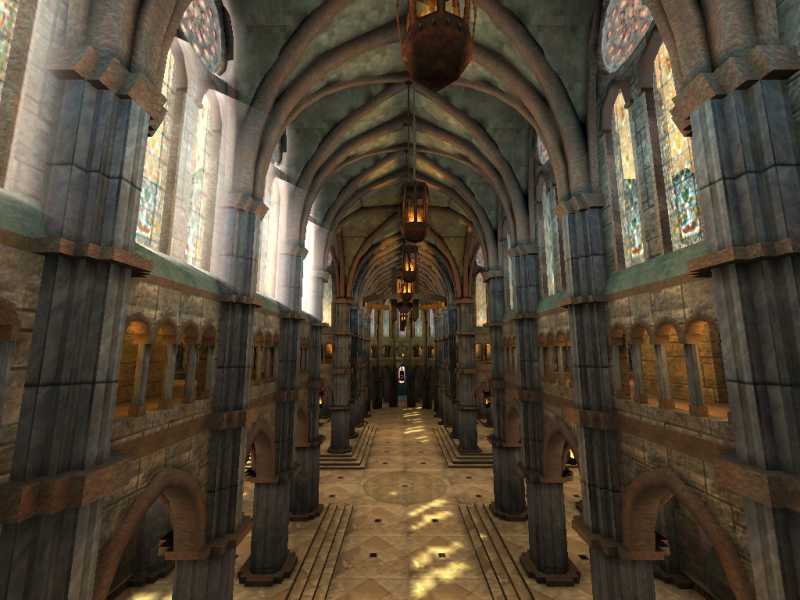
- - Chartres, not Montreal… - post by lampertina
When Mark Twain visited Montreal in 1881, he said that it was the first time he’d ever been in a city “where you couldn’t throw a brick without breaking a church window.” Montreal, you see, has lots of churches.
Twain was then told, however, that the city would soon build another church – and perhaps another, and another – and “I said the scheme is good,” Twain responded, “but where are you going to find room? They said, we will build it on top of another church and use an elevator.”
Church of God, Elevator.
Does this off-the-cuff remark from a 19th century novelist exhibit a more adventurous sense of space and structure than the buildings which pass for architectural design today?
- - ha! brilliant good old Mark Twain! - post by lampertina
How Should We Be Thinking About Urbanization? A Freakonomics Quorum - Freakonomics - Opinion - New York Times Blog Annotated
A “quorum of smart thinkers” discusses what problems and opportunities majority urbanism presents, “What effects has it had on our local and global culture? Economy? Health?”
Most observers tend to extrapolate current trends and assume that what we see now will continue moving in the same direction — ever-larger cities, etc. I don’t see it that way. The global energy predicament now gathering around us will synergize with climate change to produce a very different outcome.
- - of course he has to say that, since he has staked his speaking career on “the long emergency”…
- Kunstler drives me nuts. - post by lampertina
Some of our cities will not make it. Phoenix, Tucson, and other Sunbelt cities will dry up and blow away. In Las Vegas, the excitement will be over. Other mega-cities will have to downscale or face extreme dysfunction.
- - it’s obvious that he used to write science fiction, too - post by lampertina
The suburbs, for the most part, are toast. They have three possible outcomes in the twenty-first century: as slums, salvage yards, or ruins.
- - see previous comment - post by lampertina
Edward Glaeser, professor of economics at Harvard and director of the Taubman Center for State and Local Government at the Kennedy School of Government:
- - his entire text is worth highlighting! - post by lampertina
A central paradox of the twenty-first century is that declining communication and transportation costs have made cities more vital than ever.
- - I wonder how the declining transportation costs aspect would sit with Kunstler, who would presumably counter with “just you wait, that’ll be over soon”… - post by lampertina
In the developing world, cities are the intellectual gateways between the human capital of India and China and the markets of the West. In the developed world, cities have enjoyed a remarkable resurgence over the last 25 years as the density that once made it easier to move hogsheads onto clipper ships now serves to spread knowledge in finance and new technology.
Globalization and the death of distance increased the returns for being smart, and you become smart by hanging out with smart people. As such, cities remain important because they create the intellectual connections that forge human capital and spur innovation.
- - an important aspect here is that “smart” also means smart in different ways, and as Aristotle said (paraphrase): a city is composed of many different kinds of people (ok, he said men, but we mean people), and it’s that rubbing up against difference (and tolerance) that makes cities so very valuable.
- disagreement is good - post by lampertina
Cities sometimes have a bad reputation because of their association with problems like poverty, pollution, and disease; but this association does not imply causation.
Cities are full of poor people because cities attract poor people, not because cities make people poor. Millions of the least advantaged come to urban areas not because cities are bad for them, but because cities are good for them.
- - exactly! Or, in the West’s case, because the poor can expect to access services that they wouldn’t get in less urban places - post by lampertina
There is no doubt that the general process of industrialization and growth adversely impacts the environment, at least ially, but cities shouldn’t be blamed for every smokestack. Cities are not factories. They are the concentration of people at high densities, and that concentration is pretty green. After all, we use a lot less energy when we cluster together in cities than when we spread throughout the country and drive hundreds of miles each day in commuting.
Humans are a social species, and our greatest achievements are all collaborative. Cities are machines for making collaboration easier. Thus, I am delighted that our planet has become increasingly urban.
- - well said. - post by lampertina
Robert Bruegmann, professor of art history, architecture, and urban planning at the University of Illinois at Chicago:
In the long run, however, the policies were probably less important than the eventual result — an equally massive move from the cities back into the countryside. In virtually every affluent nation on earth, the old Nineteenth-century industrial cities have exploded outward, allowing densities to plummet at the core as residents move further and further out into low-density suburbia and a very low-density exurban penumbra around that. The city of Paris today has a third fewer residents than it did a century ago, and the suburban and exurban territory around it leapfrogs more or less from the English Channel to Burgundy. In this process, the very distinction between urban and rural has all but disappeared as citizens in almost every part of affluent societies are able to participate in what is essentially an urban culture.
- - that’s a very interesting (and different) way to characterize sprawl… much more “organic,” with interdependencies…
- have to think about this one… - post by lampertina
Of course, this huge outward migration of people has caused problems, just as the migration to the cities did. And public authorities have once again tried to slow or halt the process, now pejoratively called “sprawl,” often with the explicit aim of preserving the distinction between the urban and the rural. This effort is likely to be just as futile as the effort to stop people from moving into the cities, and just as likely to be counterproductive. No one knows what the next chapter of urban history will bring, but if there is any lesson to draw from what has happened to date, it is that abstract ideas about the proper form of settlement, whether urban or rural or hybrids we can’t yet imagine, tend to lag far behind the reality on the ground.
Dolores Hayden, professor of architecture, urbanism, and American studies at Yale and author of Building Suburbia: Green Fields and Urban Growth, 1820-2000:
Old divisions between “city” and “countryside” have become misleading in urbanized nations like the U.S. “City” in the U.S. today really means “metropolitan region,” because we are a predominantly suburban nation. After almost two centuries of peripheral urban growth, American suburbs have overwhelmed the centers of cities, creating urban regions largely formed of suburban parts. By 2000, more Americans lived in suburbs than in central cities and rural areas combined.
For years, when urban historians wrote about the “city,” they meant the center, the skyline, downtown. Suburbs were left out of traditional “city biographies” emphasizing economic development, population growth, and the achievements of business leaders. Everyone knew that large suburbs existed and had something to do with the process of urbanization. But most historians thought they were less significant than the city center: spatially, because they were less dense than centers; culturally, because more of their attractions involved nature than architecture; and socially, because their daytime activities involved women and children more than men.
- - that’s an excellent precis! - post by lampertina
Because of prejudices about density, high culture, and gender, suburbia resisted scrutiny for decades. It evaded both art historical analysis (based on the aesthetic assessment of outstanding buildings), and urban analysis (based on demographic and economic statistics).
Today, Americans need to come to terms with the urbanized landscapes we have created. As Harlan Douglas, a perceptive sociologist, defined the urban region composed of suburbs in the 1920s, “It is the city trying to escape the consequences of being a city while still remaining a city. It is urban society trying to eat its cake and keep it, too.”
Since the mid-1930s, the federal government has encouraged green field development on raw land outside of urban centers, usually through tax subsidies rather than direct spending. These incentives account for extended metropolitan expansion promoted by “growth machines” — alliances of bankers, developers, and business leaders profiting from hidden federal subsidies for suburban development.
Excessive green field growth lies behind the national energy shortage and the mortgage crisis. Using federal incentives to constantly expand urban peripheries with commercial and residential development has had serious consequences. Reliance on imported oil, pursuit of war in the Middle East, and the credit crunch shaking Wall Street suggest that wise patterns of urban land use are more important to economic well-being than many Americans recognize.
- - really well put; another reason to remediate brown fields and build on them; conserve greenfields. - post by lampertina
Alan Berube, research director of the Brookings Metropolitan Policy Program:
The way the U.N. — and most economists — look at it, a city encompasses not just the political geography that lies at the heart of an urban region, but the entire surrounding metropolitan area that functions as an economic whole. So New York isn’t just the five boroughs (population 8.2 million), but the enormous labor market that extends from Rockland County upstate, west to the Poconos, east to Suffolk County, and south to the Jersey Shore (population 18.8 million). What separates us from the world’s developing nations (and many developed ones, too) is that most Americans who live in these “cities” or “urban agglomerations” would describe themselves as living in the suburbs.
But if you live in Westchester County, N.Y.; Cobb County, Ga.; Lake County, Ill.; or Collin County, Tex., would you really have a reason to be there if it weren’t for New York City, Atlanta, Chicago, or Dallas?
Regardless, the same economic forces that are attracting people to large urban regions in the developing world apply here in the U.S. (and really always have). Firms and workers derive benefits from co-locating in large metro areas, in that they can each find a better “match” with one another given a greater variety of options. Big urban areas can cost-effectively support critical infrastructure like international airports, passenger and freight rail, and wireless networks. And urban proximity generates spillovers across workers, firms, and universities, embodied in the “network innovation” that powers areas like Silicon Valley (and in the venture capital that is its lifeblood). The result: big places are getting bigger. While the nation’s 100 largest metro areas (containing at least half a million people) contain 65 percent of U.S. population, they have captured 76 percent of its recent population growth. No wonder; as Ed Glaeser has argued, urbanization makes us more productive and, in the end, wealthier.
- - the benefits of co-location - post by lampertina
My colleagues at Brookings and I have argued that in light of this reality, we ought to begin to tackle critical national challenges — on economic growth, education and skills, infrastructure, and the environment — with a keener eye toward the big, complex, messy, metropolitan way in which the majority of Americans (and now, our global counterparts) live their lives.
- - interesting — argues for the importance at fixing infrastructure *because* the Friedman model (”the world is flat” and it matters not where you live) isn’t going to become a reality any time soon. Quite the opposite. - post by lampertina
Kunstler is a nostalgic fear-mongerer. Why are we listening to the opinions of a guy who was a theater major in college?
- - that’s what I ask myself, too… - post by lampertina

The Daily Diigo Public Link 12/21/2007 by Yule Heibel, unless otherwise expressly stated, is licensed under a Creative Commons Attribution-Noncommercial-No Derivative Works 3.0 License.
7 Comments »
RSS feed for comments on this post. TrackBack URI
Leave a comment
Theme: Pool by Borja Fernandez.
Entries and comments feeds.


I especially liked the last item. Nothing especially new, but why is it that we don’t discuss this in Sydney?
Comment by melanie — December 21, 2007 #
You mean the Freakonomics Quorum, right? Yes, that’s a good one — I haven’t had time to read the long comments string on this one, but many people responded. (I did underline one of the first comments, which pointed out that Kunstler “is a nostalgic fear-monger.” K. really gets on my wick.
If you want to try Diigo, btw, let me know and I’ll send you an invite.
Comment by Yule — December 21, 2007 #
Looks interesting. Do I need an invite? If so, please do.
Comment by melanie — December 29, 2007 #
Done!
Comment by Yule — December 29, 2007 #
[...] that first, overly surfeited with information, Diigo Daily Public Links blog a couple of days ago, I altered the parameters — cleverly, I thought, to include only the [...]
Pingback by » Diigo Daily Public Links, update Yule Heibel’s Post Studio © 2003-2008 — August 21, 2008 #
Thats a beautiful pic you took! Wow.
Comment by pocono resorts Steve — September 6, 2008 #
Thanks, but I didn’t take that picture — it’s from BLDGBLOG’s entry, and it’s captioned / credited thus:
I’m afraid my Diigo-generated entry (the one you commented on here) was over the top insofar as I set my Diigo bookmarking parameters to blog not just the links and my comments on the link, but also all the underlined highlights. I subsequently changed those parameters, to show in my blog entries only the link and my thoughts/ comment on the item, vs. showing what I underlined/highlighted.
But yeah, it’s a great photo (which is why I highlighted it in BLDGBLOG’s entry, and which is why it subsequently showed up here).
Comment by Yule — September 6, 2008 #