• Home
  • About MESH
  • Members
  • Papers
  • Contact

Middle East Strategy at Harvard

National Security Studies Program :: Weatherhead Center

Feed on
Posts
Comments

The 2,000-year shakedown

Aug 15th, 2008 by MESH

From Walter Reich
That Israel’s leadership can’t figure out what to do when faced with the challenge of ransoming kidnapped Jews is excusable. That much of that leadership seems to be ignorant of the fact that Jews have given two thousand years of thought to exactly that problem, however, isn’t.

A few weeks ago, in exchange for the bodies of two Israeli soldiers taken captive by Hezbollah two years earlier, Israel released to that organization five prisoners, including one, Samir Quntar, who stands out for his brutality in the annals of terrorism against Israelis. Of all Arabs captured by Israel with “blood on their hands,” this one was one of the most despised. Yet, in order to obtain the bodies of the Israelis taken captive by Hezbollah, Israel released Quntar and the four others.

Israel engaged in this prisoner release as part of its tradition of doing everything possible to get Israeli soldiers out of the hands of Israel’s enemies—and in response to pressure, utterly understandable, from the families of the kidnapped soldiers and from many other Israelis. But Palestinian leaders immediately announced that Israel’s willingness to give up prisoners in order to obtain even the bodies of kidnapped Israelis showed that kidnapping is a tactic that works, and that should be used again. For example, Abu Mujahid, a spokesman for the umbrella terror group Popular Resistance Committees, said that the exchange “proves that kidnapping soldiers will continue to be the most efficient, favored and ideal way to release Palestinian prisoners, particularly those defined by the enemy as having blood on their hands.” In a valuable post on this site, Robert O. Freedman, reflecting the views of many in Israel, sharply questioned the wisdom of Quntar’s release.

So the psychological insight that such exchanges could encourage more kidnappings did surface in Israel’s debate. But it is hardly new. Indeed, it’s an insight that has been discussed at length by Jews since Roman times. And it has been discussed not for theoretical reasons but because paying ransoms for kidnapped Jews has punctuated the experience of the Jews throughout that long period.

The problem of paying ransom for Jewish captives was raised in the Mishnah some 2,000 years ago, and was frequently discussed in the Rabbinic literature in the centuries that followed. In the Middle Ages, families and communities often paid enormous sums, sometimes impoverishing themselves, in order to ransom kidnapped Jews. This occurred throughout Europe but also in Turkey, Egypt and elsewhere. The Cairo Genizah—a collection of some 200,000 documents found in the 19th century in a Cairo synagogue that included materials from as far back as the 9th century CE—includes some ransom receipts.

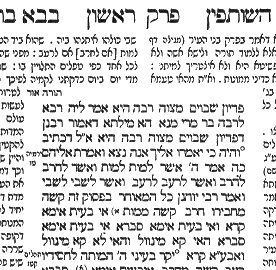
One of the most famous cases emphasizing the danger of rewarding kidnapping involved Rabbi Meir ben Baruch, known as the Maharam of Rothenburg, who lived in 13th-century Germany. The Maharam was held captive by Emperor Rudolf of Germany, who demanded a large ransom from the Jewish community for his release. According to various sources, the Maharam forbade his fellow Jews from paying it, since he feared that such a payment would encourage further kidnappings. He spent seven years as a prisoner, and died in captivity.

The purpose of this brief excursion into Jewish law and history is to point out that this dilemma has been discussed extensively for at least twenty centuries by Jews throughout the world. The circumstances have been different: the old kidnappers sought money rather than the humiliation and ultimately the destruction of a Jewish state. And in Europe and elsewhere the Jews had no army, whereas in modern Israel they do. But the psychological dilemma—the problem that ransoming kidnapped prisoners is likely to encourage more kidnappings—is similar.

What’s disheartening is that so many Israeli leaders, both civilian and military, seem ignorant of the long experience of the Jews in trying to cope with this dilemma. Now, following the Quntar exchange, the debate within Israeli society has become more focused than ever before. One hopes that Israeli leaders will take this debate seriously, and develop a policy that will help the country deal with the kidnappings that are surely yet to come. They could do worse than take Jewish history, and even traditional Jewish texts, as their point of departure.

  • E-mail this story to a friend!
  • Facebook
  • Twitter
  • del.icio.us
  • Digg
  • Google Bookmarks
  • Technorati
  • StumbleUpon
  • Reddit

Posted in Culture, Israel, Walter Reich | No Comments

Comments are closed.

  • This Site

    Middle East Strategy at Harvard (MESH) is a project of the National Security Studies Program at the Weatherhead Center for International Affairs.
    • Read about MESH
    • Search MESH with Google
    • Receive MESH by email
  • Latest Posts

    • • Lebanon on UN Security Council by David Schenker
    • • Whither Yemen? by Mark N. Katz
    • • Saudis into Yemen by Daniel Byman
    • • Disrupting Iran’s weapons smuggling by Matthew Levitt
    • • MESH seeks support
    • • How the Saudis radicalized U.S. troops by Gal Luft
  • Comments

    MESH invites comments from its members and other analysts.
    • Read about comments
  • Latest Comments

    • Walter Reich on Bungled again: Israel and Goldstone
    • J. Scott Carpenter on Farewell and thanks
    • Michele Dunne on Farewell and thanks
    • Robert Satloff on Farewell and thanks
    • Stephen Peter Rosen and Martin Kramer on Farewell and thanks
  • Subscribe

    Subscribe to MESH by email Posts+Comments
    Feed Posts+Comments
    Subscribe to MESH by email Posts+Comments
    Posts+Comments
    AddThis Feed Button
  • RSS MESH Pointers

    • • Warming increases the risk of civil war in Africa
    • • Morocco: Jail Sentence for HR Activist
    • • Democracy Promotion: A New Approach
    • • Iran: Amnesty International and Others Urge an Independent Investigation into the Mysterious Death of an Iranian Doctor
    • • Washington and the Ivory Tower: How Government Can Engage Academe in the Service of U.S. Middle East Policy
  • Posts by Category

    • Administration (5)
    • Announcements (23)
    • Countries (245)
      • Afghanistan (11)
      • Arab Gulf (11)
      • Bahrain (1)
      • Caucasus (5)
      • Central Asia (2)
      • China (3)
      • Egypt (25)
      • France (2)
      • India (1)
      • Iran (77)
      • Iraq (35)
      • Israel (95)
      • Jordan (9)
      • Lebanon (28)
      • Pakistan (8)
      • Palestinians (52)
      • Qatar (1)
      • Russia (12)
      • Saudi Arabia (14)
      • Syria (18)
      • Turkey (15)
      • United Kingdom (3)
      • Yemen (5)
    • Members (266)
      • Adam Garfinkle (22)
      • Alan Dowty (19)
      • Andrew Exum (11)
      • Barry Rubin (14)
      • Bernard Haykel (9)
      • Bruce Jentleson (6)
      • Charles Hill (3)
      • Chuck Freilich (15)
      • Daniel Byman (17)
      • David Schenker (16)
      • Gal Luft (9)
      • Harvey Sicherman (11)
      • Hillel Fradkin (8)
      • J. Scott Carpenter (15)
      • Jacqueline Newmyer (6)
      • Jon Alterman (13)
      • Josef Joffe (17)
      • Joshua Muravchik (10)
      • Mark N. Katz (21)
      • Mark T. Clark (15)
      • Mark T. Kimmitt (6)
      • Martin Kramer (24)
      • Matthew Levitt (15)
      • Michael Doran (4)
      • Michael Horowitz (9)
      • Michael Mandelbaum (12)
      • Michael Reynolds (14)
      • Michael Rubin (8)
      • Michael Young (16)
      • Michele Dunne (16)
      • Philip Carl Salzman (32)
      • Raymond Tanter (16)
      • Robert O. Freedman (20)
      • Robert Satloff (17)
      • Soner Cagaptay (4)
      • Stephen Peter Rosen (13)
      • Steven A. Cook (14)
      • Tamara Cofman Wittes (18)
      • Walter Laqueur (20)
      • Walter Reich (11)
    • Subjects (269)
      • Academe (3)
      • Books (39)
      • Counterinsurgency (13)
      • Culture (21)
      • Democracy (16)
      • Demography (5)
      • Diplomacy (19)
      • Economics (1)
      • European Union (3)
      • Geopolitics (42)
      • Hamas (21)
      • Hezbollah (25)
      • Intelligence (9)
      • Islam in West (5)
      • Islamism (16)
      • Maps (27)
      • Media (5)
      • Military (19)
      • Nuclear (26)
      • Oil and Gas (13)
      • Public Diplomacy (10)
      • Qaeda (23)
      • Sanctions (6)
      • Taliban (3)
      • Technology (2)
      • Terminology (9)
      • Terrorism (30)
      • United Nations (7)
  • Archives

    • November 2009 (12)
    • October 2009 (8)
    • September 2009 (9)
    • August 2009 (9)
    • July 2009 (9)
    • June 2009 (12)
    • May 2009 (16)
    • April 2009 (11)
    • March 2009 (16)
    • February 2009 (11)
    • January 2009 (10)
    • December 2008 (12)
    • November 2008 (11)
    • October 2008 (19)
    • September 2008 (15)
    • August 2008 (17)
    • July 2008 (18)
    • June 2008 (12)
    • May 2008 (17)
    • April 2008 (20)
    • March 2008 (27)
    • February 2008 (19)
    • January 2008 (18)
    • December 2007 (19)
  • MESH Bookstore


    Recently featured:


  • Maps

    • Online atlas in construction
    Latest additions:
    Scriptless Flickr Badge Scriptless Flickr Badge
    Scriptless Flickr Badge Scriptless Flickr Badge
    Scriptless Flickr Badge Scriptless Flickr Badge
  • RSS Latest Iran

    • • Iran threatens minimum co-operation with IAEA (AFP)
    • • Ahmadinejad hails anti-US 'brothers' on Venezuela trip (AFP)
    • • Iran's leader makes inroads in Latin America (AP)
    • • Chavez calls Israel "murderous" U.S. arm (Reuters)
    • • Exclusive: ElBaradei says West won't meet Iran atom demand (Reuters)
  • RSS Latest Levant

    • • Israel's FM says peace depends on Palestinians (AP)
    • • Up to Palestinians after settlement offer: Israel (AFP)
    • • Lebanon agrees Hezbollah right to use arms against Israel (AFP)
    • • For Gaza's homeless, holiday is time for despair (Reuters)
    • • Israel halts some settlement, urges Abbas to talk (Reuters)
  • RSS Latest Iraq

    • • Iraqi PM: election dispute poses risks to security (AP)
    • • Joint drills help Iraq Kurd, Arab police thaw ties (Reuters)
    • • Iraqi journalists worry about media crackdown (Reuters)
    • • Night-time theater returns to Iraq as courage grows (Reuters)
    • • British inquiry hears of Iraq WMD doubts (AFP)
  • RSS New York Times

    • • Israel Offers a Pause in Building New Settlements
    • • Memo From Alexandria: Harnessing Darwin to Push an Ancient Intellectual Center to Evolve
    • • Iranian-American Faces New Spying Charge
    • • In Iraq, 2 Attacks Raise Fears of Sectarianism
    • • World Briefing | Middle East: Flu Fears May Curtail Pilgrimage
  • RSS Washington Post

    • • China's backing on Iran followed dire predictions
    • • Investment scandal hurts Hezbollah's image, even among backers
    • • At least 10 people reported killed in violence in Iraq
    • • U.S. hails Israeli plan on West Bank settlement building
    • • British panel investigating Iraq war begins public hearings
  • RSS NPR

    • • Israel Declares A 10-Month Settlement Freeze
    • • At Gaza Zoo, The Wild Things Return
    • • U.K. Begins Iraq War Inquiry
    • • British Panel Begins Inquiry On Iraq War
    • • N.C. Ophthalmologist Helps Train Iraqi, Afghan Doctors
  • Harvard Events

    Check upcoming events from the calendars of...
    • Weatherhead Center for International Affairs
    • Center for Middle Eastern Studies (CMES)
    • Belfer Center for Science and International Affairs
  • RSS Weatherhead

    • • Canada, The United States and Cuba: The Triangular Relation between 1959 and 1962 as seen in Cuban Diplomatic History Co-sponsored by...
    • • The Capabilities: View of Development
    • • Special Series on International Relations of East Asia The United States and Kaji Wataru in Wartime China and Occupied Japan Co-sponsored...
  • RSS CMES

    • • From Social Democracy to Islamic-Ottoman Multiculturalism: Origins of the Historic Reforms in State Policies Towards Ethnicity
    • • Turkey’s Opening: Negotiations with Iraqi Kurdistan and US Redeployment from Iraq
    • • Modernity's Aesthetic Turn: Art Education and the Nation in Japan and Egypt
    • • 2009-2010 Egypt Forum program
    • • Destinies Apart: Jewish Immigrants from the Atlas Mountains and from Ethiopia, Moshe Shokeid
    • • The Cartoons that Shook the World
    • • Middle East Film Screening: Edge of Heaven (2007, Turkey/Germany)
  • RSS Belfer

    • • Why Arab States Fear Islamist Regimes: Threat Perception and Soft Power Politics
    • • Youth Civic Engagement & Diversity through Social Entrepreneurship in Egypt
    • • REFLECTIONS ON THE REVOLUTION IN EUROPE: Immigration, Islam, and the West
    • • Political Costs of Nuclear Threats: Implications for Crisis Stability in South Asia
    • • Are Ambassadors Still Important?
    • • Air Supremacy and the Air Force, Closure and Introduction of Spring semester
    • • "Northern Ireland Peace Process: What Then, What Now, What Next?”
    • • "Let the Historians Decide"? Politics and the Past in Turkey and Japan
    • • Saudi Arabia and “Rentier Exceptionalism”: Oil Price Fluctuations, State Responses and Political Mobilization
    • • Two Concepts of Liberty: American Grand Strategy and the Liberal Tradition
  • Sponsor

  • Host

  • Rights

    Copyright © 2007-2009 President and Fellows of Harvard College
    Site Meter

Theme: MistyLook by Sadish


Protected by Akismet • Blog with WordPress

Bad Behavior has blocked 1 access attempts in the last 7 days.