It’s the night before the last day of class, and I have to say that it has gone fairly quickly. I’m sad to be without Silver’s commentary and insight after this class, but have the completion of my assignments to look forward to (which I just couldn’t seem to manage to finish while I have been here).

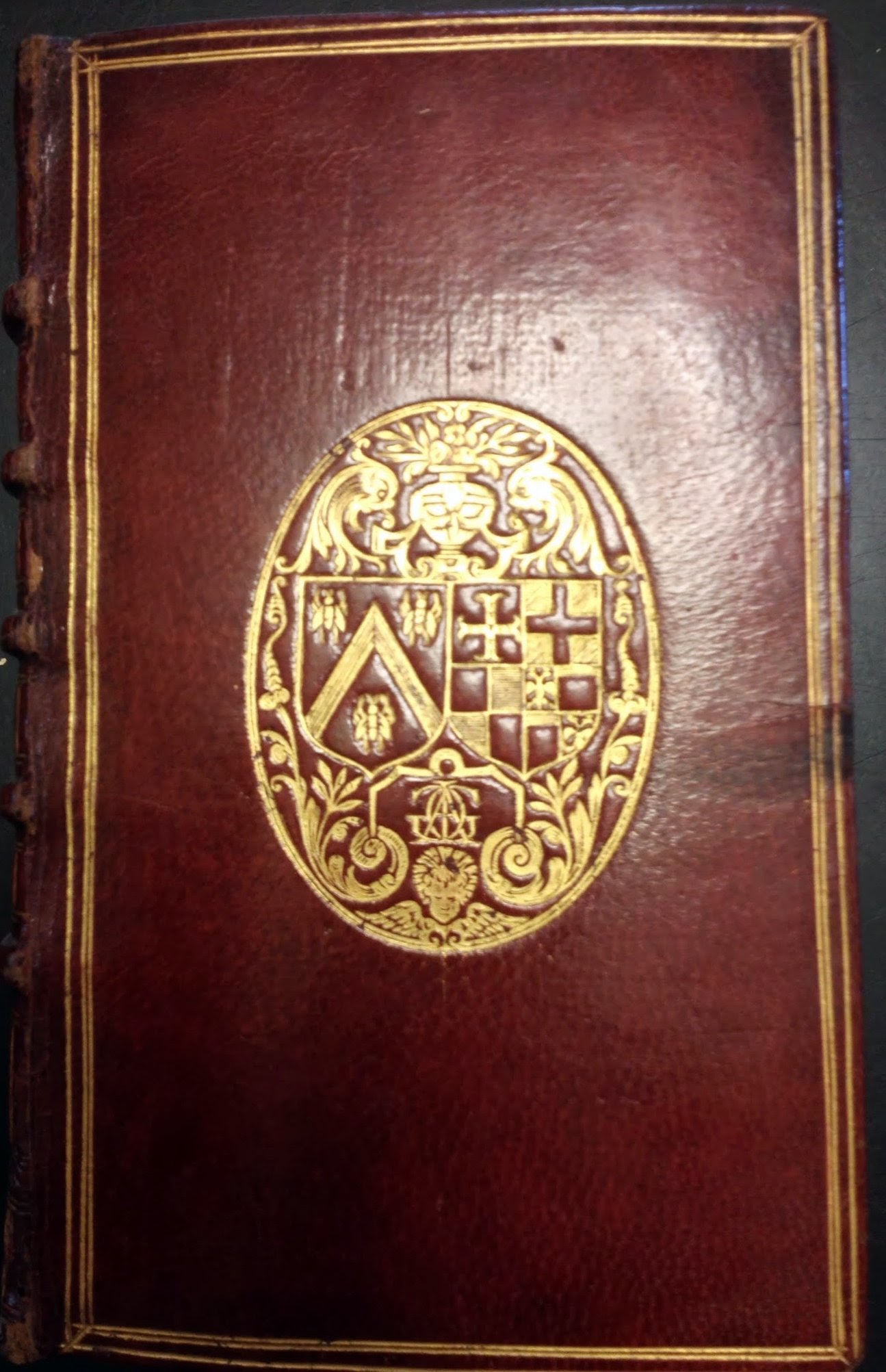
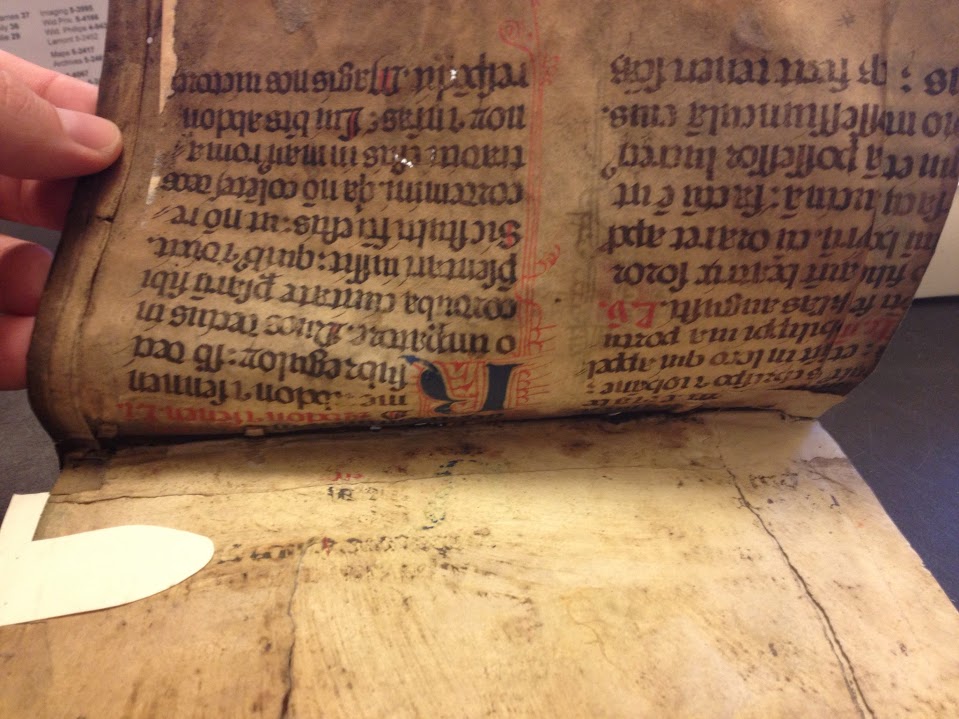
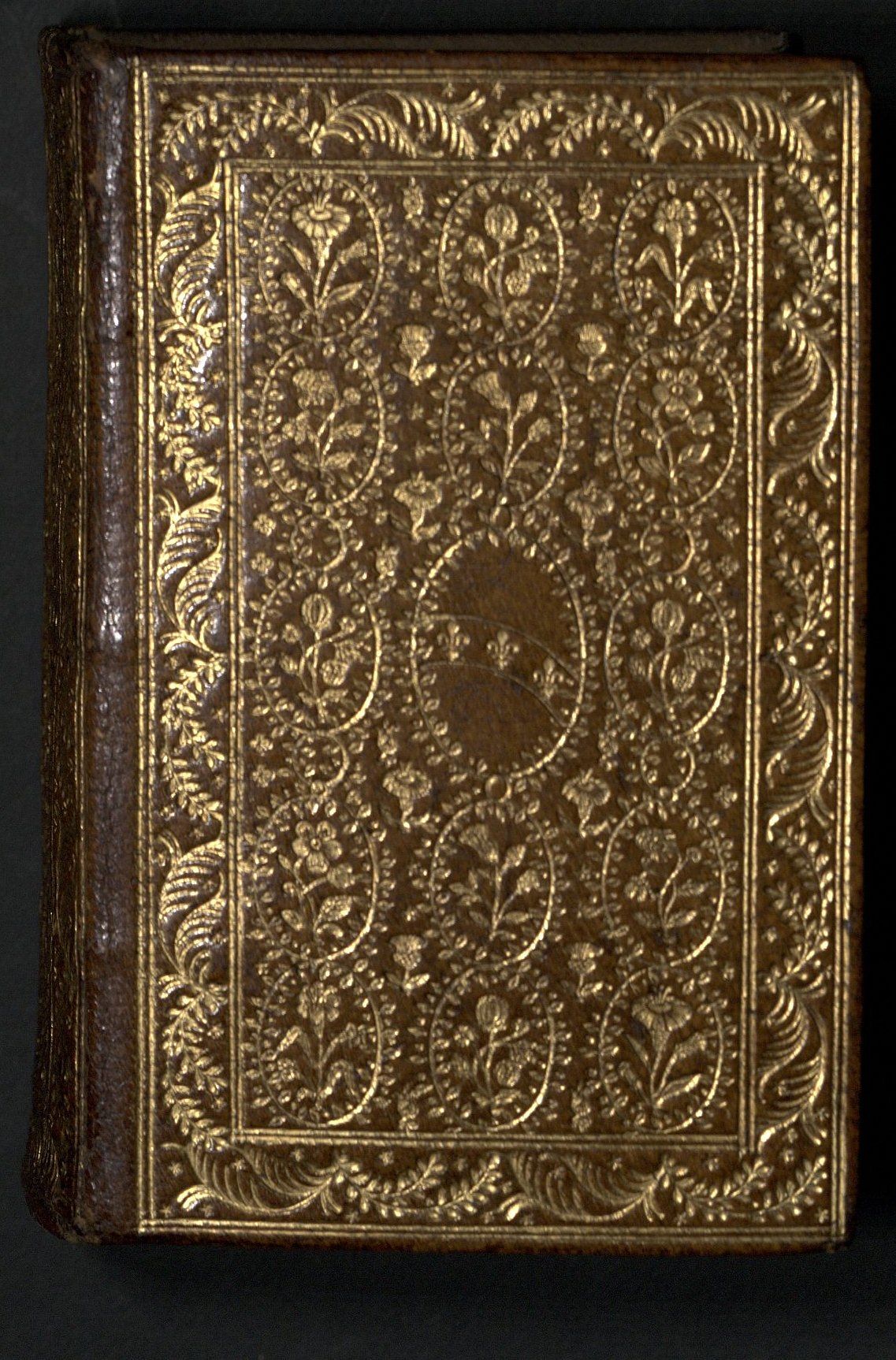
Today was a whirlwind of sources, including “Miscelaneous” subjects, like Art & Architecture, Music, and Children’s Books, and Book Arts and the physical aspects of books in general. It was a bit overwhelming. Outside of going over those sources, the highlight for me, which has encouraged my thinking most, was an aside Silver made while we were covering sources for bookbinding reference. He bemoaned the lack of opportunity people have for connecting with the physicality of books, both as private collectors and as a part of an institution. On the private side, many book stores and booksellers are taking their stock outside of public browsing and selling solely on the internet, leaving less opportunity to serendipitously encounter books. On the institutional side, collections move to off-site storage, and more attention to conservation has led to many volumes, especially older and more climate sensitive items, to be boxed, thus hiding their bindings, and making it much harder to answer reference questions about, for example, how many books of a certain peroid one has in contemporary bindings. Some of this information is available in an electronic catalog, but as has been my experience, those records are often either incomplete or non-existent (or not easily searchable).

I had thought of another aspect of this when he was talking and since, and that is placement of the books in rare book libraries, even in closed shelves, and the priority of cataloging. The idea of the most efficient way to shelf books has come up a few times in my short time at Houghton, and I had often thought that accessioning everything and shelving as things came in would be easier for space planning and retrieval. However, without like things being shelved together, it would be nearly impossible to answer a question about period bindings by walking to the stacks. There simply wouldn’t be any sections with enough like books to make that possible. Of course, the choice of call number system determines what characteristic of similarity is used for shelving.  For Houghton “Author” class, for instance, it is the author’s origin place and time. Though most of the books might be from that time period and country, even first editions could be outside that country (not to mention later editions and translations). For instance, one of our final assignment questions for this class concerns More’s first edition of Utopia. Though classed *EC M8135U (as all of More’s Utopia editions will be in the Author system), it was published in Belgium, not in England. It might not therefore be a place to look for an English 16th century binding — and the Hollis record doesn’t set up any expectation of what binding we will find, contemporary or not. And the many other classification systems used for Houghton’s shelves (Old Widener, Typ, Accession Numbers, LC, etc.) will create different local similarities.

These may seem like trivial questions, but I actually think answering them refines the sense of the usability of the collection for staff and patrons. I fear with the rise of “folksonomies,” “tagging,” and keyword search supremacy in the general library world, we resist grappling with important questions of priority and classification that will in the long run not serve our patrons in the best way.  Especially when small typographical and technical mistakes can lead to things falling through the cracks in an electronic environment, it pays for an item to be logically catalogued and traceable by some reproducible method (e.g. a systematic call number).

Newberry Library I’m a little late in posting about this, but I have to mention that despite being thwarted in my efforts to take the train (”Sold out?” I said to the Amtrak operator, incredulously. “I didn’t even know trains could sell out!” This from someone who spent a Sunday of Thanksgiving weekend on an Amtrak train to Boston during college sitting on his luggage between the cars of the train. The whole 3 hour ride. In November. They sure as heck didn’t sell tickets based on seats back then), I made it to Chicago another way (shout-out to Illini Express Shuttle!)and in time for the 10:30am tour of the Newberry. I hadn’t expected it to be sobig, especially the massive general reading room and reference area. The Special Collections reading room (or “fish bowl”) was almost empty, but was interesting for its transparency and orderlyness. I chickened out and, perhaps influenced by HCL’s draconian in-building photo policies, feared retribution should I try to document it in any way.

To make the most of my short time in Chicago, I speed-walked from the Newberry to the Printers’ Row Lit Fest down Dearborn Street. I should say I am not a regular book fair attender, and am thus not sure if I should have been impressed at this one. Printers' Row Lit Fest booth I was, though, at the number and variety of booths and the amount of people attending, despite the impending showers. I did manage to just finish my walk-through of all the booths before the showers began, and the plastic sheeting was whipped out to cover shelves in danger.

It was then on to the Chicago Public Library for a brief stop, and then to Grant Park. I wondered as I arrived there if it would now become a tourist stop by virtue of being the site of Obama’s emotional victory speech on election night. I admit that this was the main thing that brought me there, despite the increasing intensity of rain.

My ride back was courtesy of Amtrak, a less popular run, though one that was still full.

You can see more pictures of my Chicago adventure on my Picasaweb Album.

When comparing the Bibliotheca Americana Catalogue of the John Carter Brown Library with the Church Catalogue yesterday while covering Americana, we looked at yet another interesting juxtaposition of Librarians and Booksellers/Collectors. This one concerned the content of the descriptions and bibliographic detail of the entries for books.

Church (and George Watson Cole, specifically) says something interesting about each work, letting you know why it is important as a book, why we as librarians and collectors might care about it. The Bibliotheca Americana is more detailed bibliographically and the descriptions are accurate, but it doesn’t tell you why the work is important, or why we should care about it.

The same could be said for library catalogues vs. sales or exhibition catalogues. One is attempting to be an accurate and as detailed as possible description of the item. The other(s) is in part a PR document meant to both educate and generate interest on the part of the reader. If there is one thing that tends to supress rather than generate interest in the general public for something, would it not be the Library Catalogue?

From personal experience of preparing for and conducting seminars on some subjects I was not exactly an expert in, to put it kindly, I would much rather be able to reach for a catalogue or bibliography that gives rich context for the bibliographic details of the work and its importance, than a supremely accurate bibliographic description. I say this not to disparage the knowledge and work of rare book catalogers and bibliographers (I’m not worthy!), but to think through this for my own work as a public services librarian.

An Urbana-Champaign Frat
Perhaps it is all of my time spent at Harvard, where they don’t officially exist, but I find the ubiquity of fraternities here overwhelming. Is everyone in a frat at Urbana-Champaign? If I look out the door closest to my room, without actually going outside, I can see three different fraternity houses (left, straight, and slightly right). And that of course does not include the back of Alpha Kappa Lambda which is always viewable out my cell, I mean room window.

The variety of care in maintaining them is also astonishing.  Some, though majestic looking, clearly should be cared for more (note the broken window). For others, the building itself looks fine, but the surrounding environment could use improvement, including signs and lawns. Then there are those that even have advertising built right in. If I had more time right now, I might make a pithy comparison between these frats and rare books, including clever examples of how the above descriptions could be used also for rare books and collections… but I’ll leave that to you.

A nice benefit of reference works for rare books in the internet age is that many still used today are quite old. In the early days of the internet, perhaps this would be a problem rather than an asset. But since large-scale digitization projects are beginning to enter (dare I say) their maturity, there is the great opportunity of having “facsimile” copies of great reference works accessible anywhere.

For example, as part of the topic “British Books to 1800,” on Wednesday Silver introduced Dickson and Edmond’s Annals of Scottish Printing: From the Introduction of the Art in 1507 to the Beginning of the Seventeenth Century, (1890) which though overlapping with the coverage of the STC and Wing, has useful narratives of Scottish printers and their works. This work is nicely accessible through the Internet Archive, and the copy can be searched through the “Read Online” link, or downloaded for consultation. This is a simple example.

Of course, most reference works come in multiple volumes in parts. And as others have noted (specifically about Google Books) it can be quite hard to tell exactly what part or volume you have found without paging through. The search results are not at all helpful. For example, on Tuesday, while covering Early Printed Books, we looked at Hain’s Repertorium Bibliographicum, that first great incunabula catalog.  A search for the reasonable Repertorium Bibliographicum in Google Books (full view only) gives us a title list that doesn’t note volumes. Not only that, but the first item listed, though noted as being v.1 pt.1, is actually v.2 pt.1. You can see how this could get very complicated, with even Lowndes’ multiple-volume Bibliographer’s Manual of English Literature (which we looked at on Wednesday). Sure, there’s this volume one, but there is also all of these (56!) that come up as different editions in full-text. Tough to sort through.

I’m sure some will be thinking that who would actually do this anyway? Wouldn’t it make more sense to just search for what you’re looking for as a keyword? It’s true, sometimes that does work, but often, the OCR of the page images is poor for these early works, and for tracking down a citation might require browsing through the work. In a multiple volume work, even with a citation to the proper volume, it might take a little time to find what you need. Perhaps this is why, even with many of these things already being available online, there is still the market for something like rarebooks.info, which has mostly public domain material available elsewhere.


Interesting bells, near the Main Library

For some visual stimulation, head over to my Picasaweb Album of Urbana Champaign. Now with mapping!

One interesting thing that has come up numerous times in these first three days of class is the perspective of bookseller vs. librarian. Silver began in the first class by acknowledging the role of the antiquarian book trade in the production of the very reference works (bibliographies) that librarians rely on for their work. Just as a bookseller uses reference works to create an enticing and interesting description of a book in a catalog or in an online listing (”great for quotes” as Silver describes Brunet), so do we as reference librarians or curators use these works to explain to seminar attendee or exhibition guest why this particular book is so “special” (”most plagiarized book for exhibitions” as Silver described PMM).

Perhaps it is my background in general academic reference, but I had never so vividly highlighted in my mind the similarity of roles between the Public Services Librarian, as caretaker and interpreter of the worth and interest of the collections, and bookseller, as promoter of that worth for profit. Some might place the deciding hand with the book collector, who ultimately decides what something is worth by how much they are willing to pay. Enough has been said by Silver, though, with his perspective of having been in the antiquarian bookseller world, that would have me doubt somewhat the sincerity of some descriptions of works which might improperly inflate some prices.

Perhaps for many, these observations seem trite and naive. Still, I feel that for myself at least, when examining some reference works, and especially auction and sales descriptions, it pays to keep in mind the possibility of bias, both in which books are treated in more detail (Madan’s “degressive bibliography” in action, but perhaps not exactly in the way he had intended), and with the way in which they are structured or organized.

Day one of the Reference Sources for Rare Books has come and gone. As I take shelter from the sweltering Urbana-Champaign heat, waiting for a glimpse of some intense mid-western thunderstorms, I’ve decided to chronicle all of the reference works Joel Silver covers in a Google Spreadsheet. I’m already impressed with both Silver’s knowledge and ability to make a long class interesting. I hope for more of the same to come. Anecdotes, pictures, and other fun things to follow, if I’m not struck by lightning in the interim.

My first order of business, and very un-blog-like, is to create pages on the site to collect resources in different areas, such as Paleography and Digital Collections, that might be helpful for doing research in special collections. You can access these pages from the tabs at the top of the site. At some point, when more timely resources or insights come to pass, I will post about them in the usual bloggy format. Until then.

Protected by AkismetBlog with WordPress