digital age
aging digits pause
at the keyboard
… dagosan
 Notice: After almost 6 years, 2500 postings, and a million visits, f/k/a has stopped publishing new posts (and accepting new Comments) as of March 1, 2009. The content is all still here in our archives, of course, so please browse to find unique and wide-ranging punditry, much of which deals with the foibles of lawyers and the rights of their clients, plus thousands of quality haiku by a couple dozen fine poets. See our About page, to learn about f/k/a‘s history, philosophy, honors, etc., and our Prof. Yabut’s Favorites Page for the closest thing we have to a Greatest Hits List. (We may occasionally, but erratically, add a follow-up blurb to an old posting when a topic is in the news.)
By the way, we went out this week the way we came in at this “ethicalEsq” weblog: writing about excessive legal fees and the lack of adequate lawyer discipline. See our ALF (American Legal Fees) Series; and our essay this morning, “Understanding and Reducing Legal Fees.”
….. david giacalone – Editor/Proprietor
Broken Link Warning: Due to an involuntary webserver change in the Spring of 2009, some of our links to internal f/k/a material no longer work. We regret this inconvenience. However, all of our content still exists, and you should be able to locate the desired post by doing using our SideBar Search box or doing a Google Search of f/k/a [put a space and then your search terms after our URL in the Google search box].
All-Archive: This is the last new post that will appear at this web address. As of March 1, 2009, f/k/a will be in “archival status,” with all of our content (dating back to May 2003) remaining available here as archives.
- Don’t miss our artsy goodbye, “a few farewell haiga” (photos with linked poems), nor our personal thank-you’s in “just getting to know you” and “all that great haikai“
- Clicking Client Rights & Legal Ethics here or in the SideBar will bring you to our portal for legal ethics commentary and resources (including extensive discussion of lawyer fees). See “Our Resources” and “Categories” in the Sidebar for more topics.
- Go to the Honored Guest Poet Index for links to the individual archive of each of our two-dozen top-notch haiku poets. We’ve collected annotated links to our haiku-related materials and outside websites at the Haiku Resources Page.
- No one was willing to go through 2,472 posts to try to choose f/k/a‘s Greatest Hits, but Prof. Yabut’s Favorites Page makes a good substitute.
As I type right now, there are fewer than 12 minutes until my self-imposed midnight shutdown deadline. So, you’re in luck: There’s no time for a long-winded farewell apologia, nor even an attempt to answer Darren Rowse’s recent question: “If your blog died today, what would it be remembered for?” Sad to say, however, the f/k/a Gang — your Editor and his various alter egos — have apparently learned little since we tried to quit this weblog in October 2003. Our sentiments then ring just as true today. Because we still haven’t learned how to pace ourselves, we’re going cold turkey on intense daily blogging, to free up time and energy for creating a more joyful, satisfying and meaningful journey.
- If interested, you can still find my new poetic offerings at “dagosan’s haiku diary“ and “simply senryu“, and published works here.
A parting note: It’s been great to be able to opine on subjects as diverse as the Graying of the Bar, the meaning of “goomba,” and the importance of pink flamingos and Wendy Savage, while cultivating my artistic side, and bringing the joys of genuine haiku to a wider audience. Many thanks to all who have made f/k/a their regular stop for one-breath poetry and/or breathless punditry, and to the generous and talented poets who let me share their haiku. If I find a new online project or job, I’ll get the word out to my blawging and haijin friends.
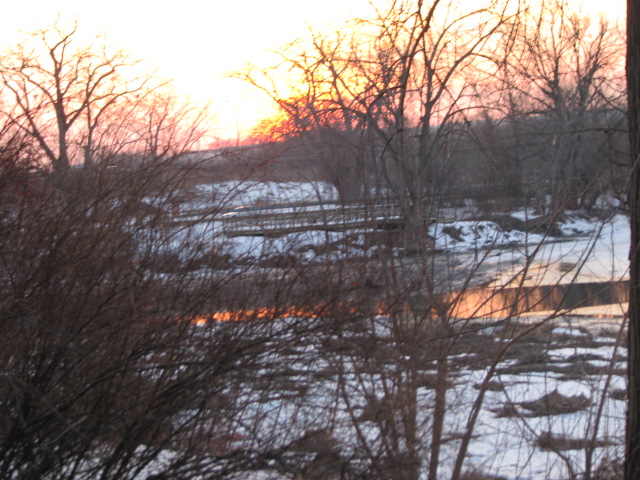
One year ago today, I took this picture at the end of the block where the f/k/a Gang lives. We hope to see a lot more of the Mohawk River from now on.

ides of March
floodwaters where
the snowman stood
… by David Giacalone
fireworks finale!
her eyes return
to the fireflies
… by David Giacalone – Simply Haiku, Autumn 2007, vol 5 no 3 –
afterwords: If you’re missing our photography, check out “suns along the Mohawk,” which features my photos from along the Mohawk River and around the Schenectady Stockade.




 Consumers of legal services won’t find much information online or at their public library to help them keep their costs down when they hire a lawyer. Some websites or firms might hawk their own services or materials as being a great value, or as an option far cheaper than using a lawyer, but almost no one — including bar associations and consumer groups — has compiled general tips on how to make legal services less expensive when you turn from prospective consumer to client. Therefore, when I heard a couple months ago that the legal reform group










 … We’re going to permanently stop production at this weblog on March 1, 2009. As Your Editor and his alter egos wind down the blawg formerly known as ethicalEsq, the f/k/a Gang is going to do what we’ve done since the spring of 2003: Focus our punditry on American Legal Fees [ALF], with our primary concern being not the welfare of lawyers but the interests of the client — especially, the “average,” unsophisticated or inexperienced buyer of lawyer services, who is often priced out of the marketplace or left with crushing debt after an encounter with a lawyer. [see our
 “I wonder about the fixation with the billable hour as a measure of lawyer’s value. While it has its obvious drawbacks, all billing methods are susceptible to the extraction of rents given the imperfections in the market for legal services. Moreover, lawyers moved to the billable hour for good reasons (more efficient allocation of risk) as well as more dubious ones (accounting firm indications that this would correct the lag in lawyers’ earnings). Why isn’t there more critical discussion of this?
 …
…


 ..
.. “As easily imagined and as was already noted by the Legislature, these ‘not in my backyard’ local residency restrictions create great difficulties for the Division of Parole, local probation and social service agencies to locate appropriate housing for sex offenders.”
 Need a more inspiring subject to head you toward the weekend? How about more haiku from the latest issue of