f/k/a means “formerly known as”
– we were formerly known as ethicalEsq.-
After almost 6 years, 2500 postings and a million visits, f/k/a stopped publishing new posts (and accepting new Comments) on February 28, 2009. It’s all still here in our archives, so please browse to find our unique punditry, much of which deals with the foibles of lawyers and the rights of their clients, plus thousands of quality haiku by a couple dozen fine poets. The closest thing we have to a “Best of” List can be found at Prof. Yabut’s Favorites Page.
….. David Giacalone – Editor/Proprietor
Note: We apologize for formatting errors that appear due to webserver and web software changes beyond our control. All of our material still exists, despite nay broken internal links, and we hope you will be able to find it by using the Search Box in our Sidebar, or by clicking to do a Google Search of f/k/a .


ABOUT f/k/a: Since May 2003, f/k/a has combined “breathless punditry” — lively commentary focused on legal ethics and client’s rights, plus political and cultural topics — with a healthy dose of short (at times called “one-breath”) poetry in the form of genuine haiku and senryu by almost two dozen distinguished English-language haiku poets It was both the first weblog focused on lawyer ethics and the first blog to regularly present haiku by a group of top-notch English-language poets. Scroll down this page to find the history of this weblog, honors it has received, its copyright policy, and information about its proprietor-Editor.
FYI: Elsewhere, we have reproduced the Original ethicalEsq About page describing the mission of ethicalEsq and introducing the Editor.
Although opinionated and occasionally cranky, the Editor/Host, David Giacalone, and his alter egos in “the f/k/a Gang” (including Prof. Yabut, ethicalEsq, Jack Cliente, and dagosan) strive for even-handedness and intellectual honesty, usually with a sense of humor. You can contact David by email using: “dag DOT law76 AT post DOT harvard DOT edu“.
Special thanks to the editors of the American Bar Association Journal for putting us on the very first Blawg 100 list of “the best sites by lawyers for lawyers” (December 2007). [Note: A “blawg” is a law or lawyer-related weblog.]
. . . We are also the proud recipient of Blawg Review‘s “Creative Law Blog Award.” [see our post (Dec. 27, 2005)] In addition, we humbly thank two of the most knowledgeable observers of the legal weblog scene, Blawg Review and Robert Ambrogi’s Lawsites, for including f/k/a in their “Simply the Best” Top Ten Blawg lists (see our post, October 5, 2007). We’re also grateful that Lexis-Nexis has placed f/k/a on its very selective list of Top Legal Blogs at the Lexis Hub for New Attorneys.
 Although this weblog was created to be a source of information for consumers and providers of legal services, the Editor soon decided to supplement his work here as Consumer-and-Competition Advocate and cultural pundit with the role of “Haiku Missionary” — to (en)lighten the tone by sharing with visitors to this site the pleasures of the haiku genre. Therefore, in addition to his own humble offerings as dagosan, you will find haiku and related poetry by some of the very best published English-language “haijin” — our “Honored Guest Poets,” who have graciously shared their work with f/k/a and its readers, along with the haiku of 19th Century Japanese master Kobayashi Issa, translated by Prof. David G. Lanoue.
Most Americans only know haiku as childish poems with three lines and strict 5-7-5 syllable format — or, as off-color or silly doggerel in the 5 – 7- 5 format. I was fortunate to discover haiku as a true poetry genre and a multi-dimensional artistic experience, at a time when my health limited both my attention span and my stamina. Small doses of the tiny poems inspired me as a reader, and kindled a belief that even I — despite a couple decades as a lawyer — could learn to “do something creative.” I hope you’ll catch haiku fever from this weblog and the resources mentioned in the weblog.
See “is it or ain’t it haiku?” to learn more about the haiku genre and find links to other helpful materials. Also see our Haiku Resources Page.
COPYRIGHT INFORMATION: The commentary/punditry on this website is copyrighted by its author, David A. Giacalone, but is available under a Creative Commons Attribution-Noncommercial-Share Alike 3.0 License, and can be used for non-commercial purposes, so long as it is attributed to f/k/a and its author, and distributed under the same or similar license.
Please note, however, that the poets whose works appear at f/k/a reserve all prior copyrights and their poetry may not be reproduced elsewhere without their prior consent. Of course, Fair Use rights are not affected by these limitations. (See our essay “Haiku and the Fair Use Doctrine“)
Our weblog history. The original weblog at this site began on May 26, 2003, and was called ethicalEsq (as can still be seen in our URL).It focused on legal ethics and clients’ rights. haikuEsq came on board on Dec. 13, 2003, taking charge of our Sidebar.The post “Yes, Lawyers and haiku” explains the haikuEsq philosophy, and why we think haiku is a perfect art form for lawyers and others in our too-busy society. On May 26, 2004, we tried to go (virtually) all-haiku and launched f/k/a (see “Poetry Not Punditry” ). However, the world is just too interesting to ignore and clients’ rights too important to abandon, so we quickly went back to offering punditry. Over the years, we remained the only lawyer-written weblog putting the clients’ interests as informed consumers — seeking quality, value, competition, innovation and choice — above the financial and status interests of lawyers.
Please note: the Editor, David Giacalone, is solely responsible for all commentary or opinion that appears in the postings on this weblog. The haiku poets who generously appear here as Honored Guests do not necessarily — or even presumptively — concur. The Editor is not responsible for the Comments of others, but requests that all Commentors refrain from vulgarities and personal attacks. We reserve the right to remove such offensive comments. Because Comments are moderated at this website, there may be a delay between submission of a Comment and its appearance online.
ethicalEsq and Prof. Yabut are Editors Emeritus of this website. prof. yabut’s journal was officially launched April 26, 2004. He made his debut here, on April 1, 2004, and retired May 26, 2004. He is an alter ego of the Editor. As explained here and here, ethicalEsq and Prof. Yabut have mostly given up the punditry business. However, we have archived ethicalEsq‘s postings and his extensive Legal Ethics Resources , as well as Prof. Yabut’s favorites.
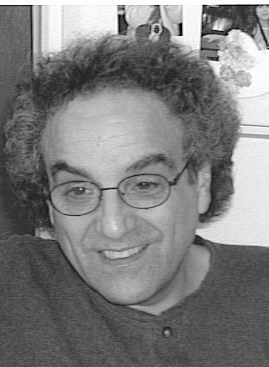
 The Editor: Although there may appear to be (and often are) warring personalities at this weblog, it is created and edited solely by David A. Giacalone. Due to health problems, I’m a prematurely-retired (but no longer prematurely-gray) attorney and mediator, living in the Capital Region of New York State. My discovery of haiku late in life has brought me a lot of joy (see Yes, Lawyers and Haiku), and I want to help people who might not think of themselves as poetry-lovers to enjoy, appreciate, and maybe start to write haiku and related forms of poetry.
Nonetheless, the original and primary focus of this website is advocacy on behalf of the consumer of legal services. After graduating from Harvard Law School in 1976, I spent a dozen years immersed in antitrust law and competition policy at the Federal Trade Commission.That period left me with two beliefs that are basic to the viewpoint of ethicalEsq.
- First, professional organizations, and the ethical codes they write and purport to enforce, often needlessly stifle competition under the guise of protecting clients. And,
- Second, as with any other product or services, the consumers of law-related services are best served when there is healthy competition among providers, a broad array of options and prices, and sufficient information to permit intelligent choices. There needs to be a very good reason for depriving law clients the benefits of competition, and increasing the wealth of lawyers doesn’t quite make the grade.
[My belief in competition as consumer protection is reflected, for example, in two postings on this site, here and here.]
In 1988, my first mid-life crisis took me from Washington, D.C., to a small city in Upstate New York, where I began a decade of practice centered in family court, mostly representing children and developing a divorce mediation practice. Seeing how law is practiced on Main Street, confirmed the beliefs that I had gained about competition as consumer protection at the FTC. More important, it left me with the lasting impression that the average consumer of legal services is often both shortchanged and overbilled — with too little respect, information and choice offered by the legal profession, and too little protection provided by those running the disciplinary systems that oversee lawyers.
At the foot of the main page of ethicalEsq‘s archives, you will find a fuller description of the experiences and perspectives that led me to start ethicalEsq. As I try to find my balance among a mix of haiku poetry, serious client advocacy and punditry, and idiosyncratic fun, I hope you’ll find f/k/a to be an enjoyable and interesting place to visit (frequently). My goal is to stay healthy enough to keep posting for as long as folks keep coming — and, probably a little longer.
s/dag 
p.s. David Giacalone was also the founding editor of shlep: the Self-Help Law ExPress, which offers news, views and information on self-help law, and was chosen “Best Law Blog In the Public Interest” in the Blawg Review Awards 2006 . Moreover, you can find more of his haiku at dagosan’s haiku diary.